
The Department of Labor has released their final rule on reducing conflicts of interest on retirement savings advice. As expected, the new rule now requires any person who provides investment advice on retirement accounts like 401(k) or IRAs to act as fiduciaries and put their client’s best interest first. The goals are to save investor money otherwise directed to hidden fees and commissions, while helping even the playing field for the financial advisors have been acting as fiduciaries all along.
Commentary. Lots of people have most of their retirement savings in 401k plans, which are often eventually rolled over into IRAs. There are entire firms of salespeople who try to capture this money and skim off huge commissions, and now they will have to act as fiduciaries.
While it can be touted as an overall “win” for consumers, there are still plenty of grey areas. The final rule requires firms to be compliant on several broader provisions by April 2017 and fully compliant by Jan. 1, 2018. Existing investments are grandfathered in. Small 401(k) plans are exempt from some of the rules. Firms can still technically sell you things like high fee variable and indexed annuities in IRAs and brokers can continue to recommend proprietary products, there just has to be a believable shred of reason behind it.
I’m going to be honest, I read about 20 articles on this subject and my head hurt with all the little details. This rule could have really blown up large parts of the industry, but you can tell they really tried not to disrupt anything significant. Try reading some for yourself:
Department of Labor Official Page
Department of Labor Press Release Fact Sheet
White House Fact Sheet [PDF]
NY Times 1, NY Times 2
WSJ 1, WSJ 2
In other words, the nastiest stuff with the highest hidden fees and commissions will probably go away. So it’s a win around the edges. For the savvy DIY investor or the person with their money with a trustworthy registered investment advisor (RIA) that was already a fiduciary, the effect will likely be small if anything.
Hopefully, if you decide to have someone help you manage your investments, they are already a fiduciary, have been for a while, and don’t need someone to tell them to act in your best interest.

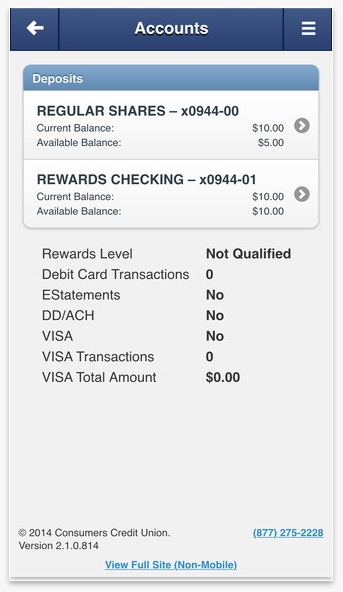
 Updated May 2020. Consumers Credit Union (CCU) has a
 You’ve heard the financial media (and me) talk about the importance of automated savings. Things like recurring 401(k) contributions that don’t require flexing your willpower. Well, the other side of the coin is automated spending. Companies love love love it when you buy their stuff on auto-pilot.

 I lent out my first $25 to a stranger on


 BankAmericard® Credit Card
 BankAmericard Cash Rewards™ Credit Card
 BankAmericard Travel Rewards® Credit Card
 As you’ve probably heard, the Square IPO was completed last week. For a while, I didn’t understand how a company could have a $4 billion valuation when they basically offer a simplified merchant account. They let small businesses accept credit cards, which means they skim a tiny bit off the 2.75% they charge while most of it goes straight to the networks. (Add in their other expenses, and Square has never made a profit.) Wouldn’t you rather own Visa or American Express directly?


 I like the idea of living off dividend and interest income. Who doesn’t? The problem is that you can’t just buy stocks with the highest dividend yields and junk bonds with the highest interest rates without giving up something in return. There are many bad investments lurking out there for desperate retirees looking only at income. My goal is to generate reliable portfolio income by not reaching too far for yield.

 The U.S. Department of the Treasury announced the national launch of


 The Best Credit Card Bonus Offers – 2025
 Big List of Free Stocks from Brokerage Apps
 Best Interest Rates on Cash - 2025
 Free Credit Scores x 3 + Free Credit Monitoring
 Best No Fee 0% APR Balance Transfer Offers
 Little-Known Cellular Data Plans That Can Save Big Money
 How To Haggle Your Cable or Direct TV Bill
 Big List of Free Consumer Data Reports (Credit, Rent, Work)