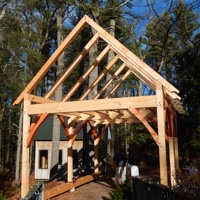
 While listening to a Tim Ferriss podcast with guest Mr. Money Mustache, I came across this quote from John Taylor Gatto in the comments. Apparently Gatto was not a fan of compulsory schooling and offered this instead:
I want to give you a yardstick, a gold standard, by which to measure good schooling. The Shelter Institute in Bath, Maine will teach you how to build a three thousand square-foot, multi-level Cape Cod home in three weeks’ time, whatever your age. If you stay another week, it will show you how to make your own posts and beams; you’ll actually cut them out and set them up. You’ll learn wiring, plumbing, insulation, the works. Twenty thousand people have learned how to build a house there for about the cost of one month’s tuition in public school.
The idea of building your own home is certainly romantic. I was pleased to learn that the Shelter Institute is still going strong, offering a 2-week Design and Build Class that costs $1,500 for one person ($2,500 for a couple) on their 68-acre campus in Maine. I guess people drive or fly there and stay nearby; they have housing options starting at $100 a week. Classes run from 8am to 5:30pm every day:
Intensive courses that provide you with extensive home building knowledge from site planning to foundations, insulation, engineering, design, wiring, plumbing, tool knowledge and the ability to Design and Build. Whether you have been dreaming of building a home or are already heavily involved in the building industry; the Design Build course or the Contract-It-Yourself course will provide a new understanding of construction and confidence in your ability to complete a project.
I gained some additional insight into the general concept of building your own home in Building a Home of Your Own, an article at the Federal Reserve Bank of Boston for some reason:
For those who desire more individual instruction, the Shelter Institute offers intensive one- to three-week classes on all aspects of house construction. In business since 1974, the Shelter Institute has taught 25,000 students who have gone on to build 8,000 homes. “A lot of people come here thinking that there’s some magic thing they have to learn to know how to build a house,” reported Patsy Hennin, the Institute’s co-founder, in a recent interview with Down East magazine, “but there aren’t any secrets. Perseverance is the biggest thing. Gadgets aren’t the answer. It’s not about how to use a hammer; it’s about how to use your head.”
There are many books and “courses” that about building your own home, but I doubt it can replace an interactive environment where you are handling the tools and watching actual houses being built in person. A few similar schools will teach you to build your own log cabin in 5 days or build your own tiny house in a week.
According to 2016 data from the US Census, only about 6% of new single-family homes are “owner-built”, which means built entirely by the landowner or by the landowner acting as his/her own general contractor. A former manager of mine was the general contractor on his own new construction and also did the electrical wiring and other parts himself. I don’t know if I’ll ever build my own home, but I’m happy that there are still DIY folk out there doing such things. These intensive courses sound like a cool vacation idea actually (if someone could watch the kids).
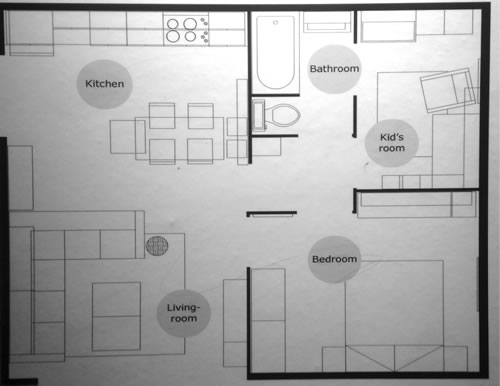
 Another one of my new joys of home ownership is having to worry about termites eating my house from the inside out. Munch munch munch! The previous owners were signed up for something called the Terminix Inspection and Protection Plan, and the bill for next year came in recently so I’m trying to decide whether to renew. According to the Terminix website, it includes

 Next step was to lay down a thin blue foam underlayment on top of the concrete. The underlayment is designed as a moisture barrier between the wood and the concrete, reduces sound, and also adjust for the remaining minor irregularities in the subfloor. We just taped it down with duct tape. Some newer flooring products actually have this already on the bottom of the flooring.
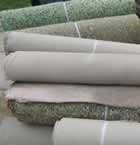 We bought a house with some flaws, and one of them was this shag carpet complete with old pet stains. Before we can install our desired hardwood flooring, we had to remove the dirt magnet. After asking around, the price for professional carpet removal is about $0.35 per square foot. For the 1,500 sf of carpet we had, that’s a potential cost of over $500. Armed with the knowledge and help of our father-in-law, we set forth to do it ourselves.
 The Best Credit Card Bonus Offers – 2025
 Big List of Free Stocks from Brokerage Apps
 Best Interest Rates on Cash - 2025
 Free Credit Scores x 3 + Free Credit Monitoring
 Best No Fee 0% APR Balance Transfer Offers
 Little-Known Cellular Data Plans That Can Save Big Money
 How To Haggle Your Cable or Direct TV Bill
 Big List of Free Consumer Data Reports (Credit, Rent, Work)