LifeX TIPS ETFs: Monthly Inflation-Adjusted Income

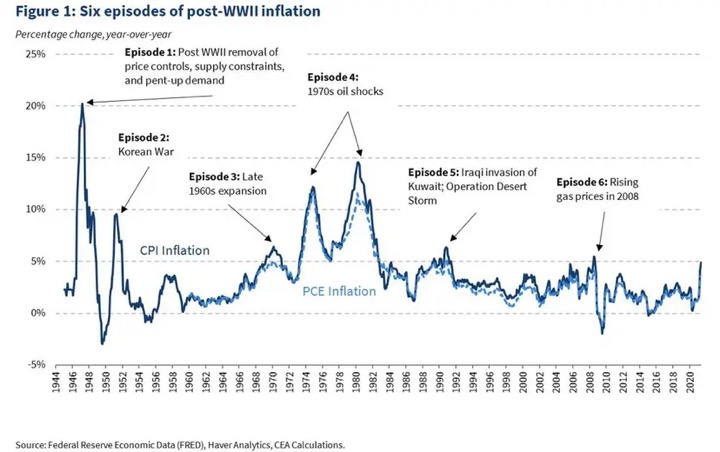
Sometimes it seems like everyone just wants risk these days. Crypto. Sports gambling. Options trading, ETFs that magically yield 10% or more. However, if you’re in the opposite camp and you want the absolute least amount of risk, you’d want to retire off an investment that has a return that is fully-guaranteed, pays out a monthly income like clockwork, is even guaranteed to grow with inflation. Inflation was relatively mild for a long time until recently, but historically it has been a significant risk factor.

If that interests you, check out 3 Ways to Build an Inflation-Adjusted Pension by Allan Roth – which first reminds you that Social Security is exactly this! – but also introduces a new series of LifeX Inflation-Protected Longevity Income ETFs.

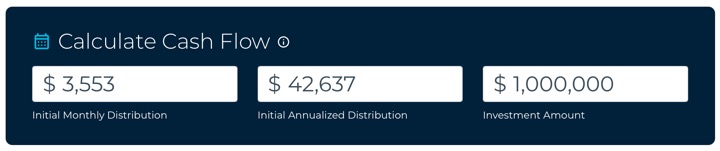
At current rates as of 12/11/25, the LifeX 2055 Inflation-Protected Longevity Income ETF (LIAM) contains a managed portfolio of United States Treasury Inflation Indexed Bonds (TIPS) that can provide you with a 4.26% guaranteed real withdrawal rate for 30 years. That means a $1,000,000 portfolio would distribute roughly $42,600 in annual income this year, but that number would increase with CPI inflation each year for 30 years (through the year 2055). At 3% average inflation, your 30th year’s income would have grown to over $100,000 a year. Of course, inflation could be a lot higher, which is why no private insurance company will sell you inflation protection over such a long period of time.
After those 30 years, you will be left with nothing. Your initial principal will be gone. Therefore, your income taken each year is partially a return of principal.

The expense ratio is 0.25%, which isn’t Vanguard-level but not horrible. I like that it does all of the work for you in a tidy ETF package, as building a TIPS ladder yourself can be a bit tricky (and do you want to keep doing it at age 80, 90?). Of course, I also worry about what happens if you bought a 30-year ladder at 65 and happen to live past 95. It could happen, and remember, this product is meant for the risk-averse folks that like to cover all the bases.

In general, I feel a TIPS ladder or equivalent that adjusts with inflation would work well in combination with a traditional annuity like an SPIA or a deferred longevity annuity that starts at a later age, which doesn’t adjust with inflation but does provide an higher initial fixed income that can last as long as you live. This is what I have set up for my parents – Social Security that rises with inflation, plus a joint income annuity that pays out as long as one is living.

“Junior Roth IRA”? Maximizing the 529-to-Roth IRA Rollover

A new automated investing app called FutureMoney is advertising something called the Junior Roth IRATM with some pretty awesome “key benefits”, according to their site:

– Tax-free growth potential
– No earned income required to make contributions
– Favorable FAFSA impact when funded by grandparents
– Optimized for long-term generational wealth building
– Within certain limits, can be used for education, a first home, or retirement.

Since it doesn’t required earned income, it’s not an official Roth IRA for kids (aka Custodial Roth IRA). Somehow, is this even better?!

A Custodial Roth IRA has maximum annual contribution room of $7,000 per year. By comparison, you can invest up to $35,000 for your child is a minor with a Junior Roth IRA over its lifetime, with no annual limit.

After a bit of poking around on their site, I realized that under the hood it’s just a 529 plan with the expectation that when the option is available, they will roll over the 529 plans assets into a Roth IRA account. I didn’t know you could advertise the combined benefits for two completely different things (529 and Roth IRA), make up a name for this thing that doesn’t actually exist, and then trademark it?

There is so much obfuscation on this site!

What is a Junior Roth IRA?
The Junior Roth IRA™, exclusively offered by FutureMoney, allows you to invest up to $35,000 while your child is under 18 and grow that money tax free into their retirement, based on a 529 plan to Roth IRA rollover.

It’s a 529 plan. Full stop.

Therefore, to see the limitations of this method, simply look up any article about the new option for rolling over unused 529 funds into the beneficiary’s Roth IRA without a tax penalty. Here are important limitations to consider, per the Secure 2.0 Act of 2022.

  • The originating 529 account must have been maintained for the Designated Beneficiary for at least 15 years.
  • The transferred amount must come from contributions made to the 529 account at least five years prior to the 529-to-Roth IRA transfer date.
  • The target Roth IRA must be established in the name of the Designated Beneficiary of the 529 account.
  • The amount transferred to the target Roth IRA is limited to the annual Roth IRA contribution limit. It is not in excess of the normal contribution limit. This means your child does eventually need to have earned income equal to the amount to be rolled over into the Roth IRA.
  • The aggregate amount (total over multiple years) transferred from a 529 account to a Roth IRA may not exceed $35,000 per individual.

I would add that nobody knows what will happen in the “Secure 5.0 act of 2035”. The Roth IRA window might be narrowed, closed, or even opened further. I do think closing it will hard after it’s already been opened, but 15 years can be a long time.

As usual with 529 plans, you can make some pretty impressive claims by combining the power of compounding and a long period of time.

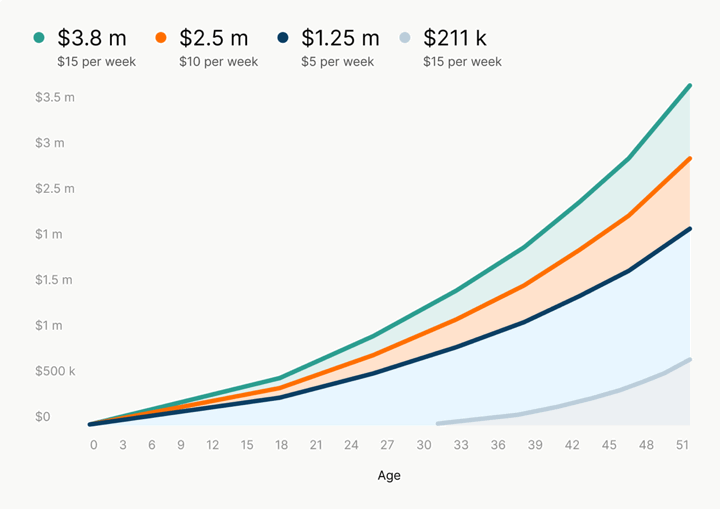
“If a parent invests just $10 a week from their child’s birth to age 18 and then leaves it to grow for 50 years, their child could have a $1 million nest egg, assuming 8% compounding annual returns,” states Dave Fortin, CFA, co-founder of FutureMoney.

Even if it is a 529 plan with a lot of limitations, let’s consider if viewing it as a Roth IRA is actually a good idea. Let’s be honest, this is for relatively rich families that are able to help their kids/grandkids even beyond the enormous, scary cost of a college and post-graduate education. $10 a week ain’t going to do much when college is coming up fast! As they say, the richer you are, the longer your financial time horizon becomes.

For such financially well-off families, I could see this as useful for the years when your child is 16-25. Even though I am a financial nerd now, I didn’t really become financially “aware” until I was 21 years old and didn’t make my first Roth IRA contribution until I was 21 years old. However, I started having “earned income” at age 16 or so. So it may be useful to contribute the money into a Roth IRA at those younger ages (maybe a “parent match”?) when there is a window where they may be earning some money from work, but not enough to be able to defer that money into a Roth IRA on their own.

But again, you can do this with any 529 plan, and the good 529 plans out there already have some low-cost, diversified portfolio options. The Utah plan I picked lets you make a customized glide path using Vanguard and DFA funds. You don’t need this “Junior Roth IRA”.

Savings I Bonds November 2025: 0.90% Fixed Rate, 3.13% Inflation Rate (4.03% Total for First 6 Months)

Update: Savings I Bonds bought from November 1, 2025 to April 30, 2026 will have a fixed rate of 0.90% and inflation rate of 3.13%, for a total composite rate of 4.03% for the first 6 months. Compare the total rate with the current short-term Treasury yields (1-year @ ~3.7%), and compare the fixed rate with the short-term TIPS real yields (5-year @ ~1.3%).

Every existing I Bond will earn this inflation rate of ~3.13% eventually for 6 months; you will need to add your own fixed rate that was set based the initial purchase month. See you again in mid-April for the next early prediction for May 2026.

Original post from 4/11/25:

Savings I Bonds are a unique, low-risk investment backed by the US Treasury that pay out a variable interest rate linked to inflation. With a holding period from 12 months to 30 years, you could own them as an alternative to bank certificates of deposit (they are liquid after 12 months) or bonds in your portfolio.

New inflation numbers were announced (late due to the government shutdown) at BLS.gov, which allows us to make an early prediction of the November 2025 savings bond rates just before the official announcement on the 1st. This also allows the opportunity to know exactly what an October 2025 savings bond purchase will yield over the next 12 months, instead of just 6 months. You can then compare this against a November 2025 purchase.

New inflation rate prediction. May 2025 CPI-U was 319.799. September 2025 CPI-U was 324.800, for a semi-annual inflation rate of 1.56%. Using the official composite rate formula:

Composite rate formula: [Fixed rate + (2 x semiannual inflation rate) + (fixed rate x semiannual inflation rate)]

This results in the variable component of interest rate for the next 6 month cycle being ~3.12 to 3.13%, depending on the fixed rate.

Tips on purchase and redemption. You can’t redeem until after 12 months of ownership, and any redemptions within 5 years incur an interest penalty of the last 3 months of interest. A simple “trick” with I-Bonds is that if you buy at the end of the month, you’ll still get all the interest for the entire month – same as if you bought it in the beginning of the month. It’s best to give yourself a few business days of buffer time. If you miss the cutoff, your effective purchase date will be bumped into the next month. (You should always sell at the very beginning of the month.)

Buying in October 2025. If you buy before the end of October, the fixed rate portion of I-Bonds will be 1.10%. You will be guaranteed a total interest rate of 1.10 + 2.88 = 3.98% for the next 6 months. For the 6 months after that, the total rate will be 1.10 + 3.12 = 4.22%.

Buying in November 2025. If you buy in November 2025, you will get ~3.12% plus a newly-set fixed rate for the first 6 months. The new fixed rate is officially unknown, but is loosely linked to the real yield of short-term TIPS with some reductions. In the previous 10 days, 5-year TIPS real rates have ranged from 1.19% to 1.30%. If I had to guess, I’d put a new fixed rate somewhere between 0.8 to 1.0%, for a total rate of about 4%. Every six months after your purchase, your rate will adjust to your fixed rate (set at purchase) plus a variable rate based on inflation.

If you have an existing I-Bond, the rates reset every 6 months depending on your specific purchase month. Everyone will eventually get this variable rate. Your bond rate = your specific fixed rate (based on purchase month, look it up here) + variable rate (total bond rate has a minimum floor of 0%).

Buy now or wait? Between those two options, if you are a long-term holder, you might grab the 1.1% fixed rate “bird in the hand” in October as the fixed rate will likely be lower in November. If you’re in it for the short-term, you may want to buy in November in case inflation shoots up.

Unique features and benefits! There are definitely reasons to own Series I Savings Bonds, including inflation protection, tax deferral, exemption from state income taxes, and potential tax benefits if used toward qualified educational expenses.

Unique drawbacks! You can only buy new savings bonds through TreasuryDirect.gov, which is limited in its customer service resources and features. There is also no option for paper tax forms nor statements (or even online monthly statements), so your heirs may never know they exist! If they do find it, it may take them several months and a lot of effort to close out all the estate paperwork. If you forget your password, it may take weeks or longer to unlock your account.

If you become a victim to theft or fraudulent activity, they will not replace any lost or stolen savings bonds. They explicitly accept no liability:

§ 363.17 Who is liable if someone else accesses my TreasuryDirect ® account using my password?

You are solely responsible for the confidentiality and use of your account number, password, and any other form(s) of authentication we may require. We will treat any transactions conducted using your password as having been authorized by you. We are not liable for any loss, liability, cost, or expense that you may incur as a result of transactions made using your password.

The juice may not be worth the squeeze when you can own individual Treasury bonds or TIPS within any full-service brokerage account.

I also used to believe that the government would not tamper or attempt to politically influence these BLS CPI statistics that are at the core of many important functions, including Social Security inflation adjustments, TIPS, and these I Savings Bonds. Now I’m not so sure.

Personally, I sold all my savings bonds in 2024 and do not plan to buy any more. I’m older now and I feel the small potential benefit just doesn’t outweigh the small possibility that I could lose the entire amount due to estate-handling mistakes or online hack. I’d rather own TIPS and US Treasuries directly in a full-service brokerage account.

Annual purchase limits. The annual purchase limit is now $10,000 in online I-bonds per Social Security Number. For a couple, that’s $20,000 per year. As of 2025, you can only buy online at TreasuryDirect.gov, after making sure you’re okay with their poor service. (No more tax refund savings bonds.) Technically, the purchase limits are per Social Security Number or Employer Identification Number. For those looking for another way to expand their purchasing power, that means you can also buy for a child, grandchild, LLC, or a trust.

Bottom line. Savings I bonds are a unique, low-risk investment that are linked to inflation and only available to individual investors. You can now only purchase them online at TreasuryDirect.gov. They have both unique benefit and drawbacks. For more background, see the rest of my posts on savings bonds.

[Image: 1942 US Savings Bond poster – source]

Longleaf Partners Fund: Beating the Market Is Harder Than You Think

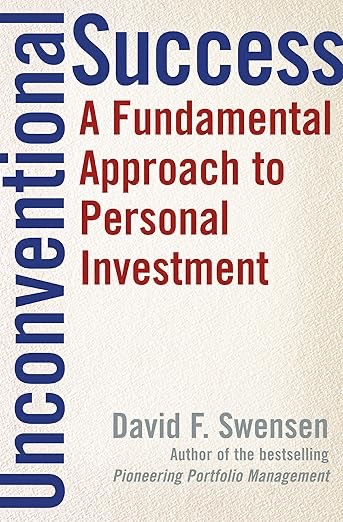
One of the early books that heavily impacted my investing philosophy was Unconventional Success: A Fundamental Approach to Personal Investment by David Swensen. As a very successful (active!) manager of the Yale Endowment, he offered common-sense explanations of why low costs are good and which core asset classes make the most sense to own.

In addition, he pointed out the characteristics to look for in successful active management:

  • Hold a limited number of stocks. Bet boldly on fewer companies (high “active share”), as opposed to being a “closet index fund”.
  • High rate of internal investment. The managers should have a high percentage of their own net worth in the same funds that they ask you to invest in. They should “eat their own cooking.”
  • Limit assets under management. If there is more money flowing in than they can invest efficiently, they should close the fund to avoid asset bloat. This is hard to do, as it requires them to turn down more money! 😮
  • Reasonable management fees. Costs still matter, and the lower the expense ratio, the lower the hurdle to overcome and the more “alpha” ends up in your pocket.

Back in 2005, Swensen specifically named Southeastern Asset Management and their flagship Longleaf Partners Fund (LLPFX) as an example of a company that most clearly displayed all of these characteristics, but also added an important caveat at the end:

Southeastern Asset Management (sponsor of the Longleaf Partners mutual-fund family) exemplifies every fundamentally important, investor-friendly characteristic conducive to active-management success. Portfolio managers exhibit the courage to hold concentrated portfolios, to commit substantial funds side by side with shareholders, to limit assets under management, to show sensitivity to tax consequence, to set fees at reasonable levels, and to shut down funds in the face of diminished investment opportunity.

Even though all the signs point in the right direction, investors still face a host of uncertainties regarding Southeastern’s future active-management success.

So for the last 18 years (!), I have kept up with their quarterly and annual shareholder letters. (You can register for free e-mail updates, even if you don’t own their funds.)

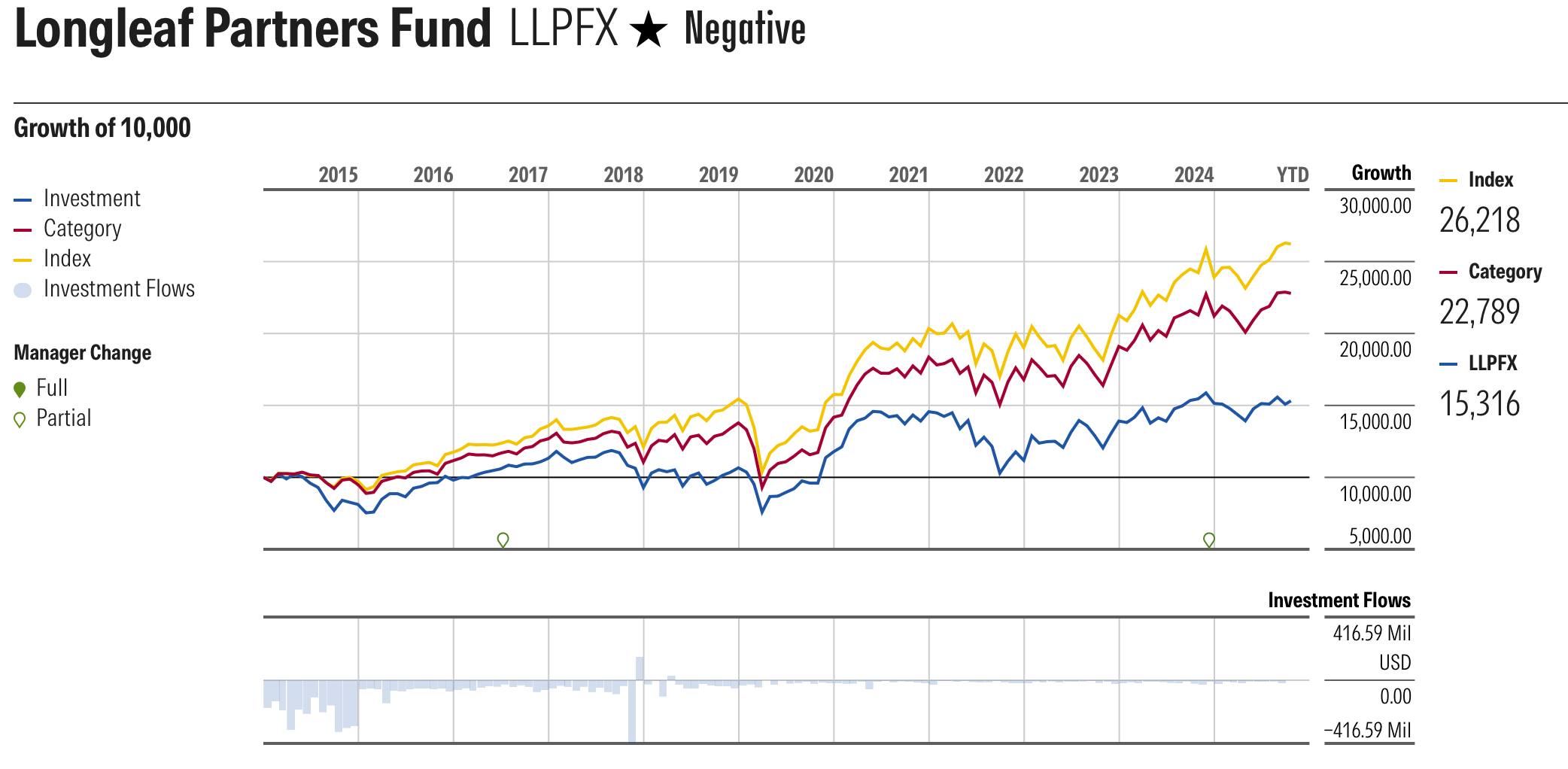
Unfortunately, the performance of the Longleaf Partners Fund for most of that time has been rather dismal. LLPFX is the blue line, while the (no cost) index benchmark (Morningstar US Mid Broad Value TR USD) is yellow, and the category of peers (Mid-Cap Value) is red.

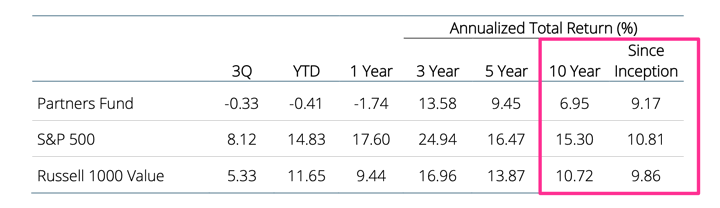
Here are the latest return numbers after Q3 2025:

This fund started out in 1987 and had some great outperformance all the way up through the early 2000s, which is how they became well-known. However, you’ll notice that even including its early success, over the long run it has lagged it’s Large Value index benchmark by very close to its expense ratio. (Costs matter.) If you exclude that part and invested after its early outperformance (or after you read this famous book), then you did much worse.

I am not trying to pick on this fund to be mean. I track them because they showed all the good things to look for in an active manager. They even closed the fund to new money in 2017, which means they gave up easy money when they didn’t have enough things to buy. That’s really rare! I would be happy to see them succeed.

I have access to Morningstar reports via my library, and even today, M* acknowledges that the managers of Longleaf Partners own over $1 million of the fund themselves (“eat their own cooking”), have below-average costs (for an active fund), and have a long average manager tenure (48 years). But yet their “Parent” rating is low because of their poor past performance? In the end, despite all the supposedly different factors they examine, it seems that Morningstar ratings are still primarily about past performance. LLPFX currently has 1 sad star.

For all that I can see, the managers of Longleaf Partners continue to try and do things the “right” way. They are experienced value-investing managers that showed skill and invested only in high-conviction picks. They had early success and the freedom to invest however they chose. They have shown patience and the willingness to avoid asset bloat. But even with all that they did not beat the S&P 500 or even the majority of their fund peers over the last decade.

Bottom line. Finding what has performed well recently by looking backward is easy. Actually beating a low-cost index fund for a 10 to 20+ year period in the future by picking stocks or picking a manager today is very hard, in my opinion much harder than most people like to think. I always try to remember this when I think about investing in something new that I just read about…

MMB Portfolio Dividend & Interest Income – October 2025 Q3 Update

Here’s my 2025 Q3 income update as a companion post to my 2025 Q3 asset allocation & performance update. Even though I don’t focus on high-dividend stocks or covered-call income strategies – I still track the income from my portfolio as an alternative metric to price performance. The total income goes up much more gradually and consistently than the number shown on brokerage statements, which helps encourage consistent investing. Here’s a related quote from Jack Bogle (source):

The true investor will do better if he forgets about the stock market and pays attention to his dividend returns and to the operating results of his companies. – Jack Bogle

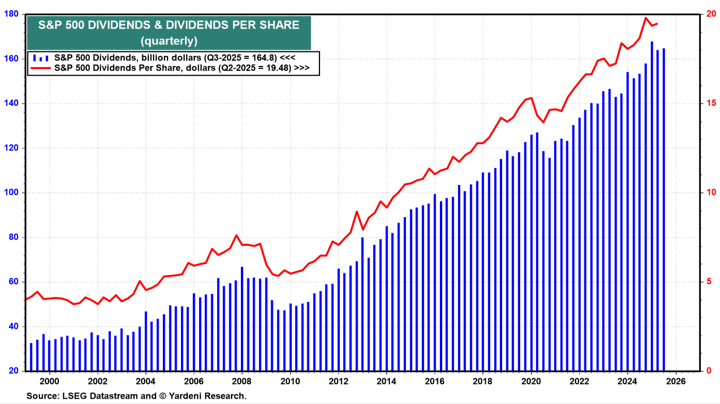
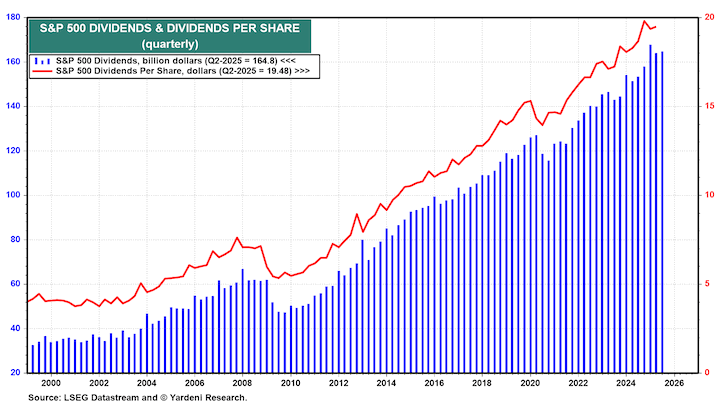
Stock dividends are a portion of profits that businesses have decided to distribute directly to shareholders, as opposed to reinvesting into their business, paying back debt, or buying back shares. They have explicitly decided that they don’t need this money to improve their business, and that it would be better to distribute it to shareholders. The dividends may suffer some short-term drops, but over the long run they have grown faster than inflation.

Here is the historical growth of the S&P 500 total dividend, which tracks roughly the largest 500 stocks in the US, updated as of 2025 Q3 (via Yardeni Research):

Tracking the income from my portfolio. Three of the primary income “trees” that produce income “fruit” in my portfolio are Vanguard Total US Stock ETF (VTI), Vanguard Total International Stock ETF (VXUS), and Vanguard Real Estate Index ETF (VNQ).

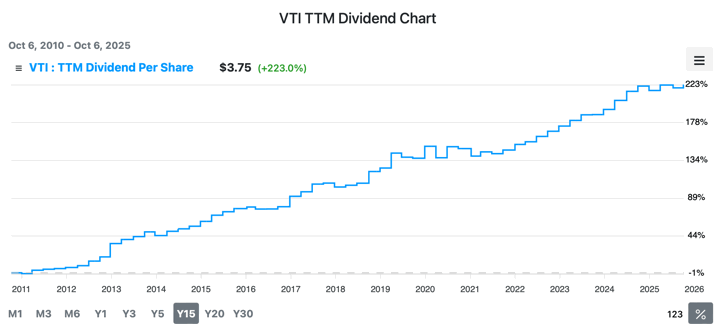
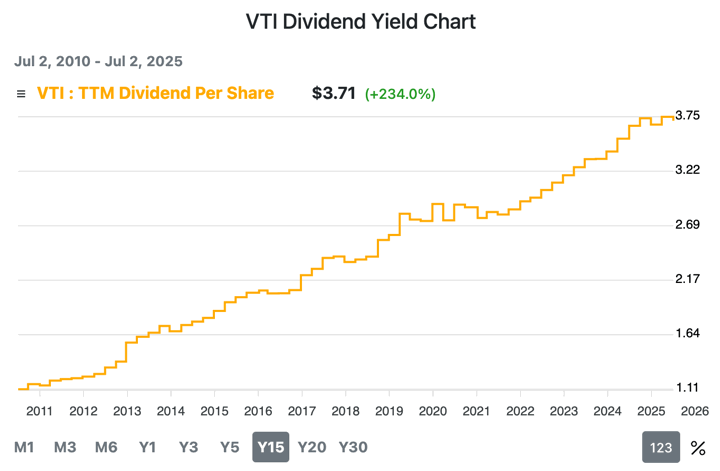
In the US, the dividend culture is somewhat conservative in that shareholders expect dividends to be stable and only go up. Thus the starting yield is lower, but grows more steadily with smaller cuts during hard times. Companies do buybacks as well, often because they are easier to discontinue. Here is an updated chart of the trailing 12-month (ttm) dividend per share over the last 15 years paid by the Vanguard Total US Stock ETF (VTI) via WallStNumbers.com.

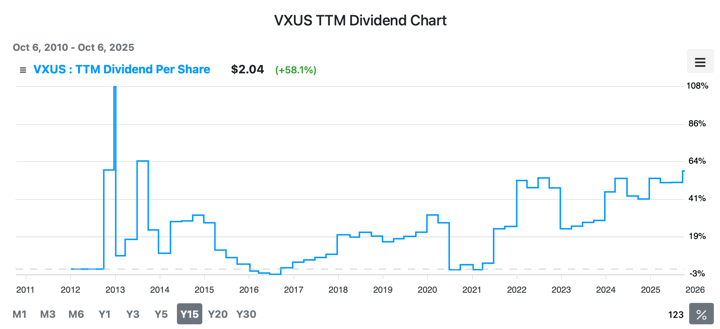
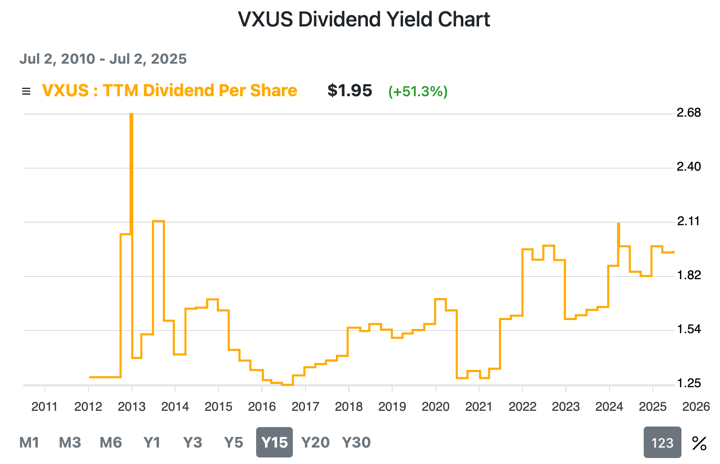
European corporate culture tends to encourage paying out a higher (sometimes even fixed) percentage of earnings as dividends, but that also means the dividends move up and down with earnings. The starting yield is currently higher but may not grow as reliably. Here is an updated chart of the trailing 12-month (ttm) dividend per share over the last 15 years paid by the Vanguard Total International Stock ETF (VXUS).

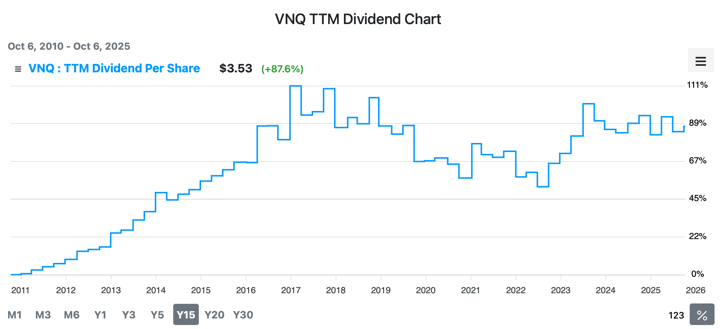
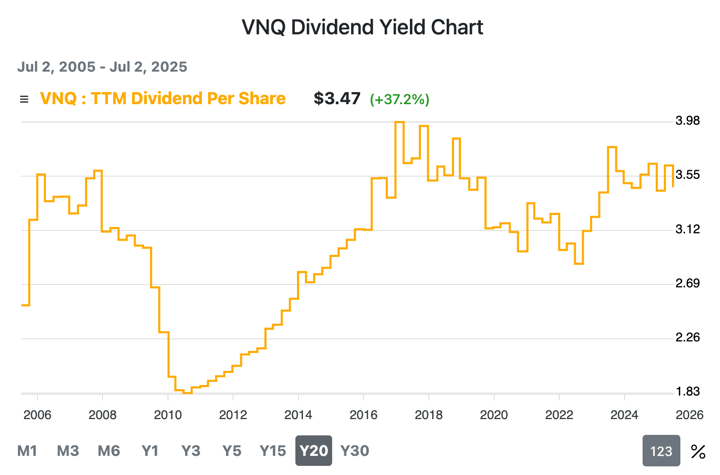
In the case of Real Estate Investment Trusts (REITs), they are legally required to distribute at least 90 percent of their taxable income to shareholders as dividends. Historically, about half of the total return from REITs is from this dividend income. Here is an updated chart of the trailing 12-month (ttm) dividend per share over the last 15 years paid by the Vanguard Real Estate Index ETF (VNQ).

The dividend yield (dividends divided by price) also serve as a rough valuation metric. When stock prices drop, this percentage metric usually goes up – which makes me feel better in a bear market. When stock prices go up, this percentage metric usually goes down, which keeps me from getting too euphoric during a bull market.

Finally, the last income component of my portfolio comes from interest from bonds and cash. Vanguard Short-Term Treasury ETF (VGSH) and Schwab US TIPS ETF (SCHP) are example holdings, with the actual amount varying with the prevailing interest rates, the real rates on TIPS, and the current rate of inflation.

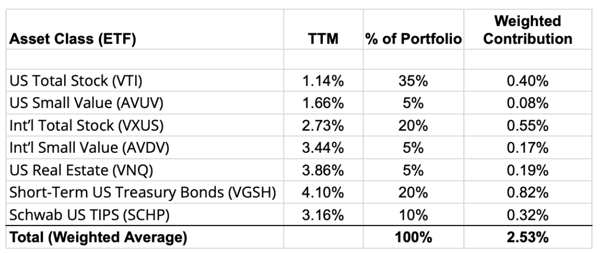
Dividend and interest income yield. To estimate the income from my portfolio, I use the weighted “TTM” or “12-Month Yield” from Morningstar (checked 10/6/24), which is the sum of the trailing 12 months of interest and dividend payments divided by the last month’s ending share price (NAV) plus any capital gains distributed (usually zero for index funds) over the same period. My TTM portfolio yield is now roughly 2.53%.

In dividend investing circles, there is a metric called yield on cost, which is calculated by dividing the current dividend by the original purchase price. In other words, while my portfolio yield today is 2.53%, that is because the current market price is also a lot higher. My yield based on my portfolio value from 10 years ago (October 2015) is over 5%.

What about the 4% rule? For big-picture purposes, I support the simple 4% or 3% rule of thumb, which equates to a target of accumulating roughly 25 to 33 times your annual expenses. I would lean towards a 3% withdrawal rate if you want to retire young (closer to age 50) and a 4% withdrawal rate if retiring at a more traditional age (closer to 65). I don’t enjoy debating this number. It’s just a quick and dirty target to get you started, not a number sent down from the heavens!

During the accumulation stage, your time is better spent focusing on earning potential via better career moves, improving your skillset, networking, and/or looking for asymmetrical (unlimited upside, limited downside) entrepreneurial opportunities where you have an ownership interest.

Our dividends and interest income are not automatically reinvested. They are simply another “paycheck”. As with our other variable paychecks, we can choose to either spend it or invest it again to compound things more quickly. You could use this money to cut back working hours, pursue a different career path, start a new business, take a sabbatical, perform charity or volunteer work, and so on. You don’t have to wait until you hit a magic number. Our life path has been very different because of this philosophy. FIRE is Life!

MMB Portfolio Asset Allocation & Performance – 2025 Q3 Update

Here is my 2025 3rd Quarter portfolio update that includes all our combined 401k/403b/IRAs and taxable brokerage accounts but excludes our house and small side portfolio of self-directed investments. Following the concept of skin in the game, the following is not a recommendation, but a sharing of our actual, imperfect DIY portfolio.

“Never ask anyone for their opinion, forecast, or recommendation. Just ask them what they have in their portfolio.” – Nassim Taleb

How I Track My Portfolio
Here’s how I track my portfolio across multiple brokers and account types:

  • The Empower Personal Dashboard real-time portfolio tracking tools (free) automatically logs into my different accounts, adds up my various balances, tracks my performance, and calculates my overall asset allocation daily. Formerly known as Personal Capital.
  • Once a quarter, I also update my manual Google Spreadsheet (free to copy, instructions) because it helps me calculate how much I need in each asset class to rebalance back towards my target asset allocation. I also create a new sheet each quarter, so I have a personal archive of my portfolio dating back many years.

2025 Q3 Asset Allocation and YTD Performance
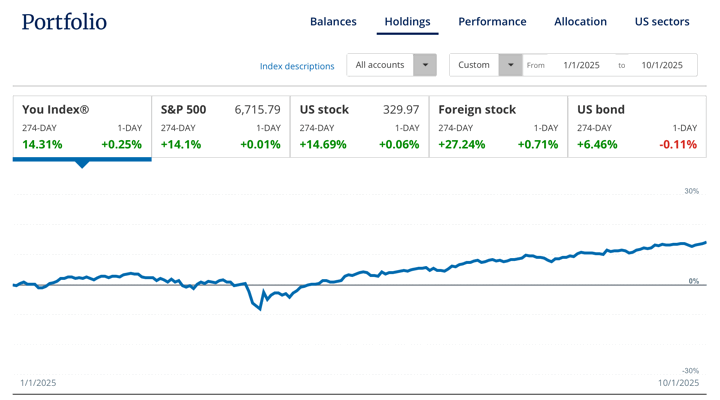
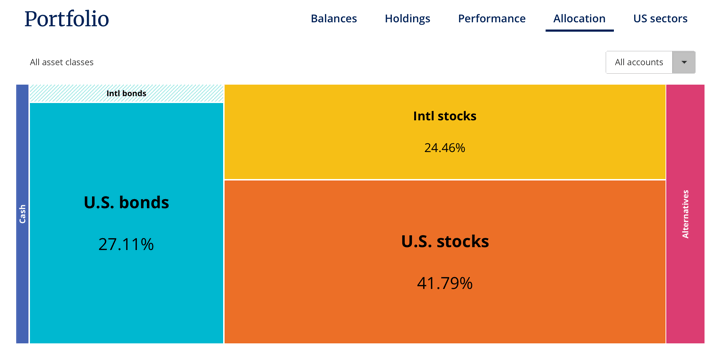
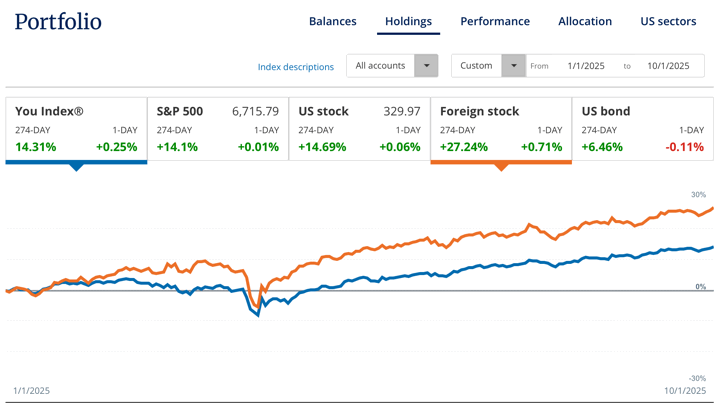
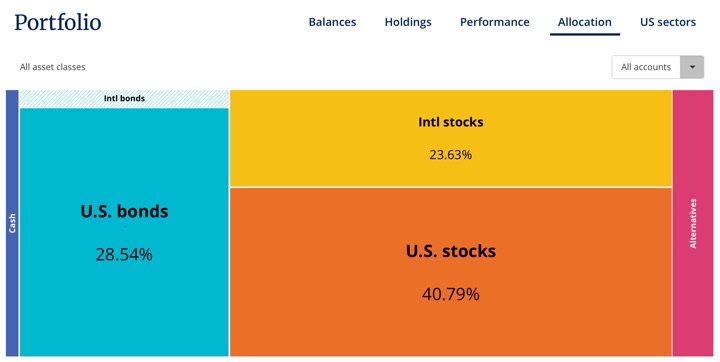
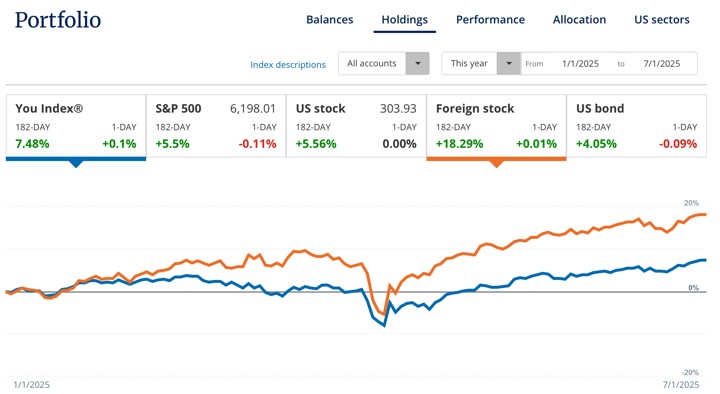
Here and at the top of this post are updated performance and asset allocation charts, per the “Holdings” and “Allocation” tabs of my Empower Personal Dashboard.

The major components of my portfolio are broad index ETFs. I do mix it up a bit around the edges, but not very much. Here is a model version of my target asset allocation with sample ETF holdings for each asset class.

  • 35% US Total Market (VTI)
  • 5% US Small-Cap Value (AVUV)
  • 20% International Total Market (VXUS)
  • 5% International Small-Cap Value (AVDV)
  • 5% US Real Estate (REIT) (VNQ)
  • 20% US “Regular” Treasury Bonds and/or FDIC-insured deposits (VGSH)
  • 10% US Treasury Inflation-Protected Bonds (SCHP)

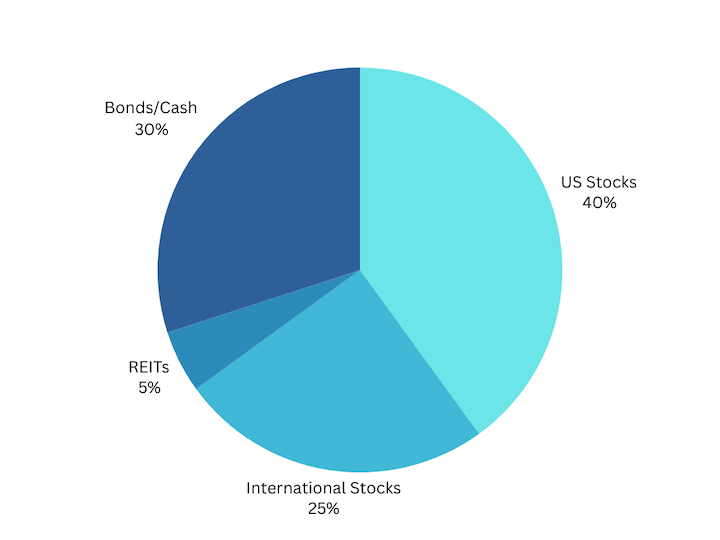
Big picture, it is 70% businesses and 30% very safe bonds/cash:

By paying minimal costs including management fees, transaction spreads, and tax drag, I am trying to essentially guarantee myself above-average net performance over time.

I do not spend a lot of time backtesting various model portfolios. You’ll usually find that whatever model portfolio is popular at the moment just happens to hold the asset class that has been the hottest recently.

The portfolio that you can hold onto through the tough times is the best one for you. I’ve been pretty much holding this same portfolio for 20 years. Check out these ancient posts from 2004 and 2005. Every asset class will eventually have a low period, and you must have strong faith during these periods to earn those historically high returns. You have to keep owning and buying more stocks through the stock market crashes. You have to maintain and even buy more rental properties during a housing crunch, etc. A good sign is that if prices drop, you’ll want to buy more of that asset instead of less. I don’t have strong faith in the long-term results of commodities, gold, or bitcoin – so I don’t own them.

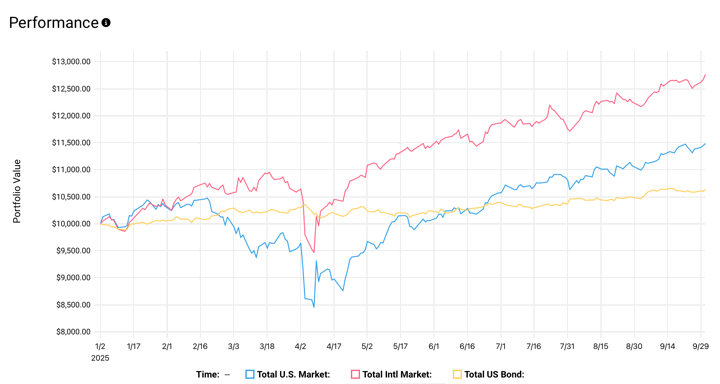
Performance details. According to Empower, the S&P 500 keeps reaching toward all-time highs (+14% YTD) and foreign stocks continued their relative outperformance this year (+27% YTD). I wonder how long this will last?

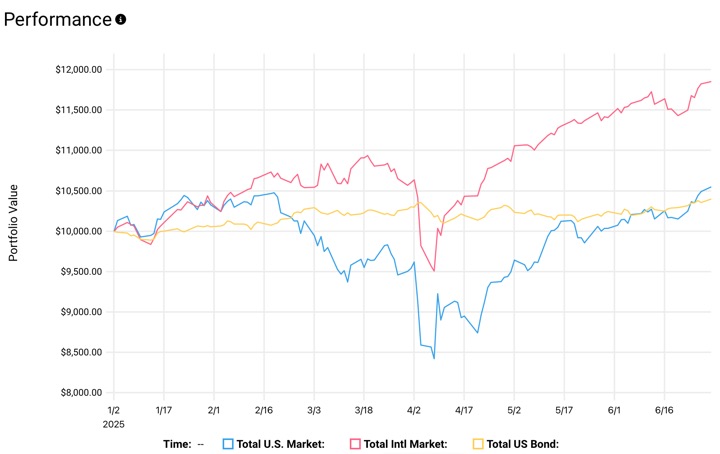
Here’s an updated YTD Growth of $10,000 chart courtesy of Testfolio for some of the major ETFs that shows the difference in performance in the broad indexes:

My portfolio is getting a bit too stock-heavy (a good sign overall I suppose) so I am reinvesting excess income and dividends into bonds. I will stay invested for sure, but will rebalance around the edges. I’ll share about more about the income aspect in a separate post.

401(k) Match Done, Now What? A Retirement Account Priority List

You’ve maxed your company 401(k) match. Now what? Where exactly should you direct your savings? Christine Benz has a short but useful Morningstar article called A Hierarchy for Retirement Savings. The structure reminds me a bit of the Personal Finance Flowchart from Reddit.

The best part of the article is that they explain the exceptions, or at least reasons for de-prioritization, in a clear and concise manner. These exceptions may be uncommon, but they are important to know. I recommend reading the entire article, but here are some quick notes.

  • 401(k) up to the match. Exception: You may not have a match.
  • IRA up to the limit (plus Spousal IRA). Exception: Your 401(k) may be so awesome it’s good enough. 401ks also have better asset protection.
  • 401(k) up to the “normal” limit. Exception: In some limited cases near retirement, the benefits don’t outweigh the restrictions.
  • Health Savings Account (HSA) up to the limit. Exception: You may not be eligible for an HSA.
  • Additional after-tax 401(k) contributions to the “full” deductible limit, if allowed. (AKA “Mega Backdoor Roth”). Exception: Your plan may not offer additional after-tax contributions (only about 1/4 do), or your plan is otherwise extra bad.
  • Taxable brokerage account. The default if nothing else is better.

Photo by Jon Tyson on Unsplash

Vanguard Letter: Choose an Automated Cost Basis Method (MinTax Warning)

Vanguard has been sending out letters to clients with SpecID as their default cost basis tracking method. This letter has caused a lot of confusion. My understanding is that they will no longer let you use SpecID for automated sell transactions, and so you will need to pick a different default cost basis method. Here are possible examples of automated sell transactions:

  • Automatic Withdrawal Plan (AWP), automatically redeems shares from your Vanguard fund account and transfers the funds to your bank account on a regular, recurring basis. Per Vanguard, this service is “ideal for IRA shareholders who are age 59½ or older and want to draw income from their IRAs”. But I’m assuming this works on taxable accounts as well.
  • Vanguard’s free automatic RMD service, which takes out exactly the amount of required minimum distribution each year.
  • Vanguard Digital Advisor and Personal Advisor, which manages and may sell shares to rebalance your portfolio for you.

This change makes intuitive sense as how would Vanguard know which tax lots you want to specify if it’s an automated sale? How did they even do it in the past? I am guessing you have to tell them within a certain window of time.

However, for manual sell transactions, you can still use SpecID and specify exactly which tax lot you want to sell. I don’t have any automated systems set up, so I am not concerned about this change. I will note that Vanguard now only allows SpecID on market orders, and not limit orders. I don’t really understand why this is the case (as long as you don’t have multiple limit orders outstanding), but it is what it is.

Here is the full text of the letter:

Action needed: Choose an automated cost basis method

Dear Vanguard Investor:

We noticed you’ve selected specific identification (SpecID) as your preferred cost basis method for certain holdings in your account. While you’ll still be able to use SpecID for individual transactions, we’re updating our preferred cost basis settings to include these automated methods only:

• FIFO (first in, first out)
• MinTax (minimum tax)
• HIFO (highest in, first out)

This change will take effect in August 2025. If you don’t select one of the automated methods as your preferred cost basis method by then, we’ll automatically set your default to FIFO. You can update your preferred method anytime by logging in to your account at vanguard.com or by contacting Vanguard. This update won’t affect any pending transactions.

Why are we making this change?
SpecID requires you to manually identify specific lots for each sale or transfer, which makes it incompatible with automation. In some cases, such as automatic distributions, IRS rules may default your trade to FIFO if SpecID instructions aren’t provided by the settlement date, which could potentially result in unfavorable tax consequences.

By switching to an automated method, you’ll still have the flexibility to use SpecID at the time of a transaction, while also benefiting from having additional automated options beyond FIFO.

To leam more about cost basis methods and your available options, please visit vanguard.com.

What’s changing on the website?
Your online experience will remain the same. You’ll continue to select your preferred cost basis method on vanguard.com. You can still choose SpeciD when placing a trade or requesting a transfer by updating the cost basis instructions at the time of the transaction using our website or app.

If you don’t update your default from SpeciD to an automated method, we’ll set it to FIFO per IRS rules. Open orders won’t be affected.

If you do have automated sales, which option should you choose? As Vanguard states, each method has its own sets of pro and cons. First, I think it is very important to understand that the “MinTax” algorithm does not guarantee that you end up with the minimum tax owed! It’s a very crude algorithm with the following priorities:

Our system prioritizes your tax savings by selecting to sell securities in the order listed below:

Short-term capital loss from largest to smallest.
Long-term capital loss from largest to smallest.
Short-term zero gain or loss.
Long-term zero gain or loss.
Long-term capital gain from smallest to largest.
Short-term capital gain from the smallest to largest.

This means that MinTax will choose to trigger a $1,000,000 long-term capital gain before a $1 short-term capital gain, simply because the tax *rate* (percentage) is the same or lower on the long-term capital gain. Meanwhile, the absolute tax incurred may be very different – see this real-life example that created a large unwanted tax bill. Mentally, I think of the name as “MinTaxRATE” and not “MinTax”.

Some folks may want to consider the HIFO (Highest In, First Out) method as it minimizes the total capital gains amount, but doesn’t take into account short or long-term holding periods. But again, every situation is different. If you don’t tell Vanguard anything, then FIFO (First in, First Out) is the default, which may create some large capital gains since they will be selling your oldest tax lots. I’d pick MinTax over FIFO.

I will probably choose HIFO, just as the backup setting with no plans to actually use it. I personally don’t like automated selling systems and prefer SpecID as I have complete control as to how many gains I want. For example, sometimes you have some tax brackets to fill, and you may actually want more capital gains in a certain year. Perhaps you have a lot of carryover losses and want to offset them.

MMB Portfolio Dividend & Interest Income – 2025 Q2 Update

Here’s my 2025 Q2 income update as a companion post to my 2025 Q2 asset allocation & performance update. Even though I don’t focus on high-dividend stocks or covered-call income strategies – I still track the income from my portfolio as an alternative metric to price performance. The total income goes up much more gradually and consistently than the number shown on brokerage statements, which helps encourage consistent investing. Here’s a related quote from Jack Bogle (source):

The true investor will do better if he forgets about the stock market and pays attention to his dividend returns and to the operating results of his companies. – Jack Bogle

Stock dividends are a portion of profits that businesses have decided to distribute directly to shareholders, as opposed to reinvesting into their business, paying back debt, or buying back shares. They have explicitly decided that they don’t need this money to improve their business, and that it would be better to distribute it to shareholders. The dividends may suffer some short-term drops, but over the long run they have grown faster than inflation.

Here is the historical growth of the S&P 500 total dividend, which tracks roughly the largest 500 stocks in the US, updated as of 2025 Q2 (via Yardeni Research):

Tracking the income from my portfolio. Three of the primary income “trees” that distribute income in my portfolio are Vanguard Total US Stock ETF (VTI), Vanguard Total International Stock ETF (VXUS), and Vanguard Real Estate Index ETF (VNQ).

In the US, the dividend culture is somewhat conservative in that shareholders expect dividends to be stable and only go up. Thus the starting yield is lower, but grows more steadily with smaller cuts during hard times. Companies do buybacks as well, often because they are easier to discontinue. Here is the updated 2010-2025 chart of the trailing 12-month (ttm) dividend per share paid by the Vanguard Total US Stock ETF (VTI) via WallStNumbers.com.

European corporate culture tends to encourage paying out a higher (sometimes even fixed) percentage of earnings as dividends, but that also means the dividends move up and down with earnings. The starting yield is currently higher but may not grow as reliably. Here is the updated 2010-2025 chart of the trailing 12-month (ttm) dividend per share paid by the Vanguard Total International Stock ETF (VXUS).

In the case of Real Estate Investment Trusts (REITs), they are legally required to distribute at least 90 percent of their taxable income to shareholders as dividends. Historically, about half of the total return from REITs is from this dividend income. Here is the updated 2005-2025 chart of the trailing 12-month (ttm) dividend per share paid by the Vanguard Real Estate Index ETF (VNQ). I extended this one out because the history was available to go beyond the 2008 Financial Crisis.

The dividend yield (dividends divided by price) also serve as a rough valuation metric. When stock prices drop, this percentage metric usually goes up – which makes me feel better in a bear market. When stock prices go up, this percentage metric usually goes down, which keeps me from getting too euphoric during a bull market.

Finally, the last income component of my portfolio comes from interest from bonds and cash. Vanguard Short-Term Treasury ETF (VGSH) and Schwab US TIPS ETF (SCHP) are example holdings, with the actual amount varying with the prevailing interest rates, the real rates on TIPS, and the current rate of inflation.

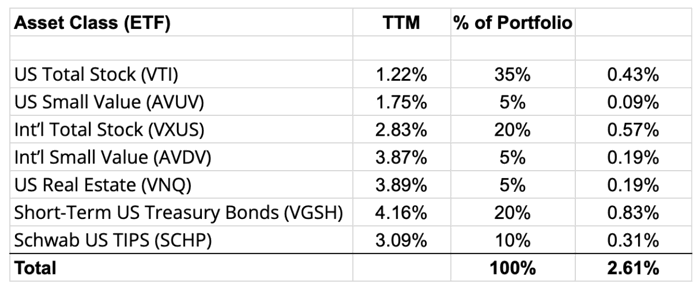
Dividend and interest income yield. To estimate the income from my portfolio, I use the weighted “TTM” or “12-Month Yield” from Morningstar (checked 7/3/24), which is the sum of the trailing 12 months of interest and dividend payments divided by the last month’s ending share price (NAV) plus any capital gains distributed (usually zero for index funds) over the same period. My TTM portfolio yield is now roughly 2.61%.

In dividend investing circles, there is a metric called yield on cost, which is calculated by dividing the current dividend by the original purchase price. In other words, while my portfolio yield today is 2.61%, that is because the current market price is also a lot higher. The yield-on-cost based on say 10 years ago, may be on the order of 5% or so. 2.61% may not seem like a lot today, but as you watch it grow it feels very powerful.

What about the 4% rule? For big-picture purposes, I support the simple 4% or 3% rule of thumb, which equates to a target of accumulating roughly 25 to 33 times your annual expenses. I would lean towards a 3% withdrawal rate if you want to retire young (closer to age 50) and a 4% withdrawal rate if retiring at a more traditional age (closer to 65). I don’t enjoy debating this number. It’s just a quick and dirty target to get you started, not a number sent down from the heavens! You will always have time to adjust later.

During the accumulation stage, your time is better spent focusing on earning potential via better career moves, improving your skillset, networking, and/or looking for asymmetrical (unlimited upside, limited downside) entrepreneurial opportunities where you have an ownership interest.

Our dividends and interest income are not automatically reinvested. They are simply another “paycheck”. As with our other variable paychecks, we can choose to either spend it or invest it again to compound things more quickly. You could use this money to cut back working hours, pursue a different career path, start a new business, take a sabbatical, perform charity or volunteer work, and so on. You don’t have to wait until you hit a magic number. Our life path is very different because of this philosophy. FIRE is Life!

MMB Portfolio Asset Allocation & Performance – 2025 Q2 Update

I try to limit checking my portfolio to once a quarter, and this is my 2025 Q2 update that includes our combined 401k/403b/IRAs and taxable brokerage accounts but excludes our house and side portfolio of self-directed investments. Following the concept of skin in the game, the following is not a recommendation, but a sharing of our actual, imperfect DIY portfolio.

“Never ask anyone for their opinion, forecast, or recommendation. Just ask them what they have in their portfolio.” – Nassim Taleb

How I Track My Portfolio
Here’s how I track my portfolio across multiple brokers and account types:

  • The Empower Personal Dashboard real-time portfolio tracking tools (free) automatically logs into my different accounts, adds up my various balances, tracks my performance, and calculates my overall asset allocation daily. Formerly known as Personal Capital.
  • Once a quarter, I also update my manual Google Spreadsheet (free to copy, instructions) because it helps me calculate how much I need in each asset class to rebalance back towards my target asset allocation. I also create a new sheet each quarter, so I have a personal archive of my net worth dating back many years.

2025 Q2 Asset Allocation and YTD Performance
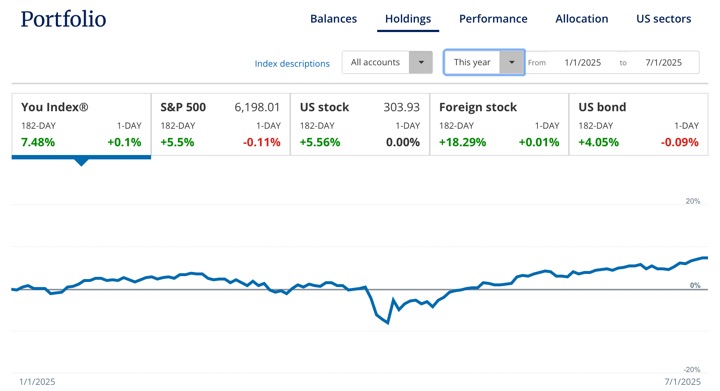
At the top of this post are updated performance and asset allocation charts, per the “Holdings” and “Allocation” tabs of my Empower Personal Dashboard.

The major components of my portfolio are broad index ETFs. I do mix it up a bit around the edges, but not very much. Here is a model version of my target asset allocation with sample ETF holdings for each asset class.

  • 35% US Total Market (VTI)
  • 5% US Small-Cap Value (AVUV)
  • 20% International Total Market (VXUS)
  • 5% International Small-Cap Value (AVDV)
  • 5% US Real Estate (REIT) (VNQ)
  • 20% US “Regular” Treasury Bonds and/or FDIC-insured deposits (VGSH)
  • 10% US Treasury Inflation-Protected Bonds (SCHP)

Big picture, it is 70% businesses and 30% very safe bonds/cash:

By paying minimal costs including management fees, transaction spreads, and tax drag, I am trying to essentially guarantee myself above-average net performance over time.

I do not spend a lot of time backtesting various model portfolios. You’ll usually find that whatever model portfolio is popular at the moment just happens to hold the asset class that has been the hottest recently.

The portfolio that you can hold onto through the tough times is the best one for you. I’ve been pretty much holding this same portfolio for 20 years. Check out these ancient posts from 2004 and 2005. Every asset class will eventually have a low period, and you must have strong faith during these periods to earn those historically high returns. You have to keep owning and buying more stocks through the stock market crashes. You have to maintain and even buy more rental properties during a housing crunch, etc. A good sign is that if prices drop, you’ll want to buy more of that asset instead of less. I don’t have strong faith in the long-term results of commodities, gold, or bitcoin – so I don’t own them.

Performance details. According to Empower, the S&P 500 bounced back from it’s earlier drop and foreign stocks continued their excellent performance this year (up over 18% YTD). Rather refreshing that international diversification is boosting my portfolio returns instead of dragging them down! 🌍

Over the last quarter, here’s a Growth of $10,000 chart courtesy of Testfolio for some of the major ETFs that shows the difference in performance in the broad indexes:

As is usually the case, just a few buy transactions to reinvest excess dividends and interest towards rebalancing the portfolio. No sell transactions at all.

I’ll share about more about the income aspect in a separate post.

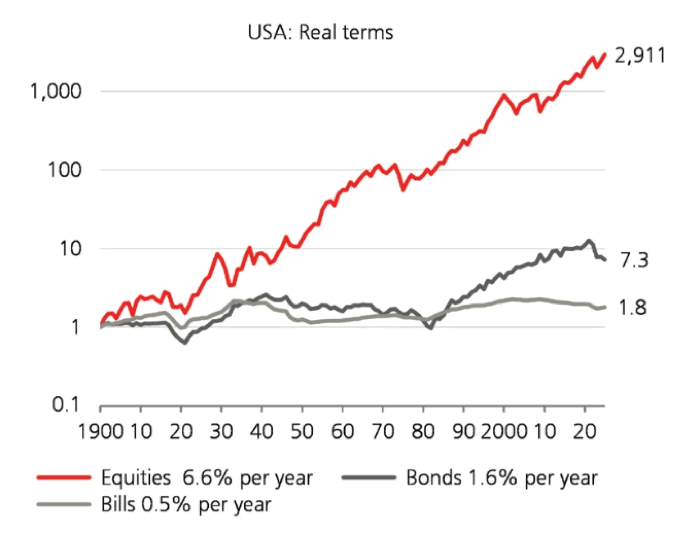
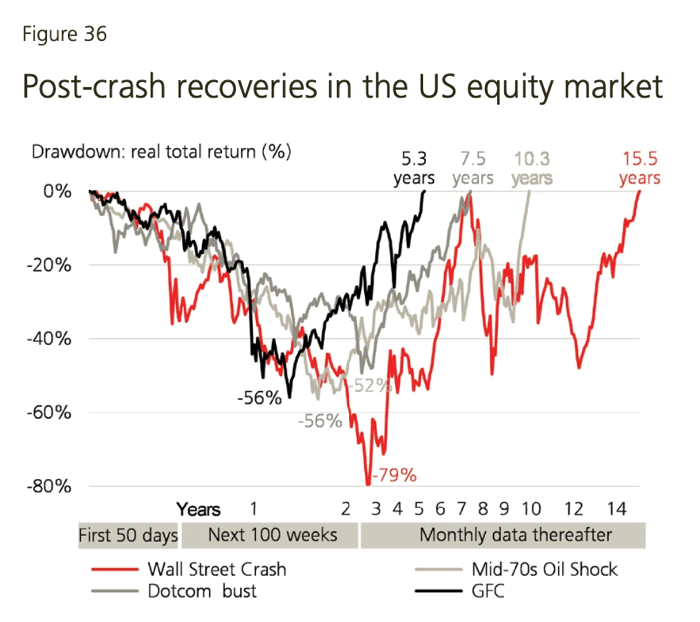
UBS Global Investment Returns Yearbook: 125 Years of Market History (1900-2025)

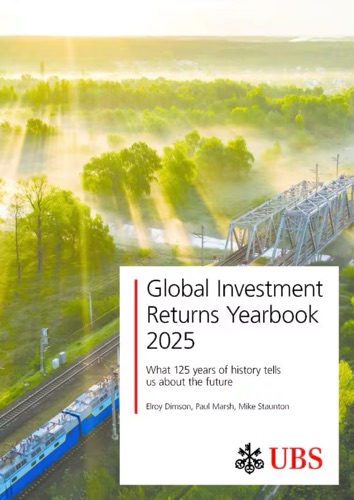
The 2025 edition of the UBS Global Investment Returns Yearbook is available for free download in a 22-page PDF with 10 Key Insights on the UBS website. This annual publication provides an excellent “big picture” overview of the last 125 years of market history, and serves as a partial antidote to all the junk we are bombarded with about what happened in the the last 24 hours.

UBS Global Investment Returns Yearbook documents long-run returns on stocks, bonds, bills, currencies and other assets since 1900. Its goal is to inform investors about long-run historical performance, to interpret it, analyze it, learn from it, and help illuminate current concerns.

I definitely recommend downloading the report and at least scrolling through the historical charts and headline insights. The lessons may be familiar, but they are a good reminder of what builds wealth over the long run.

  • The composition of the stock market changes significantly over time.
  • Stock outperformance over bonds and cash over the long run is huge.
  • Patience is required to capture this outperformance from stocks.
  • Diversification can help, but it’s not guaranteed.

Best Broker for DIY Investors? Customer Satisfaction Survey Results 2025

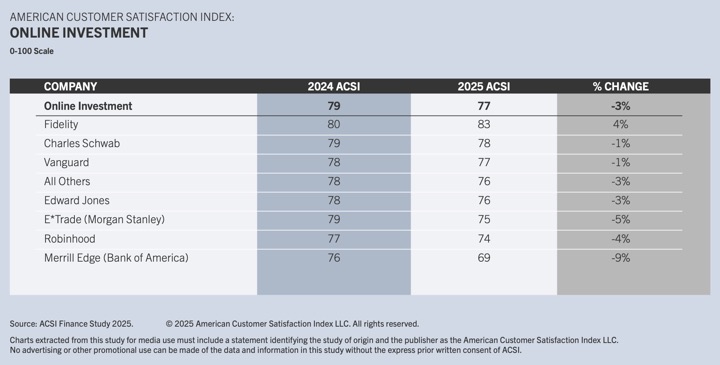
The American Customer Satisfaction Index (ACSI) is a “national cross-industry measure of customer satisfaction” and they recently released their survey results on the finance vertical. Below are their rankings for “online investment”, which covers the major brokers for do-it-yourself investors. Measured categories include mobile app quality, customer service, and research tools.

#1 Fidelity was at the top both this year and last year, but the main difference from the previous years is the significantly increased gap between Fidelity and the rest of the field, notably #2 (Schwab) and #3 (Vanguard). Morgan Stanley/E-Trade and Merrill Edge also had big drops.

The majority of my assets remain split between Fidelity and Vanguard, and over time I actually like having the features of both. See also: AI Pioneer Divides Assets Across Multiple Banks and Brokerages.

Sources: RIABiz, ASCI Press Release.