Search Results for: High Interest Savings

MMB Portfolio Asset Allocation & Performance Update – October 2023

Here’s my quarterly update on my current investment holdings as of October 2023, including all of our combined 401k/403b/IRAs and taxable brokerage accounts but excluding our primary residence and side portfolio of self-directed investments. Following the concept of skin in the game, the following is not a recommendation, but a sharing of our real-world, imperfect, low-cost, diversified DIY portfolio.

“Never ask anyone for their opinion, forecast, or recommendation. Just ask them what they have in their portfolio.” – Nassim Taleb

How I Track My Portfolio
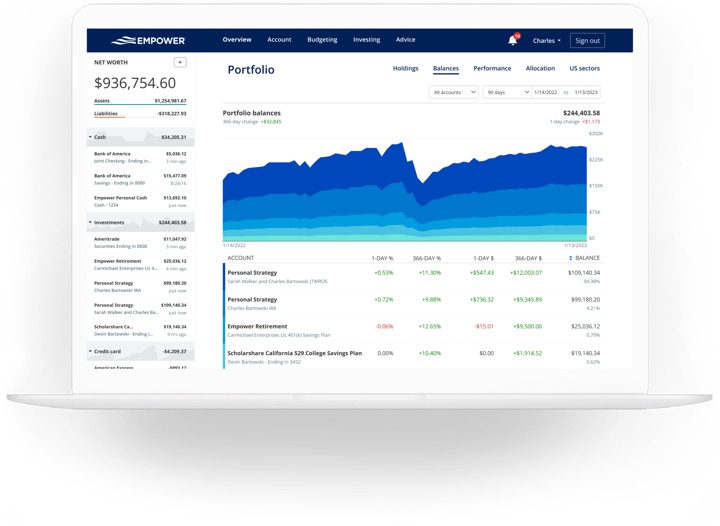
Here’s how I track my portfolio across multiple brokers and account types. There are limited free advanced options after Morningstar discontinued free access to their portfolio tracker. I use both Empower Personal Dashboard (previously known as Personal Capital) and a custom Google Spreadsheet to track my investment holdings:

  • The Empower Personal Dashboard real-time portfolio tracking tools (free) automatically logs into my different accounts, adds up my various balances, tracks my performance, and calculates my overall asset allocation daily.
  • Once a quarter, I also update my manual Google Spreadsheet (free to copy, instructions) because it helps me calculate how much I need in each asset class to rebalance back towards my target asset allocation. I also create a new tab each quarter, so I have an archive of my holdings dating back many years.

2023 Q2 Asset Allocation and YTD Performance
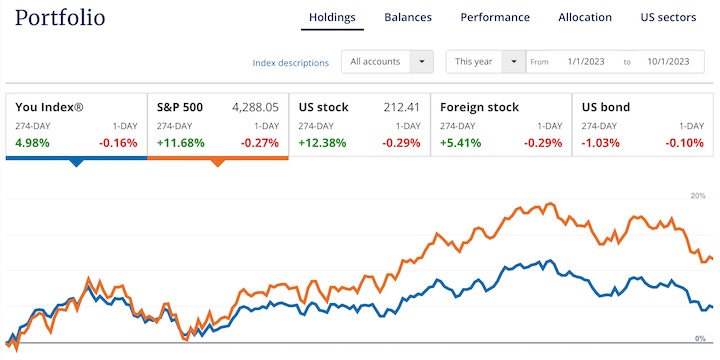
Here are updated performance and asset allocation charts, per the “Holdings” and “Allocation” tabs of my Empower Personal Dashboard.
Humble Portfolio Background. I call this my “Humble Portfolio” because it accepts the repeated findings that the ability to buy and sell stocks and exceed the performance of basically doing nothing is exceedingly rare. Charlie Munger believes that only 5% of professional money managers have the skill required to consistently beat the index averages after costs.

Instead, by paying minimal costs including management fees, transaction spreads, and tax drag, you can essentially guarantee yourself above-average net performance over time.

I own broad, low-cost exposure to productive assets that will provide long-term returns above inflation, distribute income via dividends and interest, and finally offer some historical tendencies to balance each other out. I have faith in the long-term benefit of owning businesses worldwide, as well as the stability of high-quality US Treasury debt. My stock holdings roughly follow the total world market cap breakdown at roughly 60% US and 40% ex-US. I add just a little “spice” to the broad funds with the inclusion of “small value” ETFs for US, Developed International, and Emerging Markets stocks as well as additional real estate exposure through US REITs.

I strongly believe in the importance of knowing WHY you own something. Every asset class will eventually have a low period, and you must have strong faith during these periods to truly make your money. You have to keep owning and buying more stocks through the stock market crashes. You have to maintain and even buy more rental properties during a housing crunch, etc. A good sign is that if prices drop, you’ll want to buy more of that asset instead of less. I don’t have strong faith in the long-term results of commodities, gold, or bitcoin – so I don’t own them.

I do not spend a lot of time backtesting various model portfolios, as I don’t think picking through the details of the recent past will necessarily create superior future returns. You’ll find that whatever model portfolio is popular in the moment just happens to hold the asset class that has been the hottest recently as well.

Find productive assets that you believe in and understand, and just keep buying them through the ups and downs. Mine may be different than yours.

I have settled into a long-term target ratio of roughly 70% stocks and 30% bonds (or 2:1 ratio) within our investment strategy of buy, hold, and occasionally rebalance. My goal is more “perpetual income portfolio” as opposed to the more common “build up a big stash and hope it lasts until I die” portfolio. My target withdrawal rate is 3% or less. Here is a round-number breakdown of my target asset allocation.

  • 30% US Total Market (ex. VTI)
  • 5% US Small-Cap Value (ex. VBR)
  • 20% International Total Market (ex. VXUS)
  • 5% International Small-Cap Value (ex. AVDV)
  • 10% US Real Estate (REIT) (ex. VWO)
  • 15% US Treasury Nominal Bonds or FDIC-insured deposits
  • 15% US Treasury Inflation-Protected Bonds (or I Savings Bonds)

Details. According to Empower, my portfolio is up about 5.0% YTD to 10/1/2023. The S&P 500 is up 11.7% YTD, while the US Bond index is down around 1%.

The most notable action this quarter has been… inaction. There was only minor rebalancing via new purchases with cashflows (mostly dividends) this quarter. I haven’t bought any new ETF tickers or sold a single share of anything. I am considering increasing my estimated tax payments to the IRS to compensate for the extra interest being earned on my FDIC-insured savings accounts and Treasury bonds.

I’ll share about more about the income aspect in a separate post.
Vanguard Cash Plus Account Review: FDIC-Insured, But Missing Useful Features

Vanguard has been piloting some new products recently, and I was finally invited to try out the Vanguard Cash Plus Account. I’ve been playing with it for a few days and here are my thoughts. First, it’s important to note that there are two separate FDIC-insured products available from Vanguard:

  • Vanguard Cash Deposit – This is a new option for the settlement fund (default cash sweep) in your brokerage account. The interest rate has historically been lower than Cash Plus. 3.70% APY as of 8/28/23. You can make immediate trades straight from the funds in this account. FDIC insurance up to $1.25 million ($2.5 million for joint accounts).
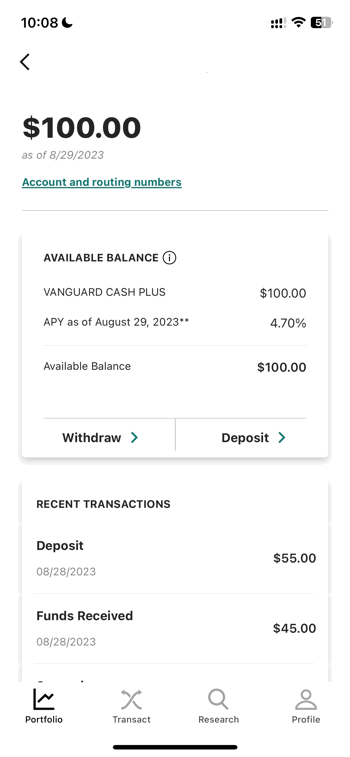
  • Vanguard Cash Plus Account – This is a separate FDIC-insured account with a historically higher interest rate that is not a settlement account. 4.70% APY as of 8/28/23. It is meant as an alternative to a bank savings account and allows incoming ACH direct deposits and ACH withdrawals. FDIC insurance up to $1.25 million ($2.5 million for joint accounts).

Invitation and opening process. I received a physical mailer with an invitation last week, but the application was all online. The invitations are sent to individuals, and if you want to open a joint account, the joint owner must also have a Vanguard brokerage account. The implication is that this product is meant for existing Vanguard brokerage customers only, not as a standalone product.

Features. This is not a full-featured account, but a pretty minimalist FDIC-insured savings account. No minimum balance, no monthly fees. You get a routing number and account number (routing number is 242071583 which turns out to be PNC Bank NA, their bank partner.

It’s important to note all that is not included:

  • No ATM or debit card. (No ATM rebates.)
  • No checkwriting. (I did find mobile check deposit on the app.)
  • No online bill payment service. (You can use your account number to link at your credit card’s website for example, but there is no in-house system.)
  • No automated recurring transfers.
  • No ability to use your money market fund as a backup overdraft source.

Historical note: For a while, Vanguard did offer an “Advantage” account to select customers which did include all these things, but they abruptly discontinued it in 2019. So Vanguard is definitely intentionally leaving all these features out.

Basically, you get to make ACH direct deposits and ACH withdrawals. This enables the direct deposit of paychecks, Social Security, pensions, PayPal/Venmo transfers, and pay bills through vendor websites.

You might think that since it is a Vanguard account, you could use the funds in Cash Plus directly to buy some Vanguard ETFs or mutual funds. Not quite. First, all accounts must be “like registered” for you to transfer from Cash Plus. I am not allowed to transfer to my trust accounts. Second, you must manually transfer the money over, and then it should be available the same day. I found this statement in one place:

A transfer from a Cash Plus Account into a Vanguard Brokerage Account will settle by the next business day, but will be available for trading immediately.

But a slightly different one on their public FAQ:

How long will it take to move my cash from one account to another?

Transfers (including from one Vanguard account to another) generally take 2–3 business days, but at times may be quicker.

The competition. This is a supplemental Vanguard account meant to add functionality for existing Vanguard customers. However, I must point out that Fidelity has included a much higher level of functionality for its customers for a long time.

The plain taxable Fidelity brokerage account will also provide you account and routing numbers so that you can perform ACH deposits and withdrawals. Their core options (settlement fund) also include an FDIC-insured option with lower interest rate, but you can use a money market mutual fund like SPAXX that currently has a 4.98% yield.

But Fidelity also includes a nice bill payment interface, ATM debit card, checkwriting (with free checks), and mobile check deposit all within their standard brokerage account. (Fidelity also includes domestic and international ATM rebates if you have at least $250k in total assets with them. The alternative Fidelity Cash Management Account does include ATM rebates with no minimum balance requirement, but takes a bit more work to manage the cash optimally by manually purchasing their money market funds. I’ll leave the details for another review.)

Basically, if you are the type to want an all-in-one banking solution, Fidelity has already been doing it for years and years with more features. I feel that Fidelity’s customer service is also much better than Vanguard’s.

The Cash Plus account appeals to a niche customer. You are a loyal Vanguard customer that wants the added functionality from a basic high-yield savings account with bank routing and account numbers. You want one that shows up when you log into Vanguard, so you don’t have to log into another bank. The interest rate is pretty good and should stay that way, but still lower than Vanguard’s own money market funds. Maybe you want that FDIC-insurance. Finally, you are satisfied with Vanguard’s level of customer service these days. In my experience, the differences in hold times between Vanguard and Fidelity is simply night and day.

Will I actually use it? Honestly, it’s kind of hard to get excited that Vanguard is offering a barebones FDIC-insured savings account like ING Direct in 2023. I’d love to see the Cash Plus APY as the standard settlement fund along with account/routing numbers. They could even add the other features like ATM debit cards, but I don’t think they can handle the customer service level required. Instead, we just get this little step forward.

Mostly, I don’t need the FDIC insurance as I have full faith in the Vanguard Federal Money Market Fund (VMFXX, 5.28% yield as of 8/28/23) and Vanguard Treasury Money Market Fund (VUSXX, 5.19% yield as of 8/28/23) which both offer much higher interest rates and partial state income tax deductions. These are perfectly acceptable as my “savings accounts”. Stay lean Vanguard, just take the customer service back to the acceptable levels you had before your huge growth.

For now, my plan is to simply keep my Cash Plus account open with minimal activity in case one day the APY is higher than the money market alternatives.

Money Market Mutual Funds, Repurchase Agreements, and State/Local Tax Exemptions

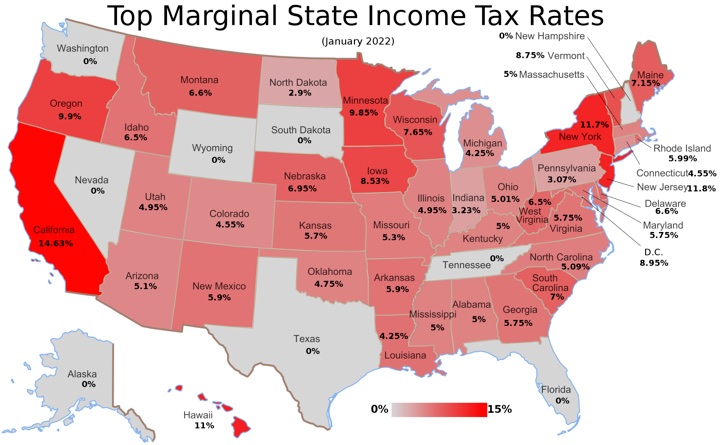
If you live in a state that taxes interest income, you may know that can significantly alter the net after-tax yield on your investments. This is because direct U.S. government obligations like Treasury bills and bonds are generally exempt from taxation in most states. For example, if a Treasury bill is yielding 5% but is exempt from a 8% state income tax, that would make it the equivalent after-tax yield of a bank CD at 5.65% APY (assuming 22% federal tax rate). That’s a pretty big difference! See Treasury Bond vs. Bank CD Rates: Adjusting For State and Local Income Taxes for details.

Money market mutual funds (available in most brokerage accounts) usually hold part of their portfolio in securities that count as US government obligations (USGO). (See Vanguard Federal Money Market Fund: How to Claim Your State Income Tax Exemption.)

For the 2022 tax year, Vanguard Federal Money Market Fund (VMFXX) had about 38% in USGOs, but the Vanguard Treasury Money Market Fund (VUSXX) had 100% in USGOs (source). As long as the yields were pretty close, your after-tax yield would be much higher with the Treasury Money Market fund if you were in a high state/local tax bracket. (VMFXX is the default sweep though, so you’d have to manually purchase VUSXX.)

However, these USGO percentages can change from year to year, and it is happening in 2023. A quick rewind – here is a list of what is and is not exempt from state and local taxes.

*Investments in U.S. government obligations may include the following: Federal Farm Credit Banks, Federal Home Loan Banks, the Student Loan Marketing Association, the Tennessee Valley Authority, the U.S. Treasury Department (bonds, notes, bills, certificates, and savings bonds), and certain other U.S. government obligations. GNMA, FNMA, Freddie Mac, repurchase agreements, and certain other securities are generally subject to state and local taxes.

In particular, even though the Vanguard Treasury Money Market Fund has “Treasury” in its name, it doesn’t only hold Treasury Bonds. It can also hold something called repurchase agreements (“repos”). These are often sold on a very short-term basis (overnight or less than 48 hours). While a repo is considered a very, very safe loan backed by government securities, it is not itself a government security, which means the income it creates is taxable at the state and income level.

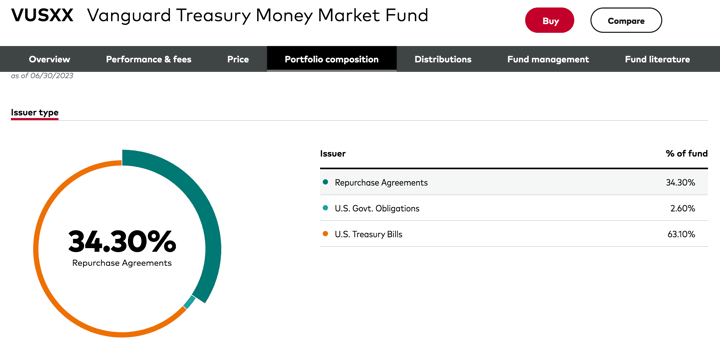
As of July 2023, here is the percentage of repurchase agreements held by these two example money market funds: 58% for VMFXX and 34% for VUSXX. This would suggest that the USGO number for VUSXX will be significantly less than 100% for 2023, although VUSXX still holds less repos than VMFXX.

For an in-depth comparison, “retiringwhen” of the Bogleheads forum has created a detailed Google Spreadsheet that tracks and calculates the after-tax yields for several different money market funds from Vanguard and Fidelity. I would point out that the low expense ratio of Vanguard funds makes their money market funds consistently better than Fidelity money market funds across the board.

I also hold some Treasury bonds directly and while laddering isn’t that much hassle, recently I have been considering simplifying to VMFXX and VUSXX as the go-to place for my liquid cash savings account. For now, the tax-equivalent yield is higher than nearly all other savings accounts due to my high state-tax situation. I am also looking at ETFs that hold mostly T-bills like SGOV and BIL.

Bottom line. If you want to be precise, the full-geek DIY investor with state/local income taxes has to take into account the percentage of repos in their money market fund portfolios in order to calculate the true tax-equivalent yield to compare against other cash alternatives.

[Top image credit – Wikipedia]

MMB Portfolio 2023 2nd Quarter Update: Asset Allocation & Performance

Here’s my quarterly update on my current investment holdings at the end of 2023 Q2, including our 401k/403b/IRAs and taxable brokerage accounts but excluding our primary residence and side portfolio of self-directed investments. Following the concept of skin in the game, the following is not a recommendation, but a sharing of our real-world, imperfect, low-cost, diversified DIY portfolio.

“Never ask anyone for their opinion, forecast, or recommendation. Just ask them what they have in their portfolio.” – Nassim Taleb

How I Track My Portfolio
Here’s how I track my portfolio across multiple brokers and account types. There are limited free options after Morningstar discontinued free access to their portfolio tracker. I use both Empower Personal Dashboard (previously known as Personal Capital) and a custom Google Spreadsheet to track my investment holdings:

  • The Empower Personal Dashboard real-time portfolio tracking tools (free) automatically logs into my different accounts, adds up my various balances, tracks my performance, and calculates my overall asset allocation daily.
  • Once a quarter, I also update my manual Google Spreadsheet (free to copy, instructions) because it helps me calculate how much I need in each asset class to rebalance back towards my target asset allocation. I also create a new tab each quarter, so I have an archive of my holdings dating back many years.

2023 Q2 Asset Allocation and YTD Performance
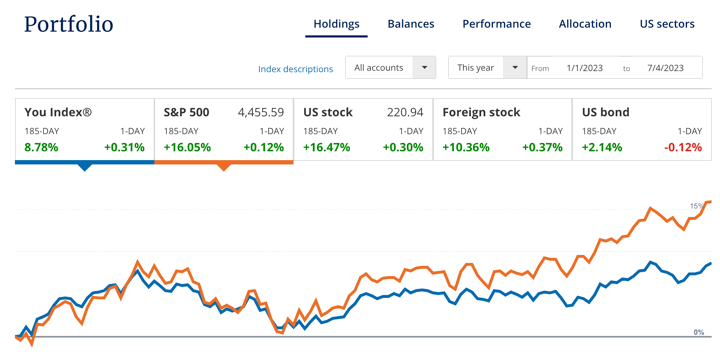
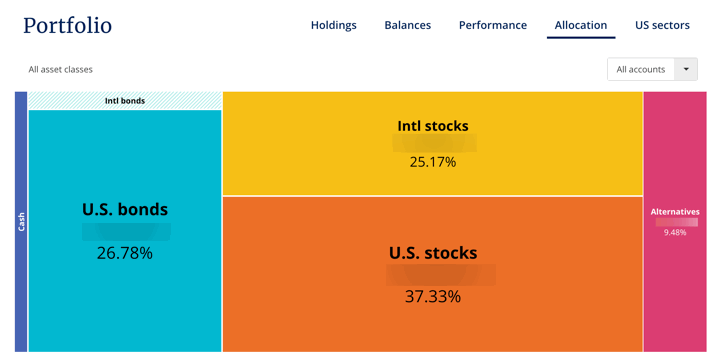
Here are updated performance and asset allocation charts, per the “Holdings” and “Allocation” tabs of my Empower Personal Dashboard.

Humble Portfolio Background. I call this my “Humble Portfolio” because it accepts the repeated findings that individuals cannot reliably time the market, and that persistence in above-average stock-picking and/or sector-picking is exceedingly rare. Charlie Munger believes that only 5% of professional money managers have the skill required to consistently beat the index averages after costs.

If beating a “simple, unsophisticated” Target Retirement Index Fund was so easy, they should simply charge money for it. You give me 2% outperformance, and I’ll pay you 1%. You simply have to cover any and all losses if you happen to underperform the “simple, unsophisticated” index fund. Isn’t it strange how nobody would take that deal?

Instead, by paying minimal costs including management fees, transaction spreads, and tax drag, you can essentially guarantee yourself above-average net performance over time.

I own broad, low-cost exposure to productive assets that will provide long-term returns above inflation, distribute income via dividends and interest, and finally offer some historical tendencies to balance each other out. I have faith in the long-term benefit of owning businesses worldwide, as well as the stability of high-quality US Treasury debt. My stock holdings roughly follow the total world market cap breakdown at roughly 60% US and 40% ex-US. I add just a little “spice” to the broad funds with the inclusion of “small value” ETFs for US, Developed International, and Emerging Markets stocks as well as additional real estate exposure through US REITs.

I strongly believe in the importance of knowing WHY you own something. Every asset class will eventually have a low period, and you must have strong faith during these periods to truly make your money. You have to keep owning and buying more stocks through the stock market crashes. You have to maintain and even buy more rental properties during a housing crunch, etc. A good sign is that if prices drop, you’ll want to buy more of that asset instead of less. I don’t have strong faith in the long-term results of commodities, gold, or bitcoin – so I don’t own them.

I do not spend a lot of time backtesting various model portfolios, as I don’t think picking through the details of the recent past will necessarily create superior future returns. You’ll find that whatever model portfolio is popular in the moment just happens to hold the asset class that has been the hottest recently as well.

Find productive assets that you believe in and understand, and just keep buying them through the ups and downs. Mine may be different than yours.

I have settled into a long-term target ratio of roughly 70% stocks and 30% bonds (or 2:1 ratio) within our investment strategy of buy, hold, and occasionally rebalance. My goal is more “perpetual income portfolio” as opposed to the more common “build up a big stash and hope it lasts until I die” portfolio. My target withdrawal rate is 3% or less. Here is a round-number breakdown of my target asset allocation.

  • 30% US Total Market
  • 5% US Small-Cap Value
  • 20% International Total Market
  • 5% International Small-Cap Value
  • 10% US Real Estate (REIT)
  • 15% US Treasury Nominal Bonds or FDIC-insured deposits
  • 15% US Treasury Inflation-Protected Bonds (or I Savings Bonds)

Details. According to Empower, my portfolio went up about 8.8% YTD to 7/4/2023. The S&P 500 is up 16% YTD, while the US Bond index is up about 2%. Remaining invested with stocks has paid off this year significantly more than worrying about the details of Treasury bills and cash rate-chasing.

There was only minor rebalancing with cashflows (mostly dividends) this quarter. I loosely keep up with the new DFA and Avantis ETFs that come out, but am somewhat limited in what I buy as I have lot of capital gains built up right now. DFA has an International Small Cap Value ETF (DISV) and an Emerging Markets Value ETF (DFEV). Avantis also has an Avantis International Small Cap Value ETF (AVDV) and Avantis Emerging Markets Value ETF (AVES). I’ll keep them in mind if there are future drops and other tax loss harvesting opportunities.

I’ll share about more about the income aspect in a separate post.
Simple Personal Finance Lessons and Quotes from Harry Markowitz (1927-2023)

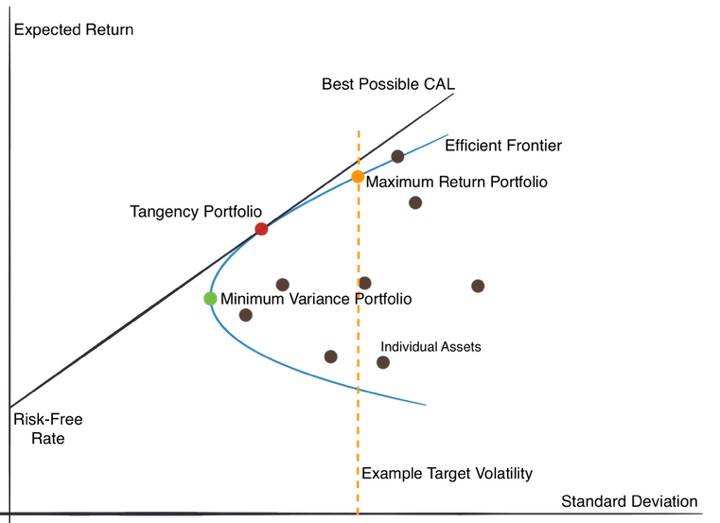
Harry Markowitz, who received the 1990 Nobel Prize in Economics for his contributions in creating modern portfolio theory, passed away recently. He introduced the use of mathematical methods to illustrate the power of diversification and how you can combine multiple different components into a portfolio that can achieve the highest expected return while taking on the minimum amount of risk. This NY Times obituary outlines his long list of achievements.

These days, anyone can run many backtests to optimize for a historically optimal portfolio using a number of different asset classes (as of today, it will be different in 5 or 10 years). However, if you listen to many of his interviews, Markowitz doesn’t necessarily think the average investor needs optimize relentlessly. Here are some useful quotes that don’t require any advanced math.

From his landmark 1959 book Portfolio Selection: Efficient Diversification of Investments:

A good portfolio is more than a long list of good stocks and bonds. It is a balanced whole, providing the investor with protections and opportunities with respect to a wide range of contingencies.

How did Harry Markowitz actually run his own personal portfolio? From Jonathan Zweig’s NYT article about emotions and investing:

Mr. Markowitz was then working at the RAND Corporation and trying to figure out how to allocate his retirement account. He knew what he should do: “I should have computed the historical co-variances of the asset classes and drawn an efficient frontier.” (That’s efficient-market talk for draining as much risk as possible out of his portfolio.)

But, he said, “I visualized my grief if the stock market went way up and I wasn’t in it — or if it went way down and I was completely in it. So I split my contributions 50/50 between stocks and bonds.” As Mr. Zweig notes dryly, Mr. Markowitz had proved “incapable of applying” his breakthrough theory to his own money. Economists in his day believed powerfully in the concept of “economic man”— the theory that people always acted in their own best self-interest. Yet Mr. Markowitz, famous economist though he was, was clearly not an example of economic man.

From a Chicago Tribune interview by Gail MarksJarvis:

Early in his career, he did not take the risks some investment advisers suggest for young investors to maximize returns. Rather, he saved regularly and put half his money into stocks and half into bonds to grow while controlling risks. When he thought he had accumulated too much in either category, he stopped putting money there for a while and directed savings to the neglected group. […]

“I never sold anything,” he said. If stocks were increasing in value, he would let that portion grow for a while, but eventually he would stop stock purchases and beef up the bonds. The idea: The bonds would insulate him from the downturns that crush stocks from time to time without clear warning. […]

“Say you were 65, and invested $1 million, with 60 percent in stocks and 40 percent in bonds,” he said. “It became $800,000 [during the financial crisis], and you are not happy, but you lived to invest another day.”

From this Business Insider article via Bogleheads forum post (emphasis mine):

In an interview with Personal Capital, Markowitz was asked, “What are the top pieces of advice you give people about money?”

“I only have one piece of advice: Diversify,” he replied. “And if I had to offer a second piece of advice, it would be: Remember that the future will not necessarily be like the past. Therefore we should diversify.

From ThinkAdvisor:

“Perhaps the most important job of a financial advisor is to get their clients in the right place on the efficient frontier in their portfolios,” he told me. “But their No. 2 job, a very close second, is to create portfolios that their clients are comfortable with. Advisors can create the best portfolios in the world, but they won’t really matter if the clients don’t stay in them.

Thank you, Mr. Markowitz, for your contributions to economics, behavioral finance, and investing. Thanks also for the simple, actionable lessons that don’t require a degree in mathematics or economics: keep saving regularly, maintain a diversified portfolio of both stocks and bonds, rebalance when it gets off, and stick with it for a long time (don’t panic sell).

Image credit: Quantpedia

Bank of America Premium Rewards Card Review – 60,000 Point Offer, Best with Preferred Rewards

The Bank of America Premium Rewards Credit Card is the mid-tier premium card in the line-up, with added perks in exchange for an $95 annual fee. (Comparable with the Chase Sapphire Preferred and American Express Green cards.) This card also participates in the Preferred Rewards program, which gives you better rewards if you let BofA hold of your assets. Here are the highlights:

  • Earn 60,000 bonus points ($600 value) after making $4,000 in purchases in first 90 days of account opening.
  • Earn 2 points per dollar spent on travel and dining purchases.
  • Earn 1.5 points for each dollar spent on all other purchases.
  • 10% customer bonus when you have an active Bank of America checking or savings account.
  • If you’re a Preferred Rewards client, you can increase that bonus to 25% – 75%. See details below.
  • Up to $100 annual airline incidental statement credit for qualifying travel purchases such as seat upgrades, baggage fees, in-flight services and airport lounge fees.
  • Up to $100 airport security statement credit towards TSA Precheck or Global Entry Application fee, every four years.
  • No foreign transaction fees.
  • $95 annual fee.
  • No limit to earning points, and points don’t expire.

Preferred Rewards bonus. The Preferred Rewards program is designed to rewards clients with multiple account and higher assets located at Bank of America banking, Merrill Edge online brokerage, and Merrill Lynch investment accounts. Here is a partial table taken from their comparison chart (click to enlarge):

bofa_pref1

Let’s consider the options. Bank of America’s interest rates on cash accounts tend to be lower than highest-available outside banks, so moving cash over to qualify may result in earning less interest on your cash deposits. Merrill Lynch advisory accounts also usually come with management fees. The sweet spot is if you have brokerage assets like stocks, mutual funds, and ETFs.

In the past, moving over to Merrill Edge at the Platinum and Platinum Plus levels also led to 30 to 100 free online stock trades every month. Fast forward to now, and nearly all major online brokers offer commission-free trades anyway.

Personally, I moved over $100k of brokerage assets to Merrill Edge to qualify for Platinum Honors. This can include your existing ETFs and mutual funds held elsewhere (Vanguard, Fidelity, Schwab, etc). I realize not everyone will have this level of assets to move around, but if you do then it is worth considering. Keep in mind that it will take a while for your “3-month average combined balance” to actually reach the $100k level and officially qualify for Platinum Honors. You might become Gold first, then Platinum, and so on. After that, the 25%-75% rewards bonus on credit card rewards kick in.

Once you reach a certain tier, BofA guarantees that you will stay there for a year no matter what, even if your balance fluctuates. Note that the terms state “The Preferred Rewards bonus will replace the customer bonus”, which means that you will lose the 10% customer bonus when you qualify for the 25% to 50% bonus.

Here’s are the cash back rates after the Preferred Rewards bonuses:

  • Platinum Honors (75% bonus): 3.5% cash back on travel and dining, 2.625% cash back on all other purchases.
  • Platinum (50% bonus): 3% cash back on travel and dining, 2.25% cash back on all other purchases.
  • Gold (25% bonus): 2.5% cash back on travel and dining, 1.875% cash back on all other purchases.

Rewards comparison. This card has a more flexible rewards structure than their BankAmericard Travel Rewards card in that the points don’t have to offset a travel purchase. You can redeem at a flat 1 point = 1 cent value towards a statement credit or deposit into eligible Bank of America or Merrill Lynch® accounts (including deposit, investment or 529 accounts).

Getting a flat 2.625% (Platinum Honors) or 2.25% cash back (Platinum) on all purchases is a very solid base earning level. In terms of the competition, there are now multiple cash back cards in the 2% cash back range such as the Citi Double Cash Card with no annual fee. That means I wouldn’t bother with this card for everyday purchases if I wasn’t Platinum or Platinum Honors.

Also note that you can also earn similar levels of everything rewards (minus the travel/dining bonus category) but restricted to offsetting a travel-related purchase with the BankAmericard Travel Rewards card – except with no annual fee. The question then reverts back to if you can offset that $95 annual fee with the $100 annual incidental airline credit good towards seat upgrades, baggage fees, in-flight services and airport lounge fees. (Sadly, everything seems to be an added fee these days.) If you can get max value out of that airline incidental credit every year, then that removes the major disadvantage when compared to the BofA Travel Rewards card. You can then enjoy the added perks like the $500 value sign-up bonus, $100 Global Entry/TSA PreCheck credit once every 4 years, and the higher rewards on travel/dining bonus.

Bottom line. The Bank of America Premium Rewards Credit Card is rather average in basic form, but is elevated into an excellent card if you can qualify for the Platinum or Platinum Honors tiers of their Preferred Rewards program for up to 3.5% cash back on travel and dining and 2.625% cash back on all other purchases. Note the the $95 annual fee is not waived for the first year. Consider your ability to use up the $100 annual incidental airline credit.

Also see: Top 10 Best Credit Card Bonus Offers.

SaveBetter No-Penalty CD Review: How To Cancel No-Penalty CDs

No-Penalty CDs try to offer the best of both worlds – the liquidity of a savings account, and the higher fixed interest rate of a term CD. If rates go up, you can still move to the new higher rate. If rates drop, you are covered because the interest rate you earn can never go down during your term (usually around a year). When a financial crisis and/or recession hits, interest rates can drop quite quickly. Below is a historical chart of the Fed Funds rate since 1990. (Other times, a bank may just decide for any reason to drop their rate on a savings account.)

SaveBetter consistently offers some of the top interest rates on No-Penalty CDs. See my full SaveBetter review for more details on SaveBetter overall. Here are some details on the No Penalty CD specifically; their product is a bit unique in both good and bad ways.

  1. You cannot make any withdrawal within the first 30 days of opening a No Penalty CD, which is longer than usual. At CIT Bank, you can withdraw after 7 days. At Ally Bank, it’s six days.
  2. However, the minimum opening amount is only $1, which is much smaller than usual. At CIT Bank, it is $1,000. Ally also has no minimum. This means you can open multiple No-Penalty CDs in whatever amount you want, and only “break” the ones you need to. If, for example, the minimum at a competitor bank was $5,000, then you’d have to break an entire $5,000 CD even if you only needed $500.

Finally, I noticed that the website does not offer details about the actual process of how to make an early withdrawal from SaveBetter No-Penalty CD. I asked the Live Chat feature and this was the official reply provided:

Please email service@savebetter.com using the email address that you use to log into SaveBetter.com

In your email be sure to include the bank or credit union’s name and the current balance of the CD. If you have more than one CD from the same institution with the same balance, please specify the number of CDs you would like us to cancel.

Once we have processed your cancellation you will receive a note from the team letting you know the process has been completed.

If you have any questions please call Customer Service at (844) 994-3276. The team is available weekdays 9AM-4PM Eastern Time (excluding holidays).

So I sent them the following simple e-mail late on a Friday night:

Hello,

This is a request to close my No Penalty CD from Sallie Mae Bank with a current balance of $XXXX.XX.

Thank you,

Jonathan

On Saturday morning, I received the following reply:

Your cancellation request has been processed.

All available funds will be transferred to your linked bank account within 3 business days.

Please reach out if we can be of further service.
Regards,

Mio
SaveBetter Customer Service
service@savebetter.com

The withdrawal amount arrived in my linked bank account on the third business day (Wednesday), but they did credit me with at least one additional day of interest because the final amount was higher than my Friday closing balance (I figure they initiated on the next business day of Monday, cash came out Tuesday).

I was still satisfied that a simple 100% online-only option exists. I just sent a single e-mail. I did not have to call in, go through a complicated confirmation process, or answer any “Are you sure?” type of questions.

With SaveBetter, all deposits and withdrawals have to go in and out through your linked external bank account. You can’t just transfer the money internally directly into another type of account at another partner bank. That means that if you wanted to cancel one No Penalty CD and immediately open another “new” No Penalty CD at a higher rate, you might lose a business day or two of interest on the way out to your linked account before transferring the money back in to purchase the new CD.

This contrasts with CIT Bank, where I you can directly fund a new No-Penalty CD (at higher rate) with an existing No-Penalty CD. Of course, if you were to move funds between two different banks, you’d also have to deal with some days of lost interest in transition.

Their No-Penalty CD rates are currently above 5% APY, but the specific rates and the banks offering them change all the time, so I won’t list it in this review. Click here to see current No-Penalty CD rates at SaveBetter.

Reader Questions: Worried About Debt Limit? Worried About Smaller Banks?

I’m probably dating myself using the image above. How old do you have to be to remember when MAD magazine was popular? In retrospect, the magazine served a very important purpose, which was basically to show kids the many tricks out there and how to be less gullible. From Robert Boyd of the LA Times (source):

The magazine instilled in me a habit of mind, a way of thinking about a world rife with false fronts, small print, deceptive ads, booby traps, treacherous language, double standards, half truths, subliminal pitches and product placements; it warned me that I was often merely the target of people who claimed to be my friend; it prompted me to mistrust authority, to read between the lines, to take nothing at face value, to see patterns in the often shoddy construction of movies and TV shows; and it got me to think critically in a way that few actual humans charged with my care ever bothered to.

As I’m old and a bit under the weather this week – though temporarily lucid thanks to behind-the-counter pseudoephedrine – if I end up rambling… that’s my excuse. Anyhow, I’ve been getting emails from two different camps in the past few months:

  • Don’t put your money in US Treasury bills, that’s risky. Haven’t you heard about the debt limit crisis?
  • Don’t put your money in non-huge banks, that’s risky. Haven’t you heard of those bank failures? You should keep your money in US Treasury bills.

Am I worried about the US debt limit?

No and yes. No, I am not worried that my Treasury bonds (and money market funds based on Treasury bonds) will fail to be paid back with interest. In fact, I’ve thought about buying some of those affected short-term T-Bills, but it wouldn’t be much additional benefit for my small amounts.

Yes, I am worried that this signals a high level of disfunction between our elected officials. Imagine my partner and I already previously agreed to a mortgage for the house, an auto loan for both our cars, and put shared household bills on the credit card. Is the best way to make ourselves more financially responsible to threaten not to pay the debt that we have already agreed to take on? We should certainly examine our future expenses closely, and government spending is an important topic. But what is the point of threatening to ruin our collective credit score by not paying our existing bills? Is it honorable to openly consider defaulting on your debts? The US enjoys a lot of benefits from its top credit rating. I’m disappointed.

Am I worried about having my personal money deposited at non-huge banks?

No. As long as they are under the covered FDIC-insurance limits of $250,000 per depositor, per insured bank, for each account ownership category. Both of these things (NCUA/FDIC-insured bank deposits and US Treasury bonds) are backed by the US government, which has the power to create as much fiat currency as it likes. The FDIC is quite good at transitioning if a bank failure does occur. So I’m personally not worried about either thing. I just opened a relatively large 5-year CD at 5.00% APY at a small, friendly credit union in Oxnard, CA with only a few physical branches (deal expired). I hope they in turn lend it out to some small businesses in their area.

If you can get past the paywall, read this interesting Bloomberg article (close alternative) about the smallest bank in the US. One full-time employee (the CEO), a part-time teller, no ATM, no website. I kind of want to open an account.

The thing is, for a business with a huge cash balance that is over the FDIC-insured limits, then it indeed might be rational to move that money into the safest possible bank. You’d think that these sorts of problems would be solved by now. Berkshire Hathaway rolls billions of Treasury bills every month. But that’s how it works sometimes. Problems are only faced after it becomes a painful issue. I believe they’ll figure it out.

Worried About Unused 529 Funds? New 529 to Roth IRA Rollover Option

One of the concerns about contributing to 529 plan for college savings is that you won’t end up using all the money and end up being hit with additional taxes (at ordinary income rates) and penalties on an non-qualified withdrawal. The funds potentially would have been better off simply invested in a taxable brokerage account (and long-term capital gains rates).
This was partially addressed within the SECURE 2.0 Act of 2022, part of the Consolidated Appropriations Act (CAA) of 2023. Specifically, Section 126 [PDF link], “Special Rules for Certain Distributions from Long-term Qualified Tuition Programs to Roth IRAs”, which adds the ability to roll your 529 funds into a Roth IRA both tax-free and penalty-free starting in 2024. Kitces.com covers many of the major points. Here is a quick summary of the rollover requirements:

  • The Roth IRA receiving the rollover money must be owned by the beneficiary of the 529 plan. (Unless the beneficiary is also the owner, the money can’t go to the owner’s Roth IRA.)
  • The 529 plan must have been open for at least 15 years.
  • The rollover amount must have been in the 529 account for at least 5 years before your distribution date (contributions and attached earnings).
  • The annual rollover amount is limited to annual IRA contribution limits, and is reduced by any “regular” Roth IRA contributions made during the tax year. (You are not able to exceed the usual max contribution limits. However, the income (MAGI) limits that usually lower the contribution limits due to high income do not apply.)
  • The Roth IRA owner still needs to earn taxable income, at least equal to the amount of the rollover.
  • The maximum lifetime amount that can be moved from a 529 plan to a Roth IRA is $35,000 per person. (This may not be as much in 15+ years if they don’t increase it with inflation.)

In general, this seems like a reasonable way to alleviate the over-contribution concerns, although the money must still technically go to the beneficiary (usually the kid) and not the owner (usually the parent or grandparent). Previously, options for leftover money included graduate school, changing the beneficiary to another family member or future grandchild, or paying back up to $10,000 in qualified student loans.

There are a few interesting, potential wrinkles that a few readers have pointed out:

  • Making yourself both owner and beneficiary to fund future Roth IRA contributions for yourself (even with no kids). As you aren’t really increasing the total amount you are able to stuff into a Roth IRA in the future, the primary benefit is basically to access the tax-deferral benefit early. For example, you could put in $2,000 today and expect to roll over $6,000 in 15 years (7.6% annualized return). The exception may be if you expect not to be able to do Roth IRA contributions in the future because your income is too high AND the Backdoor Roth IRA method is not available to you. Still, 15 years is a long time to wait, and the law may change in the future to restrict this type of move. In such a case, it may backfire and subject you to taxes and penalties.
  • Planning to change the beneficiary from kid to yourself later on. Maybe you don’t want your kid to have the unspent funds, and plan to simply change the beneficiary to yourself later on. However, it’s not 100% clear if beneficiary changes will reset the 15-year clock or otherwise affect rollover eligibility. The law specifically restricted the rollover
  • Contributing extra money for the specific purpose of early funding for your children’s Roth IRAs. This might spur higher-income parents to put even more money into their 529s on purpose, as you are essentially indirectly able to fund a Roth IRA with tax-deferred growth for your kid way before they have earned income. When they eventually do have any form of earned income from a part-time or entry-level job in their teens or early 20s, the money can just roll into their Roth IRA officially (up to the limits).

I don’t have any immediate plans to take advantage of any of these potential scenarios, but taken together it does make me feel better about the 529 contributions that I have already made. Which I suppose is the overall idea?

In terms of other actionable advice, it may be worth it to start a 529 for each child immediately or as soon as possible, even if only putting in $25 or whatever is the minimum amount, just to start the 15 year clock in case you do want to take advantage of this feature down the road. There are countless examples out there of the benefit of starting the compounding early, especially when it can keep growing tax-free forever.

CBC Federal Credit Union 5-Year CD at 5.25% APY (Expired)

(Update: This offer is no longer available, but the credit union was very customer-friendly and did honor their rate for those that opened the account during the period when the offer was displayed on their website. You just had to call them up and ask. They are a small credit union with limited resources, and I commend them for acting honorably and in a friendly manner. The rate has now dropped, and they no longer open CDs over the phone; you must open in-branch. )

CBC Federal Credit Union is a small credit union that is offering some top certificate rates as of 4/12/23. NCUA-insured. Here are the rate highlights:

  • 5-year certificate at 5.00% APY ($500 minimum).
  • 5-year certificate with Epic Premium Checking account: 5.25% APY ($500 minimum).
  • Early withdrawal penalty for 5-year certificate is 365 days of dividends (will eat into principal if needed).
  • The rates on their 1-year, 2-year, 3-year, and 4-year certificates are also competitive, with and without the Epic Premium Checking Account.

Their Epic Premium Checking Account offers various perks including a discount on loan interest and also a boost of 0.25% to 0.50% on certain Term Share Certificate Rates. However, it does charge an $8/month fee that cannot be waived. If you close the Epic Premium checking account or it becomes inactive, then you lose the rate boost AND the interest rate on your CD might drop to the current rate. Whether the extra rate boost is worth the monthly fee and maintaining activity on the checking account depends on the amount deposited and your own preferences.

Unknown if there is a credit pull with a new membership application. This is common with credit unions, but I did not see anything come up on my credit monitoring alerts after my application. Must keep $5 minimum in Share Savings account as long as you are a credit union member. Hat tip to DepositAccounts.

Membership eligibility. Although in Southern California with only four physical branches, their eligibility criteria is actually open to anyone nationwide. You can:

  • Live, work, worship, or go to school in Ventura County
  • Participate in programs to alleviate poverty or distress in Ventura County
  • Participate in associations, businesses, or other legal entities headquartered or located in Ventura County
  • Maintain a facility located in the Ventura County
  • Have a family member that is an existing CBC member
  • Importantly… one of the eligible associations is the American Consumer Council, which you can join as part of the sign-up process and CBC FCU will cover the membership fee.

My thoughts. I wasn’t sure if I should post about this, as the last time I posted a CD deal from a smaller credit union, the rate dropped in only two days. These small credit unions usually offer up these high APYs when they have specific funding needs and then they will drop the rate once that dollar amount has been met. However, the purpose of this blog is to share what I am up to, and this is an example of a motivated individual being able to access a much better interest rate than even a billionaire hedge fund manager.

For comparison, as of 4/11/23, the 5-year Treasury bond rate is 3.54%. For retirees and semi-retirees with large cash/bond balances, this is a meaningful rate difference. I don’t know where rates will go in the future, but I like to build a ladder and this is one of the best rates for my “5-year rung” in a while.

If you wish to get in on this rate, you should act quickly and temper your expectations. It’s a good enough deal that it is quite possible that there will be enough new applications to overwhelm their limited staff. You might go through the application process, possibly take a credit pull hit, and have the rate fall before you can fund the certificate. I’m not saying this will happen, but it is possible. Of course, it is also possible that this is only the start of multiple places offering long-term 5% APY CDs.

In terms of best practices, I would recommend taking extra care when applying online and uploading a very clear picture of your photo ID. You want to avoid any hiccups that would require human intervention. If you do have to call, be polite and patient. Once you get your Share Savings account number, use it to transfer funds over online within a few days. (Some people choose to wire funds as that is instant.) Then you must call up CBC FCU and open up the certificate over the phone as an existing member with funds ready to go.

Based on their website, they appear to be using the same backend software as many other credit unions.

Discover Bank Deposit Bonus: $150/$200 ($15,000/$25,000 Required)

disc_osaBonus still available in 2023. Discover Bank has an ongoing deposit bonus for new customers for their online savings account. If you open a new account through this link (currently shows promo code SAVE323W2 with expiration date 5/31/23) or this link (currently shows promo code GOBP223 with expiration date 6/15/23), you can receive one of the following bonuses:
  • Deposit at least $15,000 within 30 days of opening to earn a $150 bonus, or
  • Deposit at least $25,000 within 30 days of opening to earn a $200 bonus.

This offer has been available off and on for over 5 years and is always only for first-time Discover Savings account customers, but if you haven’t grabbed it yet it’s a solid bonus.

*To get your $150 or $200 Bonus: What to do: Apply for your first Discover Online Savings Account, online, in the Discover App or by phone. Enter Offer Code GOBP223 when applying. Deposit into your account a total of at least $15,000 to earn a $150 Bonus or deposit a total of at least $25,000 to earn a $200 Bonus. Deposit must be posted to account within 30 days of account open date. Maximum bonus eligibility is $200.

What to know: Offer not valid for existing or prior Discover savings customers or existing or prior customers with savings accounts that are co-branded, or affinity accounts provided by Discover. Eligibility is based on primary account owner. Account must be open when bonus is credited. Bonus will be credited to the account within 60 days of the account qualifying for the bonus. Bonus is interest and subject to reporting on Form 1099-INT. Offer ends 6/15/2023, 11:59 PM ET. Offer may be modified or withdrawn without notice.

The Discover Online Savings Account has a current interest rate of 3.60% APY as of 4/11/23, which is sort of a competitive rate although not the highest available. There are no minimum balance requirements and no monthly fees. Interest is compounded daily and paid monthly.

If you deposit the minimum amount of $15k, the $150 bonus is effectively another 1% of your initial deposit. The $200 bonus on $25,000 deposited is a lower percentage, but if you have the extra cash then it may still be a good rate. There is no fixed minimum time period where you have to keep the money there after getting the bonus, so your effective ROI can be quite high since the bonus should post shortly after you complete the required deposits. Keep in mind that you must still have an open account for the bonus to post.

I did not experience a hard credit pull when opening my Discover bank account on a previous bonus. Historically, their rates are competitive but not the rate leaders. Their overall feature set is not exceptional (average speed transfers), so it is not my primary savings account at this time. Maybe it is convenient if your primary card is the Discover It credit card?

Bottom line. The Discover Savings account is a simple, barebones piggy-back savings account with no minimum balance and no monthly fees. The rates are historically competitive but rarely the highest. With no monthly fees, this is a solid low-risk bonus if you have the funds available and have never had a Discover bank account before.

Examples and Stories of Working Less on Purpose (to Live More)

My philosophy on financial freedom essentially boils down to believing you have the power to make choices that affect your life. Do not accept that the world is against you and that there is no point in trying. Everyone is dealt different cards, but it’s how you play them that matters. Your job title, your employer, the number of hours per week, where you live, the size of your home, your commute time, how you spend the 4 hours each day that most people spend watching TV – these are all variables that you can change. Be different. Or don’t. But choose them consciously.

The WSJ article Would Life Be Better if You Worked Less? (gift article, should bypass paywall) shares the stories of several Americans trying to “live more” by shifting to part-time hours or four-day workweeks and accepting the accompanying lower income.

Granted, I don’t know if I would have used a “part-time” neurosurgeon still working 40+ hour weeks as my first example. Of course, if you have a high income, then you are ideally suited to cut back your working hours and still maintain a comfortable lifestyle. For others, a few years of high savings rates may be required first to help you build up that financial base so that you can eventually cut back hours or otherwise take more risks to improve your life.

I found this quote interesting about how a little work is good to provide us with a feeling of purpose and value, but you don’t need a lot. This would support the concept of assuming you’ll work a little forever, which should lower the savings requirement to reach that point. It doesn’t have to be all or nothing.

Humans need work to give structure to our days, to bestow purpose and self-esteem, he says. But we don’t need that much of it. A 2019 paper from Prof. Burchell and several co-authors found that people performing one to eight hours of paid work a week got the same mental health boost—less anxiety, less depression—as those who work 44 to 48 hours a week.

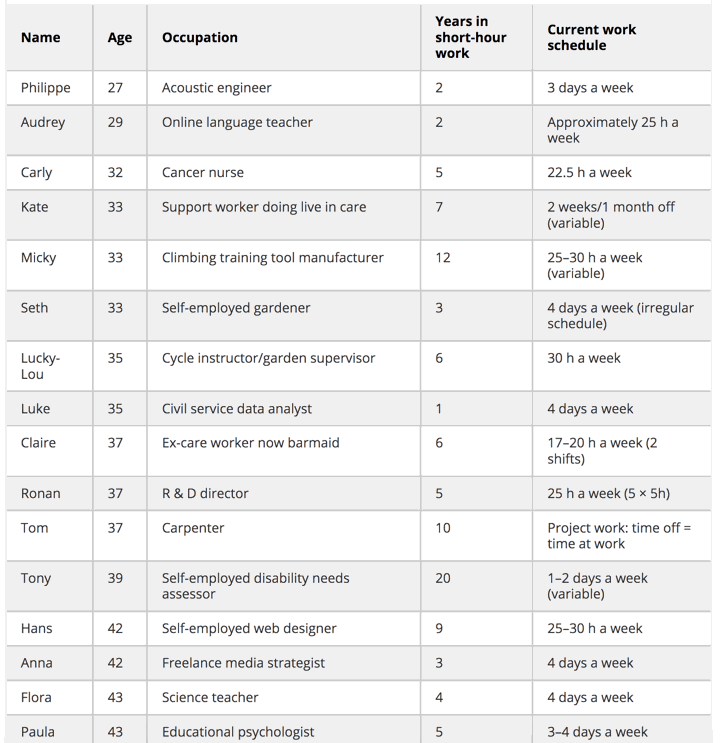
The referenced 2019 paper appears to be this one: An exploration of the multiple motivations for spending less time at work, which includes many more stories and quotes from people tinkering with the amount of time that they work.

The paper separates negative “push” factors like long hours, work intensity, and low job satisfaction and “pull” factors like realizing your life is short and time is limited, the attraction of leisure activities, the desire for freedom in general, family concerns, and the ability to varied and more fulfilling work.

The main purpose of sharing all of these examples is to show you that there isn’t just one path. There are many other people who are purposefully working less than full-time, making less income than they could make, and getting something they value in return (the time to do something else). You may be inspired.

It would be nice if these articles dived more deeply into the sacrifices made before and during the switch to such part-time status. How did they negotiate a 4-day workweek with their employer? How do they plan to compensate for the added risks like cut hours during a recession, or the lack of benefits like health insurance? How long did they have to save to get there? In our case, I was only comfortable downshifting after first working 40 to 80 hours weeks and saving 50%+ of net income every year for a decade. We didn’t retire completely from paid work into an ultra-frugal minimalist lifestyle, nor did we go for dual full-time high-powered careers with lots of outside childcare help, but gradually found an in-between path that worked for us.