
Updated July 2025. My personal choice amongst all the 529 plans is the My529 (Utah) college savings plan for all three of my children. Formerly known as the Utah Educational Savings Plan (UESP). The Utah My529 plan feels like it has the highest quality of administrative ease/customer service, the widest options for DIY investors (create a custom glide path or use solid prefab options), and long-term commitment to keeping their fees low. Accordingly, they are consistently top-rated by Morningstar and other ratings systems. (I don’t live in Utah; I live in a state with no special tax benefits for 529 contributions.)
As of 2025, I have finishing consolidating all my other 529 plan balances from all my other accounts. I’ve had 529 plans with Ohio CollegeAdvantage, California Scholarshare, Nevada (“Official” Vanguard 529 College Savings Plan), Virginia (Invest529), and maybe some others I’ve since forgotten by now (I have a problem…). Those are all solid plans as well, but over time I found the time to fill out the required forms to perform a direct rollover to Utah. (It was all free but a decent amount of paperwork; I wouldn’t recommend it. Just pick a good one and focus on the contributions.)
Nearly every year, I get some announcement in their newsletter that Utah is lowering their fees. Every 529 plan charges an administrative fee on top of the expense ratios of the underlying investments like mutual funds. For example, an asset fee of 0.10% is the same as charging $10 a year for every $10,000 in assets invested.
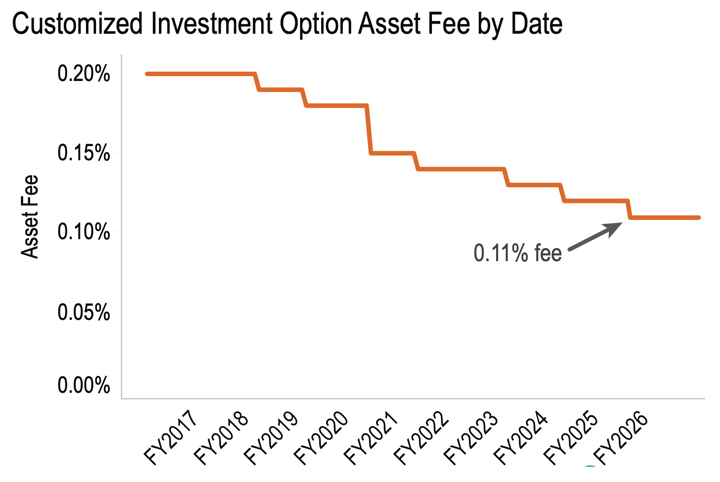
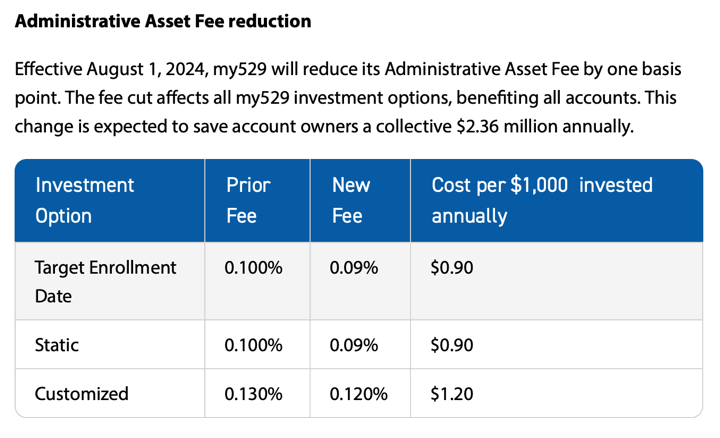
Although Utah may not be the lowest in every option, they consistently are amongst the lowest and keep going lower. Here is a partial history, although I couldn’t dig up every historical change date.
- July 2025: Administrative Asset Fee for Customized investment options lowered from 0.12% to 0.11% annually.
- August 2024: Administrative Asset Fee for Target Enrollment Date and Static investment options lowered from 0.10% to 0.09%.
Customized investment options lowered from 0.13% to 0.12%. - July 2023: Administrative Asset Fee for Target Enrollment Date and Static investment options lowered to 0.10%. Customized investment options lowered to 0.13%. (source)
- […]
- October 2020: Administrative Asset Fee for Age-Based and Static investment options lowered from 0.13% to 0.12%.
Customized investment options lowered from 0.18% to 0.15%. - February 2018. Utah Educational Savings Plan (UESP) changed its name to my529, effective February 5, 2018.
- […]
- July 2017: Administrative Asset Fee for Age-Based and Static investment options lowered from 0.17% to 0.16%.
- […]
- June 2013: UESP fees dropped an average of 10% overall. Administrative asset fee was 0.15% to 0.20%, now lowered to between 0.14% and 0.18% most Age-Based and Static investment options. Customized investment option at 0.20% (make your own glide path).
Note: At some point, they changed from the “Age-Based” label to “Target Enrollment Date” but it’s basically the same idea of a glide path that changes as the student ages, in preparation for their college enrollment date.
Each individual annual change may only amount to $1 to $20 a year in savings, but I do think it shows an ongoing commitment to passing on savings as their assets under management grow.
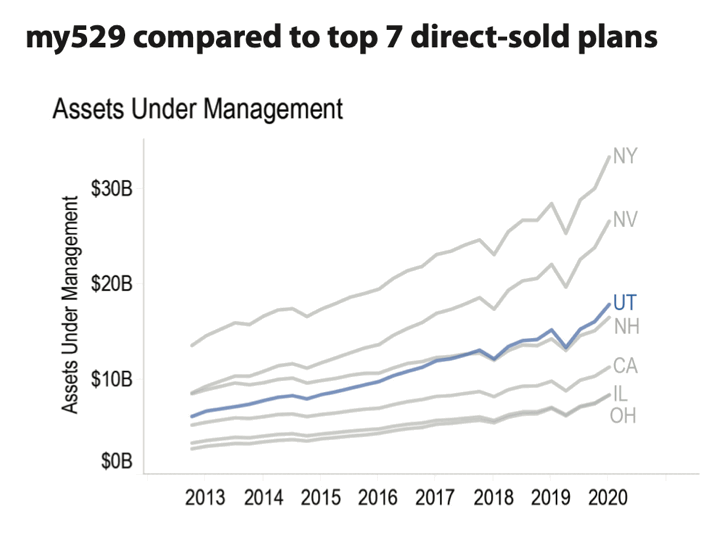
I believe the Utah plan is now the 3rd largest direct-sold plan in the nation. This is especially impressive considering the New York plan at #1 has the benefit of a large in-state tax break (and large population) to help it grow, the Nevada plan is co-branded with Vanguard and their trillions of assets, and New Hampshire is co-branded with Fidelity and their trillions of assets. The Utah plan includes a lot of low-cost Vanguard investments, but remains independent and also includes options from other providers like DFA and PIMCO. I enjoy being able to set up my own glide path with a large menu of investment options.
 One of the early books that impacted my investing philosophy was

 The Best Credit Card Bonus Offers – 2025
 Big List of Free Stocks from Brokerage Apps
 Best Interest Rates on Cash - 2025
 Free Credit Scores x 3 + Free Credit Monitoring
 Best No Fee 0% APR Balance Transfer Offers
 Little-Known Cellular Data Plans That Can Save Big Money
 How To Haggle Your Cable or Direct TV Bill
 Big List of Free Consumer Data Reports (Credit, Rent, Work)