Elm Wealth has a new article on asset classes that introduces their six criteria for whether to include it inside their client portfolios. I found how they explicitly outlined this structure very useful. Here are the six criteria:
- Low cost
- Expectation of risk premium
- Ability to systematically estimate expected return
- Non-zero-sum
- Liquid
- Tax-efficient
Here is a partial excerpt of selected asset classes, outlining how each one performed under each individual criteria. Find the full chart with all of the asset classes in their article.
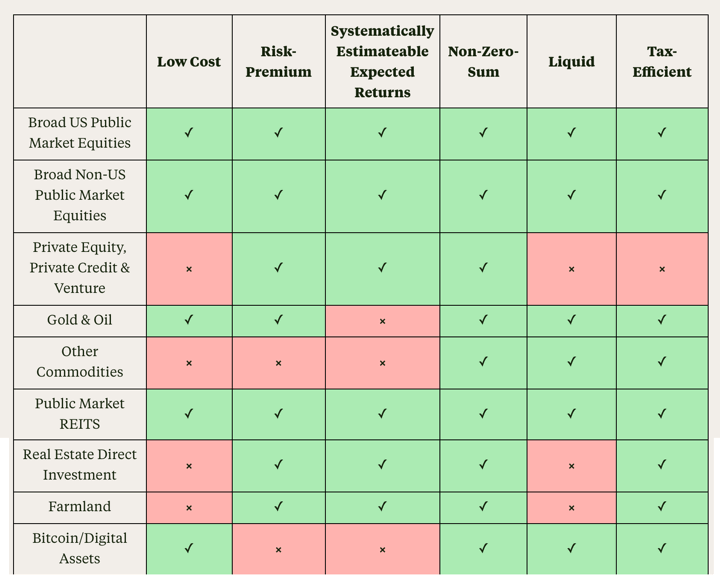
Here are the asset classes that passed all six criteria.
Risk Assets
- Broad US Public Market Equities
- Broad Non-US Public Market Equities
- Public Market REITS
Safe Assets
- US Treasury Bills
- Treasury Inflation-Protected Securities (TIPS)
- US Treasury and investment grade nominal bonds (small allocation)
- High grade municipal bonds (small allocation in taxable)
This pretty much matches my portfolio. I know this list is incredible “boring”, and they don’t include any of the trendy ones right now – private equity, aggressive covered call options, crypto, etc. Sometimes, I am also pulled by the desire to seem skilled and sophisticated. But I think it’s an important message that these readily-available asset classes are all you need to achieve financial independence.
Remember, these are the same authors of the book titled “Missing Billionaires”. Permanent capital loss is the real danger! Relentless and reliable compounding wins.
 The Best Credit Card Bonus Offers – 2025
 Big List of Free Stocks from Brokerage Apps
 Best Interest Rates on Cash - 2025
 Free Credit Scores x 3 + Free Credit Monitoring
 Best No Fee 0% APR Balance Transfer Offers
 Little-Known Cellular Data Plans That Can Save Big Money
 How To Haggle Your Cable or Direct TV Bill
 Big List of Free Consumer Data Reports (Credit, Rent, Work)
This is a great little common-sense crib sheet for investors. I’d consider adding in ease of diversification too.