Search Results for: High Interest Savings

CIT Bank Savings Builder $300 Deposit Bonus (EXPIRED)

(NOTE: This promotion is expired. Please visit this page for current CIT Bank products and rates.)

Expired info for historical reference purposes:

CIT Bank still has their Savings Builder Account deposit bonus. The bonus has increased to up to a $300 cash bonus depending on deposit amount, and it is open to both new and existing customers. The bonus is on top of the interest rate, currently 1.70% APY (as of 4/9/20) at their top tier for qualifying accounts. Unfortunately, if you did an earlier bonus, you are not eligible for this one:

PLEASE NOTE: Existing Customers enrolled in a Savings Builder bonus promotion prior to January 17, 2020, are not eligible for this promotion.

New deposit bonus details. For new customers, you must first open a new account with at least $100 and promo code Spring20 at this link. If you already had an existing account as of 2/19/20, you need to first officially enroll in this offer via the “Let’s get started” button at this link for existing customers. After doing that:

  • A new deposit of $25,000 to $49,999 within 15 calendar days of your open/enrollment date will get you a $150 cash bonus.
  • A new deposit of $50,000+ within 15 calendar days of your open/enrollment date will get you a $300 cash bonus.

New accounts will have to maintain this balance for 90 calendar days following the end of the 15-day Funding Period. However, existing accounts will only have to maintain this balance for 30 calendar days following the end of the 15-day Funding Period. The shorter holding period for existing customers is nice, but remember it has to be additional money new to CIT Bank. This is their definition of “starting balance” when measuring new deposits for existing customers:

The balances of all the customer’s individual Savings Builder accounts, any joint Savings Builder accounts in which the customer has ownership, if not already enrolled in the bonus promotion by another joint owner as of February 18, 2020.

They will deposit your bonus within 1 to 5 business days after the Funding Period, but it will be on hold (can’t withdraw) until 7 days after your minimum holding period of 30/90 days to make sure you satisfy the requirements.

Effective APY. Here are the effective interest rates you could get as either a new or existing customer:

  • For a new customer earning either the $150 bonus on $25,000 or $300 bonus on $50,000, which also qualifies you for the 1.70% APY rate, that works out to a total 4.10% APY for 90 days (2.4 + 1.70).
  • For an existing customer earning either the $150 bonus on $25,000 or $300 bonus on $50,000, which also qualifies you for the 1.70% APY rate, that works out to a total 8.90% APY for 30 days (7.2 + 1.70).

Note this is somewhat optimistic as you will probably add a several days of holding time unless your deposit lands at the very end of the 15-day funding period. Still, it’s always nice to stack a cash bonus on top of an already competitive interest rate. There are no minimum balance fees, no monthly service fees, no inactivity fee.

Savings Builder high interest qualifications reminder. This a unique savings account with two ways to qualify for their highest interest rate tier. You need ONE of the following in each Evaluation Period:

  • Maintain at least one single monthly deposit of $100+, OR
  • Maintain a balance of $25,000+.

Everyone earns the top tier rate for the first monthly “Evaluation Period”. Then, if you meet one of the requirements listed above during the first Evaluation Period, you’ll earn the top rate for the next monthly Evaluation Period. If you don’t meet a least one of the requirements, you will receive the base interest rate during the next Evaluation Period. They have an indicator in your online account that confirms that you have qualified. Now, if you’re going for this bonus, you’ll already have $25,000 in there so you will qualify for the higher interest rate.

One option that I did is to set up an automatic monthly transfer from my checking account to this account for $100 and satisfy the requirement on auto-pilot. (I can always transfer additional funds in or out as needed.) More details in my previous full review.

Bottom line. CIT Bank has refreshed their Savings Builder Account deposit bonus with a bigger bonus. You can get up to a $300 cash bonus depending on deposit amount, and it is open to both new and existing customers. Unfortunately, if you’ve done a Savings Builder bonus already, you are not eligible for another one. The bonus is on top of the interest rate, currently 1.70% APY (as of 4/9/20) at their top tier for qualifying accounts. These types of bonuses help me earn higher interest rates even when rates are dropping.

Best Interest Rates on Cash – April 2020

The Federal Reserve further cut their target Fed Funds Rate to zero in March, so we continue to see a steady stream of rate drops on cash savings. I hope that some of you got a nice rate locked-in if you tried to refinance your mortgage.

Here’s my monthly roundup of the best interest rates on cash for April 2020, roughly sorted from shortest to longest maturities. I track these rates because I keep 12 months of expenses as a cash cushion and also invest in longer-term CDs (often at lesser-known credit unions) when they yield more than bonds. Check out my Ultimate Rate-Chaser Calculator to see how much extra interest you’d earn by moving money between accounts. Rates listed are available to everyone nationwide. Rates checked as of 4/2/2020.

High-yield savings accounts
While the huge megabanks make huge profits while paying you 0.01% APY, it’s easy to open a new “piggy-back” savings account and simply move some funds over from your existing checking account. The interest rates on savings accounts can drop at any time, so I list the top rates as well as competitive rates from banks with a history of competitive rates. Some banks will bait you with a temporary top rate and then lower the rates in the hopes that you are too lazy to leave.

Short-term guaranteed rates (1 year and under)
A common question is what to do with a big pile of cash that you’re waiting to deploy shortly (just sold your house, just sold your business, legal settlement, inheritance). My usual advice is to keep things simple and take your time. If not a savings account, then put it in a flexible short-term CD under the FDIC limits until you have a plan.

  • No Penalty CDs offer a fixed interest rate that can never go down, but you can still take out your money (once) without any fees if you want to use it elsewhere. Marcus has a 7-month No Penalty CD at 1.70% APY with a $500 minimum deposit. Ally Bank has a 11-month No Penalty CD at 1.55% APY with a $25,000 minimum deposit. CIT Bank has a 11-month No Penalty CD at 1.70% APY with a $1,000 minimum deposit. You may wish to open multiple CDs in smaller increments for more flexibility.
  • CIT Bank has a few competitive term CDs at similar rates: 12-month CD at 1.86% APY ($1,000 min), 13-month at 1.82% APY, and 18-month at 1.85% APY.

Money market mutual funds + Ultra-short bond ETFs
If you like to keep cash in a brokerage account, beware that many brokers pay out very little interest on their default cash sweep funds (and keep the difference for themselves). The following money market and ultra-short bond funds are not FDIC-insured, but may be a good option if you have idle cash and cheap/free commissions.

  • Vanguard Prime Money Market Fund currently pays an 1.07% SEC yield. The default sweep option is the Vanguard Federal Money Market Fund which has an SEC yield of 0.68%. You can manually move the money over to Prime if you meet the $3,000 minimum investment.
  • Vanguard Ultra-Short-Term Bond Fund currently pays 2.08% SEC yield ($3,000 min) and 2.18% SEC Yield ($50,000 min). The average duration is ~1 year, so there is more interest rate risk.
  • The PIMCO Enhanced Short Maturity Active Bond ETF (MINT) has a 2.57% SEC yield and the iShares Short Maturity Bond ETF (NEAR) has a 3.16% SEC yield while holding a portfolio of investment-grade bonds with an average duration of ~6 months. Note that the higher yield came from a drop in net asset value during the recent market stress.

Treasury Bills and Ultra-short Treasury ETFs
Another option is to buy individual Treasury bills which come in a variety of maturities from 4-weeks to 52-weeks. You can also invest in ETFs that hold a rotating basket of short-term Treasury Bills for you, while charging a small management fee for doing so. T-bill interest is exempt from state and local income taxes. Right now, this section probably isn’t very interesting as T-Bills are yielding close to zero!

  • You can build your own T-Bill ladder at TreasuryDirect.gov or via a brokerage account with a bond desk like Vanguard and Fidelity. Here are the current Treasury Bill rates. As of 4/2/2020, a new 4-week T-Bill had the equivalent of 0.09% annualized interest and a 52-week T-Bill had the equivalent of 0.14% annualized interest.
  • The Goldman Sachs Access Treasury 0-1 Year ETF (GBIL) has a 1.42% SEC yield and the SPDR Bloomberg Barclays 1-3 Month T-Bill ETF (BIL) has a 0.88% SEC yield. GBIL appears to have a slightly longer average maturity than BIL. Expect these yields to drop significantly as they are updated.

US Savings Bonds
Series I Savings Bonds offer rates that are linked to inflation and backed by the US government. You must hold them for at least a year. There are annual purchase limits. If you redeem them within 5 years there is a penalty of the last 3 months of interest.

  • “I Bonds” bought between November 2019 and April 2020 will earn a 2.22% rate for the first six months. The rate of the subsequent 6-month period will be based on inflation again. More info here.
  • In mid-April 2020, the CPI will be announced and you will have a short period where you will have a very close estimate of the rate for the next 12 months. I will have another post up at that time.

Prepaid Cards with Attached Savings Accounts
A small subset of prepaid debit cards have an “attached” FDIC-insured savings account with exceptionally high interest rates. The negatives are that balances are capped, and there are many fees that you must be careful to avoid (lest they eat up your interest). Some folks don’t mind the extra work and attention required, while others do. There is a long list of previous offers that have already disappeared with little notice. I don’t personally recommend nor use any of these anymore.

  • The only notable card left in this category is Mango Money at 6% APY on up to $2,500, but there are many hoops to jump through. Requirements include $1,500+ in “signature” purchases and a minimum balance of $25.00 at the end of the month.

Rewards checking accounts
These unique checking accounts pay above-average interest rates, but with unique risks. You have to jump through certain hoops, and if you make a mistake you won’t earn any interest for that month. Some folks don’t mind the extra work and attention required, while others do. Rates can also drop to near-zero quickly, leaving a “bait-and-switch” feeling. I don’t use any of these anymore.

  • Consumers Credit Union Free Rewards Checking (my review) still offers up to 5.09% APY on balances up to $10,000 if you make $500+ in ACH deposits, 12 debit card “signature” purchases, and spend $1,000 on their credit card each month. Elements Financial has dropped to 2% APY on balances up to $20,000 if you make 15 debit card “signature” purchases or other qualifying transactions per statement cycle. Find a locally-restricted rewards checking account at DepositAccounts.

Certificates of deposit (greater than 1 year)
CDs offer higher rates, but come with an early withdrawal penalty. By finding a bank CD with a reasonable early withdrawal penalty, you can enjoy higher rates but maintain access in a true emergency. Alternatively, consider building a CD ladder of different maturity lengths (ex. 1/2/3/4/5-years) such that you have access to part of the ladder each year, but your blended interest rate is higher than a savings account. When one CD matures, use that money to buy another 5-year CD to keep the ladder going. Some CDs also offer “add-ons” where you can deposit more funds if rates drop.

  • Pen Air Federal Credit Union has a 5-year certificate at 2.20% APY ($500 minimum). Early withdrawal penalty is 180 days of interest. Their other terms are competitive as well, if you want build a CD ladder. Anyone can join this credit union via partner organization ($3 one-time fee).
  • You can buy certificates of deposit via the bond desks of Vanguard and Fidelity. You may need an account to see the rates. These “brokered CDs” offer FDIC insurance and easy laddering, but they don’t come with predictable early withdrawal penalties. Vanguard and Fidelity both have a 5-year at 1.60% APY right now. Be wary of higher rates from callable CDs listed by Fidelity.

Longer-term Instruments
I’d use these with caution due to increased interest rate risk, but I still track them to see the rest of the current yield curve.

  • Willing to lock up your money for 10 years? You can buy long-term certificates of deposit via the bond desks of Vanguard and Fidelity. These “brokered CDs” offer FDIC insurance, but they don’t come with predictable early withdrawal penalties. Vanguard has a 10-year at 1.50% APY right now. Watch out for higher rates from callable CDs from Fidelity.
  • How about two decades? Series EE Savings Bonds are not indexed to inflation, but they have a unique guarantee that the value will double in value in 20 years, which equals a guaranteed return of 3.5% a year. However, if you don’t hold for that long, you’ll be stuck with the normal rate which is quite low (currently a sad 0.10% rate). I view this as a huge early withdrawal penalty. You could also view it as a hedge against prolonged deflation, but only if you can hold on for 20 years. As of 4/2/2020, the 20-year Treasury Bond rate was 1.04%.

All rates were checked as of 4/2/2020.

Best Interest Rates on Cash – March 2020

The Federal Reserve just cut their target Fed Funds Rate by 0.50% in response to the market volatility brought on by the coronavirus. This will likely result in many rates drops this month for savings accounts and certificates across the board. (Lower rates may also make it a good time to refinance your mortgage with rates at all-time lows.)

Here’s my monthly roundup of the best interest rates on cash for March 2020, roughly sorted from shortest to longest maturities. I track these rates because I keep 12 months of expenses as a cash cushion and also invest in longer-term CDs (often at lesser-known credit unions) when they yield more than bonds. Check out my Ultimate Rate-Chaser Calculator to see how much extra interest you’d earn by moving money between accounts. Rates listed are available to everyone nationwide. Rates checked as of 3/4/2020.

High-yield savings accounts
While the huge megabanks make huge profits while paying you 0.01% APY, it’s easy to open a new “piggy-back” savings account and simply move some funds over from your existing checking account. The interest rates on savings accounts can drop at any time, so I list the top rates as well as competitive rates from banks with a history of competitive rates. Some banks will bait you with a temporary top rate and then lower the rates in the hopes that you are too lazy to leave.

Short-term guaranteed rates (1 year and under)
A common question is what to do with a big pile of cash that you’re waiting to deploy shortly (just sold your house, just sold your business, legal settlement, inheritance). My usual advice is to keep things simple and take your time. If not a savings account, then put it in a flexible short-term CD under the FDIC limits until you have a plan.

  • No Penalty CDs offer a fixed interest rate that can never go down, but you can still take out your money (once) without any fees if you want to use it elsewhere. Marcus has a 11-month No Penalty CD at 1.90% APY with a $500 minimum deposit. My eBanc has a 11-month No Penalty CD at 2.00% APY with a $100,000 minimum deposit. Ally Bank has a 11-month No Penalty CD at 1.90% APY with a $25,000 minimum deposit. CIT Bank has a 11-month No Penalty CD at 1.70% APY with a $1,000 minimum deposit. You may wish to open multiple CDs in smaller increments for more flexibility.
  • Andrews FCU has a special 13-month certificate at 2.15% APY. Anyone can join this credit union via partner organization. Ally Bank has a special 13-month certificate at 2.10% APY. CIT Bank has a 12-month CD at 2.06% APY ($1,000 min).

Money market mutual funds + Ultra-short bond ETFs
If you like to keep cash in a brokerage account, beware that many brokers pay out very little interest on their default cash sweep funds (and keep the difference for themselves). The following money market and ultra-short bond funds are not FDIC-insured, but may be a good option if you have idle cash and cheap/free commissions.

  • Vanguard Prime Money Market Fund currently pays an 1.60% SEC yield. The default sweep option is the Vanguard Federal Money Market Fund which has an SEC yield of 1.49%. You can manually move the money over to Prime if you meet the $3,000 minimum investment.
  • Vanguard Ultra-Short-Term Bond Fund currently pays 1.89% SEC yield ($3,000 min) and 1.99% SEC Yield ($50,000 min). The average duration is ~1 year, so there is more interest rate risk.
  • The PIMCO Enhanced Short Maturity Active Bond ETF (MINT) has a 1.77% SEC yield and the iShares Short Maturity Bond ETF (NEAR) has a 2.00% SEC yield while holding a portfolio of investment-grade bonds with an average duration of ~6 months.

Treasury Bills and Ultra-short Treasury ETFs
Another option is to buy individual Treasury bills which come in a variety of maturities from 4-weeks to 52-weeks. You can also invest in ETFs that hold a rotating basket of short-term Treasury Bills for you, while charging a small management fee for doing so. T-bill interest is exempt from state and local income taxes.

  • You can build your own T-Bill ladder at TreasuryDirect.gov or via a brokerage account with a bond desk like Vanguard and Fidelity. Here are the current Treasury Bill rates. As of 3/3/2020, a 4-week T-Bill had the equivalent of 1.12% annualized interest and a 52-week T-Bill had the equivalent of 0.73% annualized interest.
  • The Goldman Sachs Access Treasury 0-1 Year ETF (GBIL) has a 1.46% SEC yield and the SPDR Bloomberg Barclays 1-3 Month T-Bill ETF (BIL) has a 1.38% SEC yield. GBIL appears to have a slightly longer average maturity than BIL.

US Savings Bonds
Series I Savings Bonds offer rates that are linked to inflation and backed by the US government. You must hold them for at least a year. There are annual purchase limits. If you redeem them within 5 years there is a penalty of the last 3 months of interest.

  • “I Bonds” bought between November 2019 and April 2020 will earn a 2.22% rate for the first six months. The rate of the subsequent 6-month period will be based on inflation again. More info here.
  • In mid-April 2020, the CPI will be announced and you will have a short period where you will have a very close estimate of the rate for the next 12 months. I will have another post up at that time.

Prepaid Cards with Attached Savings Accounts
A small subset of prepaid debit cards have an “attached” FDIC-insured savings account with exceptionally high interest rates. The negatives are that balances are capped, and there are many fees that you must be careful to avoid (lest they eat up your interest). Some folks don’t mind the extra work and attention required, while others do. There is a long list of previous offers that have already disappeared with little notice. I don’t personally recommend nor use any of these anymore.

  • The only notable card left in this category is Mango Money at 6% APY on up to $2,500, but there are many hoops to jump through. Requirements include $1,500+ in “signature” purchases and a minimum balance of $25.00 at the end of the month.

Rewards checking accounts
These unique checking accounts pay above-average interest rates, but with unique risks. You have to jump through certain hoops, and if you make a mistake you won’t earn any interest for that month. Some folks don’t mind the extra work and attention required, while others do. Rates can also drop to near-zero quickly, leaving a “bait-and-switch” feeling. I don’t use any of these anymore.

  • Consumers Credit Union Free Rewards Checking (my review) has up to 5.09% APY on balances up to $10,000 if you make $500+ in ACH deposits, 12 debit card “signature” purchases, and spend $1,000 on their credit card each month. Elements Financial has 3% APY on balances up to $20,000 if you make 15 debit card “signature” purchases or other qualifying transactions per statement cycle. Find a locally-restricted rewards checking account at DepositAccounts.

Certificates of deposit (greater than 1 year)
CDs offer higher rates, but come with an early withdrawal penalty. By finding a bank CD with a reasonable early withdrawal penalty, you can enjoy higher rates but maintain access in a true emergency. Alternatively, consider building a CD ladder of different maturity lengths (ex. 1/2/3/4/5-years) such that you have access to part of the ladder each year, but your blended interest rate is higher than a savings account. When one CD matures, use that money to buy another 5-year CD to keep the ladder going. Some CDs also offer “add-ons” where you can deposit more funds if rates drop.

  • Hiway Federal Credit Union has a 5-year certificate at 2.61% APY ($25k minimum) and 2.50% APY with a $10,000 minimum. Early withdrawal penalty is 1 year of interest. Anyone can join this credit union via partner organization ($10 one-time fee).
  • Navy Federal Credit Union has a special 17-month CD at 2.25% APY ($50 minimum + add-on feature up to $75k), but you must have a military affiliation to join (includes being a relative of a veteran).
  • Andrews FCU still has their special 84-month certificate at 3.05% APY. They also have a 55-month at 2.60% APY. $1,000 minimum to open. Anyone can join this credit union via partner organization.
  • You can buy certificates of deposit via the bond desks of Vanguard and Fidelity. You may need an account to see the rates. These “brokered CDs” offer FDIC insurance and easy laddering, but they don’t come with predictable early withdrawal penalties. The rates are not competitive right now. Be wary of higher rates from callable CDs listed by Fidelity.

Longer-term Instruments
I’d use these with caution due to increased interest rate risk, but I still track them to see the rest of the current yield curve.

  • Willing to lock up your money for 10+ years? You can buy long-term certificates of deposit via the bond desks of Vanguard and Fidelity. These “brokered CDs” offer FDIC insurance, but they don’t come with predictable early withdrawal penalties. I don’t see anything noteworthy. Watch out for higher rates from callable CDs from Fidelity.
  • How about two decades? Series EE Savings Bonds are not indexed to inflation, but they have a unique guarantee that the value will double in value in 20 years, which equals a guaranteed return of 3.5% a year. However, if you don’t hold for that long, you’ll be stuck with the normal rate which is quite low (currently a sad 0.10% rate). I view this as a huge early withdrawal penalty. You could also view it as a hedge against prolonged deflation, but only if you can hold on for 20 years. As of 3/3/2020, the 20-year Treasury Bond rate was 1.44%.

All rates were checked as of 3/4/2020.

CIT Bank Savings Builder $300 Bonus – New and Existing Customers (2020)

(This promotion is expired. The interest rate for the CIT Bank Savings Builder account is 0.40% APY as of 2/22/21.)

Expired info for reference:

CIT Bank has refreshed their Savings Builder Account deposit bonus. The bonus has increased to up to a $300 cash bonus depending on deposit amount, and it is open to both new and existing customers. The bonus is on top of the interest rate, currently 1.75% APY (as of 2/4/20) at their top tier for qualifying accounts. Unfortunately, if you did an earlier bonus, you are not eligible for this one:

PLEASE NOTE: Existing Customers enrolled in a Savings Builder bonus promotion prior to January 17, 2020, are not eligible for this promotion.

New deposit bonus details. For new customers, you must first open a new account with at least $100 and promo code Spring20 at this link. If you already had an existing account as of 2/19/20, you need to first officially enroll in this offer via the “Let’s get started” button at this link for existing customers. After doing that:

  • A new deposit of $25,000 to $49,999 within 15 calendar days of your open/enrollment date will get you a $150 cash bonus.
  • A new deposit of $50,000+ within 15 calendar days of your open/enrollment date will get you a $300 cash bonus.

New accounts will have to maintain this balance for 90 calendar days following the end of the 15-day Funding Period. However, existing accounts will only have to maintain this balance for 30 calendar days following the end of the 15-day Funding Period. The shorter holding period for existing customers is nice, but remember it has to be additional money new to CIT Bank. This is their definition of “starting balance” when measuring new deposits for existing customers:

The balances of all the customer’s individual Savings Builder accounts, any joint Savings Builder accounts in which the customer has ownership, if not already enrolled in the bonus promotion by another joint owner as of February 18, 2020.

They will deposit your bonus within 1 to 5 business days after the Funding Period, but it will be on hold (can’t withdraw) until 7 days after your minimum holding period of 30/90 days to make sure you satisfy the requirements.

Effective APY. Here are the effective interest rates you could get as either a new or existing customer:

  • For a new customer earning either the $150 bonus on $25,000 or $300 bonus on $50,000, which also qualifies you for the 1.75% APY rate, that works out to a total 4.15% APY for 90 days (2.4 + 1.75).
  • For an existing customer earning either the $150 bonus on $25,000 or $300 bonus on $50,000, which also qualifies you for the 1.75% APY rate, that works out to a total 8.95% APY for 30 days (7.2 + 1.75).

Note this is somewhat optimistic as you will probably add a several days of holding time unless your deposit lands at the very end of the 15-day funding period. Still, it’s always nice to stack a cash bonus on top of an already competitive interest rate. This promotion is scheduled to last through May 30, 2020. There are no minimum balance fees, no monthly service fees, no inactivity fee.

Savings Builder high interest qualifications reminder. This a unique savings account with two ways to qualify for their highest interest rate tier. You need ONE of the following in each Evaluation Period:

  • Maintain at least one single monthly deposit of $100+, OR
  • Maintain a balance of $25,000+.

Everyone earns the top tier rate for the first monthly “Evaluation Period”. Then, if you meet one of the requirements listed above during the first Evaluation Period, you’ll earn the top rate for the next monthly Evaluation Period. If you don’t meet a least one of the requirements, you will receive the base interest rate during the next Evaluation Period. They have an indicator in your online account that confirms that you have qualified.

One option that I did is to set up an automatic monthly transfer from my checking account to this account for $100 and satisfy the requirement on auto-pilot. (I can always transfer additional funds in or out as needed.) More details in my previous full review.

Bottom line. CIT Bank has refreshed their Savings Builder Account deposit bonus with a bigger bonus. You can get up to a $300 cash bonus depending on deposit amount, and it is open to both new and existing customers. Unfortunately, if you’ve done a Savings Builder bonus already, you are not eligible for another one. The bonus is on top of the interest rate, currently 1.75% APY (as of 2/4/20) at their top tier for qualifying accounts. These types of bonuses help me earn higher interest rates even when rates are dropping.

Best Interest Rates on Cash – February 2020

Here’s my monthly roundup of the best interest rates on cash for February 2020, roughly sorted from shortest to longest maturities. I track these rates because I keep 12 months of expenses as a cash cushion and also invest in longer-term CDs (often at lesser-known credit unions) when they yield more than bonds. Check out my Ultimate Rate-Chaser Calculator to see how much extra interest you’d earn by moving money between accounts. Rates listed are available to everyone nationwide. Rates checked as of 2/4/2020.

High-yield savings accounts
While the huge megabanks make huge profits while paying you 0.01% APY, it’s easy to open a new “piggy-back” savings account and simply move some funds over from your existing checking account. The interest rates on savings accounts can drop at any time, so I list the top rates as well as competitive rates from banks with a history of competitive rates. Some banks will bait you with a temporary top rate and then lower the rates in the hopes that you are too lazy to leave.

Short-term guaranteed rates (1 year and under)
A common question is what to do with a big pile of cash that you’re waiting to deploy shortly (just sold your house, just sold your business, legal settlement, inheritance). My usual advice is to keep things simple and take your time. If not a savings account, then put it in a flexible short-term CD under the FDIC limits until you have a plan.

  • No Penalty CDs offer a fixed interest rate that can never go down, but you can still take out your money (once) without any fees if you want to use it elsewhere. Marcus has a 11-month No Penalty CD at 2.00% APY with a $500 minimum deposit. My eBanc has a 11-month No Penalty CD at 2.00% APY with a $100,000 minimum deposit. Ally Bank has a 11-month No Penalty CD at 1.90% APY with a $25,000 minimum deposit. CIT Bank has a 11-month No Penalty CD at 1.75% APY with a $1,000 minimum deposit. You may wish to open multiple CDs in smaller increments for more flexibility.
  • Marcus (GS Bank) has a 12-month CD at 2.15% APY ($500 minimum).

Money market mutual funds + Ultra-short bond ETFs
If you like to keep cash in a brokerage account, beware that many brokers pay out very little interest on their default cash sweep funds (and keep the difference for themselves). The following money market and ultra-short bond funds are not FDIC-insured, but may be a good option if you have idle cash and cheap/free commissions.

  • Vanguard Prime Money Market Fund currently pays an 1.64% SEC yield. The default sweep option is the Vanguard Federal Money Market Fund which has an SEC yield of 1.51%. You can manually move the money over to Prime if you meet the $3,000 minimum investment.
  • Vanguard Ultra-Short-Term Bond Fund currently pays 1.93% SEC yield ($3,000 min) and 2.03% SEC Yield ($50,000 min). The average duration is ~1 year, so there is more interest rate risk.
  • The PIMCO Enhanced Short Maturity Active Bond ETF (MINT) has a 1.86% SEC yield and the iShares Short Maturity Bond ETF (NEAR) has a 2.14% SEC yield while holding a portfolio of investment-grade bonds with an average duration of ~6 months.

Treasury Bills and Ultra-short Treasury ETFs
Another option is to buy individual Treasury bills which come in a variety of maturities from 4-weeks to 52-weeks. You can also invest in ETFs that hold a rotating basket of short-term Treasury Bills for you, while charging a small management fee for doing so. T-bill interest is exempt from state and local income taxes.

  • You can build your own T-Bill ladder at TreasuryDirect.gov or via a brokerage account with a bond desk like Vanguard and Fidelity. Here are the current Treasury Bill rates. As of 2/3/2020, a 4-week T-Bill had the equivalent of 1.56% annualized interest and a 52-week T-Bill had the equivalent of 1.46% annualized interest.
  • The Goldman Sachs Access Treasury 0-1 Year ETF (GBIL) has a 1.83% SEC yield and the SPDR Bloomberg Barclays 1-3 Month T-Bill ETF (BIL) has a 1.37% SEC yield. GBIL appears to have a slightly longer average maturity than BIL.

US Savings Bonds
Series I Savings Bonds offer rates that are linked to inflation and backed by the US government. You must hold them for at least a year. There are annual purchase limits. If you redeem them within 5 years there is a penalty of the last 3 months of interest.

  • “I Bonds” bought between November 2019 and April 2020 will earn a 2.22% rate for the first six months. The rate of the subsequent 6-month period will be based on inflation again. More info here.
  • In mid-April 2020, the CPI will be announced and you will have a short period where you will have a very close estimate of the rate for the next 12 months. I will have another post up at that time.

Prepaid Cards with Attached Savings Accounts
A small subset of prepaid debit cards have an “attached” FDIC-insured savings account with exceptionally high interest rates. The negatives are that balances are capped, and there are many fees that you must be careful to avoid (lest they eat up your interest). Some folks don’t mind the extra work and attention required, while others do. There is a long list of previous offers that have already disappeared with little notice. I don’t personally recommend nor use any of these anymore.

  • The only notable card left in this category is Mango Money at 6% APY on up to $2,500, but there are many hoops to jump through. Requirements include $1,500+ in “signature” purchases and a minimum balance of $25.00 at the end of the month.

Rewards checking accounts
These unique checking accounts pay above-average interest rates, but with unique risks. You have to jump through certain hoops, and if you make a mistake you won’t earn any interest for that month. Some folks don’t mind the extra work and attention required, while others do. Rates can also drop to near-zero quickly, leaving a “bait-and-switch” feeling. I don’t use any of these anymore.

  • Consumers Credit Union Free Rewards Checking (my review) has up to 5.09% APY on balances up to $10,000 if you make $500+ in ACH deposits, 12 debit card “signature” purchases, and spend $1,000 on their credit card each month. Elements Financial has 3% APY on balances up to $20,000 if you make 15 debit card “signature” purchases or other qualifying transactions per statement cycle. Find a locally-restricted rewards checking account at DepositAccounts.
  • If you’re looking for a high-interest checking account without debit card transaction requirements, the rate won’t be nearly as high, but take a look at MemoryBank at 0.90% APY.

Certificates of deposit (greater than 1 year)
CDs offer higher rates, but come with an early withdrawal penalty. By finding a bank CD with a reasonable early withdrawal penalty, you can enjoy higher rates but maintain access in a true emergency. Alternatively, consider building a CD ladder of different maturity lengths (ex. 1/2/3/4/5-years) such that you have access to part of the ladder each year, but your blended interest rate is higher than a savings account. When one CD matures, use that money to buy another 5-year CD to keep the ladder going. Some CDs also offer “add-ons” where you can deposit more funds if rates drop.

  • Hiway Federal Credit Union has a 5-year certificate at 2.71% APY ($25k minimum) and 2.61% APY with a $10,000 minimum. Early withdrawal penalty is 1 year of interest. Anyone can join this credit union via partner organization ($10 one-time fee).
  • Navy Federal Credit Union has a special 17-month CD at 2.25% APY ($50 minimum + add-on feature up to $75k), but you must have a military affiliation to join (includes being a relative of a veteran).
  • Andrews FCU still has their special 84-month certificate at 3.05% APY. Anyone can join this credit union via partner organization.
  • You can buy certificates of deposit via the bond desks of Vanguard and Fidelity. You may need an account to see the rates. These “brokered CDs” offer FDIC insurance and easy laddering, but they don’t come with predictable early withdrawal penalties. The rates are not competitive right now. Be wary of higher rates from callable CDs listed by Fidelity.

Longer-term Instruments
I’d use these with caution due to increased interest rate risk, but I still track them to see the rest of the current yield curve.

  • Willing to lock up your money for 10+ years? You can buy long-term certificates of deposit via the bond desks of Vanguard and Fidelity. These “brokered CDs” offer FDIC insurance, but they don’t come with predictable early withdrawal penalties. I don’t see anything noteworthy. Watch out for higher rates from callable CDs from Fidelity.
  • How about two decades? Series EE Savings Bonds are not indexed to inflation, but they have a unique guarantee that the value will double in value in 20 years, which equals a guaranteed return of 3.5% a year. However, if you don’t hold for that long, you’ll be stuck with the normal rate which is quite low (currently a sad 0.10% rate). I view this as a huge early withdrawal penalty. You could also view it as a hedge against prolonged deflation, but only if you can hold on for 20 years. As of 2/3/2020, the 20-year Treasury Bond rate was 1.84%.

All rates were checked as of 2/4/2020.

Best Interest Rates on Cash – January 2020

Here’s my monthly roundup of the best interest rates on cash for January 2020, roughly sorted from shortest to longest maturities. I track these rates because I keep 12 months of expenses as a cash cushion and also invest in longer-term CDs (often at lesser-known credit unions) when they yield more than bonds. Check out my Ultimate Rate-Chaser Calculator to see how much extra interest you’d earn by moving money between accounts. Rates listed are available to everyone nationwide. Rates checked as of 1/9/2020.

High-yield savings accounts
While the huge megabanks like to get away with 0.01% APY, it’s easy to open a new “piggy-back” savings account and simply move some funds over from your existing checking account. The interest rates on savings accounts can drop at any time, so I list the top rates as well as competitive rates from banks with a history of competitive rates. Some banks will bait you with a temporary top rate and then lower the rates in the hopes that you are too lazy to leave.

Short-term guaranteed rates (1 year and under)
A common question is what to do with a big pile of cash that you’re waiting to deploy shortly (just sold your house, just sold your business, legal settlement, inheritance). My usual advice is to keep things simple and take your time. If not a savings account, then put it in a flexible short-term CD under the FDIC limits until you have a plan.

  • No Penalty CDs offer a fixed interest rate that can never go down, but you can still take out your money (once) without any fees if you want to use it elsewhere. Marcus Bank has a 11-month No Penalty CD at 2.00% APY with a $500 minimum deposit. My eBanc has a 11-month No Penalty CD at 2.00% APY with a $100,000 minimum deposit. Ally Bank has a 11-month No Penalty CD at 1.85% APY with a $25,000 minimum deposit. CIT Bank has a 11-month No Penalty CD at 1.75% APY with a $1,000 minimum deposit. You may wish to open multiple CDs in smaller increments for more flexibility.
  • Quontic Bank has a 12-month CD at 2.20% APY ($1,000 minimum).

Money market mutual funds + Ultra-short bond ETFs
If you like to keep cash in a brokerage account, beware that many brokers pay out very little interest on their default cash sweep funds (and keep the difference for themselves). The following money market and ultra-short bond funds are not FDIC-insured, but may be a good option if you have idle cash and cheap/free commissions.

  • Vanguard Prime Money Market Fund currently pays an 1.69% SEC yield. The default sweep option is the Vanguard Federal Money Market Fund which has an SEC yield of 1.54%. You can manually move the money over to Prime if you meet the $3,000 minimum investment.
  • Vanguard Ultra-Short-Term Bond Fund currently pays 2.00% SEC yield ($3,000 min) and 2.16% SEC Yield ($50,000 min). The average duration is ~1 year, so there is more interest rate risk.
  • The PIMCO Enhanced Short Maturity Active Bond ETF (MINT) has a 1.97% SEC yield and the iShares Short Maturity Bond ETF (NEAR) has a 2.25% SEC yield while holding a portfolio of investment-grade bonds with an average duration of ~6 months.

Treasury Bills and Ultra-short Treasury ETFs
Another option is to buy individual Treasury bills which come in a variety of maturities from 4-weeks to 52-weeks. You can also invest in ETFs that hold a rotating basket of short-term Treasury Bills for you, while charging a small management fee for doing so. T-bill interest is exempt from state and local income taxes.

  • You can build your own T-Bill ladder at TreasuryDirect.gov or via a brokerage account with a bond desk like Vanguard and Fidelity. Here are the current Treasury Bill rates. As of 1/9/2020, a 4-week T-Bill had the equivalent of 1.53% annualized interest and a 52-week T-Bill had the equivalent of 1.54% annualized interest.
  • The Goldman Sachs Access Treasury 0-1 Year ETF (GBIL) has a 1.83% SEC yield and the SPDR Bloomberg Barclays 1-3 Month T-Bill ETF (BIL) has a 1.38% SEC yield. GBIL appears to have a slightly longer average maturity than BIL.

US Savings Bonds
Series I Savings Bonds offer rates that are linked to inflation and backed by the US government. You must hold them for at least a year. There are annual purchase limits. If you redeem them within 5 years there is a penalty of the last 3 months of interest.

  • “I Bonds” bought between November 2019 and April 2020 will earn a 2.22% rate for the first six months. The rate of the subsequent 6-month period will be based on inflation again. More info here.
  • In mid-April 2020, the CPI will be announced and you will have a short period where you will have a very close estimate of the rate for the next 12 months. I will have another post up at that time.

Prepaid Cards with Attached Savings Accounts
A small subset of prepaid debit cards have an “attached” FDIC-insured savings account with exceptionally high interest rates. The negatives are that balances are capped, and there are many fees that you must be careful to avoid (lest they eat up your interest). Some folks don’t mind the extra work and attention required, while others do. There is a long list of previous offers that have already disappeared with little notice. I don’t personally recommend nor use any of these anymore.

  • The only notable card left in this category is Mango Money at 6% APY on up to $2,500, but there are many hoops to jump through. Requirements include $1,500+ in “signature” purchases and a minimum balance of $25.00 at the end of the month.

Rewards checking accounts
These unique checking accounts pay above-average interest rates, but with unique risks. You have to jump through certain hoops, and if you make a mistake you won’t earn any interest for that month. Some folks don’t mind the extra work and attention required, while others do. Rates can also drop to near-zero quickly, leaving a “bait-and-switch” feeling. I don’t use any of these anymore.

  • Consumers Credit Union Free Rewards Checking (my review) has up to 5.09% APY on balances up to $10,000 if you make $500+ in ACH deposits, 12 debit card “signature” purchases, and spend $1,000 on their credit card each month. TAB Bank Kasasa Cash Checking has 4.00% APY on balances up to $50,000 if you make 1 ACH transfer and 15+ debit card purchases of $5+ each month, but read their vague fine print first. Find a locally-restricted rewards checking account at DepositAccounts.
  • If you’re looking for a high-interest checking account without debit card transaction requirements, the rate won’t be nearly as high, but take a look at MemoryBank at 0.90% APY.

Certificates of deposit (greater than 1 year)
CDs offer higher rates, but come with an early withdrawal penalty. By finding a bank CD with a reasonable early withdrawal penalty, you can enjoy higher rates but maintain access in a true emergency. Alternatively, consider building a CD ladder of different maturity lengths (ex. 1/2/3/4/5-years) such that you have access to part of the ladder each year, but your blended interest rate is higher than a savings account. When one CD matures, use that money to buy another 5-year CD to keep the ladder going. Some CDs also offer “add-ons” where you can deposit more funds if rates drop.

  • Financial Partners Credit Union (LFCU) has a 5-year Jumbo certificate at 3.00% APY ($100k minimum) and 2.85% APY with a $1,000 minimum. As with many credit union specials, this likely won’t last long. Anyone can join this credit union via partner organization American Consumer Council ($8 one-time fee).
  • Navy Federal Credit Union has a special 37-month IRA CD at 3.00% APY ($50 minimum + add-on feature), but you must have a military affiliation to join (includes being a relative of a veteran).
  • Andrews FCU still has their special 84-month certificate at 3.05% APY. Anyone can join this credit union via partner organization.
  • You can buy certificates of deposit via the bond desks of Vanguard and Fidelity. You may need an account to see the rates. These “brokered CDs” offer FDIC insurance and easy laddering, but they don’t come with predictable early withdrawal penalties. The rates are not competitive right now. Watch out for higher rates from callable CDs listed by Fidelity.

Longer-term Instruments
I’d use these with caution due to increased interest rate risk, but I still track them to see the rest of the current yield curve.

  • Willing to lock up your money for 10+ years? You can buy long-term certificates of deposit via the bond desks of Vanguard and Fidelity. These “brokered CDs” offer FDIC insurance, but they don’t come with predictable early withdrawal penalties. I don’t see anything noteworthy. Watch out for higher rates from callable CDs from Fidelity.
  • How about two decades? Series EE Savings Bonds are not indexed to inflation, but they have a unique guarantee that the value will double in value in 20 years, which equals a guaranteed return of 3.5% a year. However, if you don’t hold for that long, you’ll be stuck with the normal rate which is quite low (currently a sad 0.10% rate). I view this as a huge early withdrawal penalty. You could also view it as a hedge against prolonged deflation, but only if you can hold on for 20 years. As of 1/9/2020, the 20-year Treasury Bond rate was 2.17%.

All rates were checked as of 1/9/2020.

Best Interest Rates on Cash – December 2019

Here’s my monthly roundup of the best interest rates on cash for December 2019, roughly sorted from shortest to longest maturities. I track these rates because I keep a full 12 months of expenses as a cash cushion and also invest in longer-term CDs (often at lesser-known credit unions) when they yield more than bonds. Check out my Ultimate Rate-Chaser Calculator to see how much extra interest you’d earn by moving money between accounts. Rates listed are available to everyone nationwide. Rates checked as of 12/9/19.

High-yield savings accounts
While the huge megabanks like to get away with 0.01% APY, it’s easy to open a new “piggy-back” savings account and simply move some funds over from your existing checking account. The interest rates on savings accounts can drop at any time, so I list the top rates as well as competitive rates from banks with a history of competitive rates. Some banks will bait you with a temporary top rate and then lower the rates in the hopes that you are too lazy to leave.

Short-term guaranteed rates (1 year and under)
A common question is what to do with a big pile of cash that you’re waiting to deploy shortly (just sold your house, just sold your business, legal settlement, inheritance). My usual advice is to keep things simple and take your time. If not a savings account, then put it in a flexible short-term CD under the FDIC limits until you have a plan.

  • No Penalty CDs offer a fixed interest rate that can never go down, but you can still take out your money (once) without any fees if you want to use it elsewhere. My eBanc has a 11-month No Penalty CD at 2.00% APY with a $100,000 minimum deposit. Marcus Bank has a 7-month No Penalty CD at 1.90% APY with a $500 minimum deposit. Ally Bank has a 11-month No Penalty CD at 1.90% APY with a $25,000 minimum deposit. CIT Bank has a 11-month No Penalty CD at 1.85% APY with a $1,000 minimum deposit. You may wish to open multiple CDs in smaller increments for more flexibility.
  • Quontic Bank has a 12-month CD at 2.25% APY ($1,000 minimum).

Money market mutual funds + Ultra-short bond ETFs
If you like to keep cash in a brokerage account, beware that many brokers pay out very little interest on their default cash sweep funds (and keep the difference for themselves). The following money market and ultra-short bond funds are not FDIC-insured, but may be a good option if you have idle cash and cheap/free commissions.

  • Vanguard Prime Money Market Fund currently pays an 1.72% SEC yield. The default sweep option is the Vanguard Federal Money Market Fund, which has an SEC yield of 1.60%. You can manually move the money over to Prime if you meet the $3,000 minimum investment.
  • Vanguard Ultra-Short-Term Bond Fund currently pays 2.06% SEC yield ($3,000 min) and 2.16% SEC Yield ($50,000 min). The average duration is ~1 year, so there is more interest rate risk.
  • The PIMCO Enhanced Short Maturity Active Bond ETF (MINT) has a 2.05% SEC yield and the iShares Short Maturity Bond ETF (NEAR) has a 2.15% SEC yield while holding a portfolio of investment-grade bonds with an average duration of ~6 months.

Treasury Bills and Ultra-short Treasury ETFs
Another option is to buy individual Treasury bills which come in a variety of maturities from 4-weeks to 52-weeks. You can also invest in ETFs that hold a rotating basket of short-term Treasury Bills for you, while charging a small management fee for doing so. T-bill interest is exempt from state and local income taxes.

  • You can build your own T-Bill ladder at TreasuryDirect.gov or via a brokerage account with a bond desk like Vanguard and Fidelity. Here are the current Treasury Bill rates. As of 12/6/19, a 4-week T-Bill had the equivalent of 1.52% annualized interest and a 52-week T-Bill had the equivalent of 1.57% annualized interest.
  • The Goldman Sachs Access Treasury 0-1 Year ETF (GBIL) has a 1.83% SEC yield and the SPDR Bloomberg Barclays 1-3 Month T-Bill ETF (BIL) has a 1.44% SEC yield. GBIL appears to have a slightly longer average maturity than BIL.

US Savings Bonds
Series I Savings Bonds offer rates that are linked to inflation and backed by the US government. You must hold them for at least a year. There are annual purchase limits. If you redeem them within 5 years there is a penalty of the last 3 months of interest.

  • “I Bonds” bought between November 2019 and April 2020 will earn a 2.22% rate for the first six months. The rate of the subsequent 6-month period will be based on inflation again. More info here.
  • In mid-April 2020, the CPI will be announced and you will have a short period where you will have a very close estimate of the rate for the next 12 months. I will have another post up at that time.

Prepaid Cards with Attached Savings Accounts
A small subset of prepaid debit cards have an “attached” FDIC-insured savings account with exceptionally high interest rates. The negatives are that balances are capped, and there are many fees that you must be careful to avoid (lest they eat up your interest). Some folks don’t mind the extra work and attention required, while others do. There is a long list of previous offers that have already disappeared with little notice. I don’t personally recommend nor use any of these anymore.

  • The only notable card left in this category is Mango Money at 6% APY on up to $2,500, but there are many hoops to jump through. Requirements include $1,500+ in “signature” purchases and a minimum balance of $25.00 at the end of the month.

Rewards checking accounts
These unique checking accounts pay above-average interest rates, but with unique risks. You have to jump through certain hoops, and if you make a mistake you won’t earn any interest for that month. Some folks don’t mind the extra work and attention required, while others do. Rates can also drop to near-zero quickly, leaving a “bait-and-switch” feeling. I don’t use any of these anymore, but the Orion offer is worth consideration.

  • Consumers Credit Union Free Rewards Checking (my review) has up to 5.09% APY on balances up to $10,000 if you meet make $500+ in ACH deposits, 12 debit card “signature” purchases, and spend $1,000 on their credit card each month. Orion FCU Premium Checking (my review) has 3.00% APY on balances up to $15,000 if you meet make $500+ in direct deposits and 8 debit card “signature” purchases each month. Find a locally-restricted rewards checking account at DepositAccounts.
  • If you’re looking for a high-interest checking account without debit card transaction requirements, the rate won’t be nearly as high, but take a look at MemoryBank at 0.90% APY.

Certificates of deposit (greater than 1 year)
CDs offer higher rates, but come with an early withdrawal penalty. By finding a bank CD with a reasonable early withdrawal penalty, you can enjoy higher rates but maintain access in a true emergency. Alternatively, consider building a CD ladder of different maturity lengths (ex. 1/2/3/4/5-years) such that you have access to part of the ladder each year, but your blended interest rate is higher than a savings account. When one CD matures, use that money to buy another 5-year CD to keep the ladder going. Some CDs also offer “add-ons” where you can deposit more funds if rates drop.

  • You could build a CD ladder at Lafayette Federal Credit Union (LFCU) at 3.03% APY for 5-years, 2.78% APY for 4-year, 2.52% APY for 3-year, 2.27% APY for 2-year, and 2.02% APY for 1-year. As with many credit union deals, this likely won’t last long. Anyone can join this credit union via partner organization ($10 one-time fee).
  • Andrews FCU still had their special 7-year certificate at 3.05% APY. Anyone can join this credit union via partner organization.
  • You can buy certificates of deposit via the bond desks of Vanguard and Fidelity. You may need an account to see the rates. These “brokered CDs” offer FDIC insurance and easy laddering, but they don’t come with predictable early withdrawal penalties. The rates are not competitive right now. Watch out for higher rates from callable CDs listed by Fidelity.

Longer-term Instruments
I’d use these with caution due to increased interest rate risk, but I still track them to see the rest of the current yield curve.

  • Willing to lock up your money for 10+ years? You can buy long-term certificates of deposit via the bond desks of Vanguard and Fidelity. These “brokered CDs” offer FDIC insurance, but they don’t come with predictable early withdrawal penalties. I don’t see anything noteworthy. Watch out for higher rates from callable CDs from Fidelity.
  • How about two decades? Series EE Savings Bonds are not indexed to inflation, but they have a unique guarantee that the value will double in value in 20 years, which equals a guaranteed return of 3.5% a year. However, if you don’t hold for that long, you’ll be stuck with the normal rate which is quite low (currently a sad 0.10% rate). I view this as a huge early withdrawal penalty. You could also view it as a hedge against prolonged deflation, but only if you can hold on for 20 years. As of 12/9/19, the 20-year Treasury Bond rate was 2.13%.

All rates were checked as of 12/9/19.

Best Interest Rates on Cash – November 2019

Here’s my monthly roundup of the best interest rates on cash for November 2019, roughly sorted from shortest to longest maturities. There was another Fed rate cut last week. I track these rates because I keep a full 12 months of expenses as a cash cushion and also invest in longer-term CDs (often at lesser-known credit unions) when they yield more than bonds. Check out my Ultimate Rate-Chaser Calculator to get an idea of how much extra interest you’d earn if you are moving money between accounts. Rates listed are available to everyone nationwide. Rates checked as of 11/5/19.

High-yield savings accounts
While the huge megabanks like to get away with 0.01% APY, it’s easy to open a new “piggy-back” savings account and simply move some funds over from your existing checking account. The interest rates on savings accounts can drop at any time, so I include banks with a history of competitive rates. Some banks will bait you with a temporary top rate and then lower the rates in the hopes that you are too lazy to leave.

Short-term guaranteed rates (1 year and under)
A common question is what to do with a big pile of cash that you’re waiting to deploy shortly (just sold your house, just sold your business, legal settlement, inheritance). My usual advice is to keep things simple and take your time. If not a savings account, then put it in a flexible short-term CD under the FDIC limits until you have a plan.

  • No Penalty CDs offer a fixed interest rate that can never go down, but you can still take out your money (once) without any fees if you want to use it elsewhere. My eBanc has a 11-month No Penalty CD at 2.15% APY with a $10,000 minimum deposit. Marcus Bank has a 7-month No Penalty CD at 2.00% APY with a $500 minimum deposit. Ally Bank has a 11-month No Penalty CD at 1.90% APY with a $25,000 minimum deposit. CIT Bank has a 11-month No Penalty CD at 1.85% APY with a $1,000 minimum deposit. You may wish to open multiple CDs in smaller increments for more flexibility.
  • Total Direct Bank has a 12-month CD at 2.36% APY ($25,000 minimum) with an early withdrawal penalty of 3 months of interest.

Money market mutual funds + Ultra-short bond ETFs
If you like to keep cash in a brokerage account, beware that many brokers pay out very little interest on their default cash sweep funds (and keep the difference for themselves). The following money market and ultra-short bond funds are not FDIC-insured, but may be a good option if you have idle cash and cheap/free commissions.

  • Vanguard Prime Money Market Fund currently pays an 1.85% SEC yield. The default sweep option is the Vanguard Federal Money Market Fund, which has an SEC yield of 1.76%. You can manually move the money over to Prime if you meet the $3,000 minimum investment.
  • Vanguard Ultra-Short-Term Bond Fund currently pays 2.09% SEC yield ($3,000 min) and 2.19% SEC Yield ($50,000 min). The average duration is ~1 year, so there is more interest rate risk.
  • The PIMCO Enhanced Short Maturity Active Bond ETF (MINT) has a 2.19% SEC yield and the iShares Short Maturity Bond ETF (NEAR) has a 2.30% SEC yield while holding a portfolio of investment-grade bonds with an average duration of ~6 months.

Treasury Bills and Ultra-short Treasury ETFs
Another option is to buy individual Treasury bills which come in a variety of maturities from 4-weeks to 52-weeks. You can also invest in ETFs that hold a rotating basket of short-term Treasury Bills for you, while charging a small management fee for doing so. T-bill interest is exempt from state and local income taxes.

  • You can build your own T-Bill ladder at TreasuryDirect.gov or via a brokerage account with a bond desk like Vanguard and Fidelity. Here are the current Treasury Bill rates. As of 11/5/19, a 4-week T-Bill had the equivalent of 1.56% annualized interest and a 52-week T-Bill had the equivalent of 1.62% annualized interest.
  • The Goldman Sachs Access Treasury 0-1 Year ETF (GBIL) has a 1.83% SEC yield and the SPDR Bloomberg Barclays 1-3 Month T-Bill ETF (BIL) has a 1.66% SEC yield. GBIL appears to have a slightly longer average maturity than BIL.

US Savings Bonds
Series I Savings Bonds offer rates that are linked to inflation and backed by the US government. You must hold them for at least a year. There are annual purchase limits. If you redeem them within 5 years there is a penalty of the last 3 months of interest.

  • “I Bonds” bought between November 2019 and April 2020 will earn a 2.22% rate for the first six months. The rate of the subsequent 6-month period will be based on inflation again. More info here.
  • In mid-April 2020, the CPI will be announced and you will have a short period where you will have a very close estimate of the rate for the next 12 months. I will have another post up at that time.

Prepaid Cards with Attached Savings Accounts
A small subset of prepaid debit cards have an “attached” FDIC-insured savings account with exceptionally high interest rates. The negatives are that balances are capped, and there are many fees that you must be careful to avoid (lest they eat up your interest). Some folks don’t mind the extra work and attention required, while others do. There is a long list of previous offers that have already disappeared with little notice. I don’t personally recommend nor use any of these anymore.

  • The only notable card left in this category is Mango Money at 6% APY on up to $2,500, but there are many hoops to jump through. Requirements include $1,500+ in “signature” purchases and a minimum balance of $25.00 at the end of the month.

Rewards checking accounts
These unique checking accounts pay above-average interest rates, but with unique risks. You have to jump through certain hoops, and if you make a mistake you won’t earn any interest for that month. Some folks don’t mind the extra work and attention required, while others do. Rates can also drop to near-zero quickly, leaving a “bait-and-switch” feeling. I don’t use any of these anymore, but the Orion offer is worth consideration.

  • Consumers Credit Union Free Rewards Checking (my review) has up to 5.09% APY on balances up to $10,000 if you meet make $500+ in ACH deposits, 12 debit card “signature” purchases, and spend $1,000 on their credit card each month. Orion FCU Premium Checking (my review)has 4.00% APY on balances up to $30,000 if you meet make $500+ in direct deposits and 8 debit card “signature” purchases each month. Find a locally-restricted rewards checking account at DepositAccounts.
  • If you’re looking for a high-interest checking account without debit card transaction requirements, the rate won’t nearly as high, but take a look at MemoryBank at 0.90% APY.

Certificates of deposit (greater than 1 year)
CDs offer higher rates, but come with an early withdrawal penalty. By finding a bank CD with a reasonable early withdrawal penalty, you can enjoy higher rates but maintain access in a true emergency. Alternatively, consider building a CD ladder of different maturity lengths (ex. 1/2/3/4/5-years) such that you have access to part of the ladder each year, but your blended interest rate is higher than a savings account. When one CD matures, use that money to buy another 5-year CD to keep the ladder going. Some CDs also offer “add-ons” where you can deposit more funds if rates drop.

  • You could build a CD ladder at Pennsylvania State Employees Credit Union (PSECU) at 3.00% APY for 5-year, 2.75% APY for 4-year, 3.25% APY for 3-year, 3.00% APY for 2-year, and 1.95% APY for 1-year. Early withdrawal penalty: Up to 2-year CD is 90 days of interest. 3 to 5 year CD is 180 days of interest. Some of these are limited-time specials. Anyone can join this credit union via partner organization ($10 one-time fee).
  • You could also build a CD ladder at current rates of First National Bank of America at 2.55% APY for 5-year, 2.50% APY for 4-year, 2.40% APY for 3-year, 2.37% APY for 2-year, and 2.35% APY for 1-year.
  • You can buy certificates of deposit via the bond desks of Vanguard and Fidelity. You may need an account to see the rates. These “brokered CDs” offer FDIC insurance and easy laddering, but they don’t come with predictable early withdrawal penalties. The rates are not competitive right now. Watch out for higher rates from callable CDs listed by Fidelity.

Longer-term Instruments
I’d use these with caution due to increased interest rate risk, but I still track them to see the rest of the current yield curve.

  • Willing to lock up your money for 10+ years? You can buy long-term certificates of deposit via the bond desks of Vanguard and Fidelity. These “brokered CDs” offer FDIC insurance, but they don’t come with predictable early withdrawal penalties. As of this writing, I am seeing no inventory on 7-year and 10-year CDs. Watch out for higher rates from callable CDs from Fidelity.
  • How about two decades? Series EE Savings Bonds are not indexed to inflation, but they have a unique guarantee that the value will double in value in 20 years, which equals a guaranteed return of 3.5% a year. However, if you don’t hold for that long, you’ll be stuck with the normal rate which is quite low (currently a sad 0.10% rate). I view this as a huge early withdrawal penalty. You could also view it as a hedge against prolonged deflation, but only if you can hold on for 20 years. As of 10/2/19, the 20-year Treasury Bond rate was 1.90%.

All rates were checked as of 11/5/19.

Savings I Bonds November 2019 Interest Rate: 2.02% Inflation + 0.20% Fixed Rate

sb_poster

Updated November 2019. The fixed rate will be 0.20% for I bonds issued from November 1, 2019 through April 30th, 2020. This is a drop from the previous fixed rate of 0.50%. The variable inflation-indexed rate for this 6-month period will be 2.02% (as was predicted). The total rate on any specific bond is the sum of the fixed and variable rates, changing every 6 months. If you buy a new bond in between November 2019 and April 2020, you’ll get 2.22% for the first 6 months. This isn’t that bad given the recent rate cuts. See you again in mid-April for the next early prediction for May 2020.

Original post 10/14/19:

Savings I Bonds are a unique, low-risk investment backed by the US Treasury that pay out a variable interest rate linked to inflation. You could own them as an alternative to bank certificates of deposit (they are liquid after 12 months) or bonds in your portfolio.

New inflation numbers were just announced at BLS.gov, which allows us to make an early prediction of the November 2019 savings bond rates a couple of weeks before the official announcement on the 1st. This also allows the opportunity to predict what an October 2019 savings bond purchase will yield over the next 12 months, instead of just 6 months.

New inflation rate prediction. March 2019 CPI-U was 254.202. September 2019 CPI-U was 256.759, for a semi-annual increase of 1.01%. Using the official formula, the variable component of interest rate for the next 6 month cycle will be 2.02%. You add the fixed and variable rates to get the total interest rate. If you have an older savings bond, your fixed rate may be very different than one from recent years.

Tips on purchase and redemption. You can’t redeem until 12 months have gone by, and any redemptions within 5 years incur an interest penalty of the last 3 months of interest. A known “trick” with I-Bonds is that if you buy at the end of the month, you’ll still get all the interest for the entire month as if you bought it in the beginning of the month. It’s best to give yourself a few business days of buffer time. If you miss the cutoff, your effective purchase date will be bumped into the next month.

Buying in October 2019. If you buy before the end of October, the fixed rate portion of I-Bonds will be 0.50%. You will be guaranteed a total interest rate of 1.90% for the next 6 months (0.50 + 1.40). For the 6 months after that, the total rate will be 0.50 + 2.02 = 2.52%.

Let’s look at a worst-case scenario, where you hold for the minimum of one year and pay the 3-month interest penalty. If you theoretically buy on October 31st, 2019 and sell on October 1, 2020, you’ll earn a ~1.72% annualized return for an 11-month holding period, for which the interest is also exempt from state income taxes. If you held for three months longer, you’d be looking at a ~1.89% annualized return for a 14-month holding period (assuming my math is correct). Compare with the best interest rates as of October 2019.

Buying in November 2019. If you buy in November 2019, you will get 2.02% plus a newly-set fixed rate for the first 6 months. The new fixed rate is unknown, but is loosely linked to the real yield of short-term TIPS. In the past 6 months, the 5-year TIPS yield has dropped to about 0.20% and has been close to zero. My best guess is that it will be 0.10%. Every six months, your rate will adjust to your fixed rate (set at purchase) plus a variable rate based on inflation.

If you have an existing I-Bond, the rates reset every 6 months depending on your purchase month. Your bond rate = your specific fixed rate (set at purchase) + variable rate (minimum floor of 0%).

Buy now or wait? In the short-term, these I bond rates will probably not beat a top CD. If you intend to be a long-term holder, a factor to consider is that the October fixed rate is 0.5% and that it will likely drop at least a little in November in my opinion. You may want to lock in that higher fixed rate now.

Unique features. I have a separate post on reasons to own Series I Savings Bonds, including inflation protection, tax deferral, exemption from state income taxes, and educational tax benefits.

Over the years, I have accumulated a nice pile of I-Bonds and now consider it part of the inflation-linked bond allocation inside my long-term investment portfolio.

Annual purchase limits. The annual purchase limit is now $10,000 in online I-bonds per Social Security Number. For a couple, that’s $20,000 per year. Buy online at TreasuryDirect.gov, after making sure you’re okay with their security protocols and user-friendliness. You can also buy an additional $5,000 in paper bonds using your tax refund with IRS Form 8888. If you have children, you may be able to buy additional savings bonds by using a minor’s Social Security Number.

For more background, see the rest of my posts on savings bonds.

[Image: 1946 Savings Bond poster from US Treasury – source]

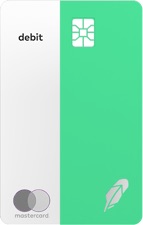
Robinhood’s New Savings Account is FDIC-Insured! 2.05% APY

Robinhood brokerage has finally re-launched the high-interest cash sweep option after their failed (and illegal?) 2018 mash-up of checking accounts and SIPC-insurance. Robinhood Cash Management is basically what many other places like Betterment Savings have implemented, a FDIC-insured sweep account backed by a mix of different partner banks. The interest rate is variable and currently 2.05% APY as of 10/8/19. This is a pretty competitive rate when compared to other cash alternatives. Debit card has no fees on the Allpoint ATM network. Unfortunately, as is usual with Robinhood, you’ll have to join a long waitlist first.

This was an important move for Robinhood, as many of the established giants have joined the free stock trades party – Schwab, TD Ameritrade, E-Trade, Interactive Brokers, Ally Invest. However, not all of them offer competitive rates on idle cash. Schwab is notably bad in this regard. However, Schwab does offer well-trained humans and instant customer service via phone call. Robinhood has a slick app and user interface, but they don’t readily offer a phone number. Instead, you must wait around for a reply on their online messaging service. If I put a huge chunk of my net worth in a broker, I want a phone number.

So basically, there are free trades, high interest on idle cash, and good customer service. Which are the most important to you?

Best Interest Rates on Cash – October 2019

Here’s my monthly roundup of the best interest rates on cash for October 2019, roughly sorted from shortest to longest maturities. Rates are lower across the board due to the recent Fed rate cut. I track these rates because I keep a full 12 months of expenses as a cash cushion and also invest in longer-term CDs (often at lesser-known credit unions) when they yield more than bonds. Check out my Ultimate Rate-Chaser Calculator to get an idea of how much extra interest you’d earn if you are moving money between accounts. Rates listed are available to everyone nationwide. Rates checked as of 10/2/19.

High-yield savings accounts
While the huge megabanks like to get away with 0.01% APY, it’s easy to open a new “piggy-back” savings account and simply move some funds over from your existing checking account. The interest rates on savings accounts can drop at any time, so I prioritize banks with a history of competitive rates. Some banks will bait you and then lower the rates in the hopes that you are too lazy to leave.

Short-term guaranteed rates (1 year and under)
A common question is what to do with a big pile of cash that you’re waiting to deploy shortly (just sold your house, just sold your business, legal settlement, inheritance). My usual advice is to keep things simple and take your time. If not a savings account, then put it in a flexible short-term CD under the FDIC limits until you have a plan.

  • No Penalty CDs offer a fixed interest rate that can never go down, but you can still take out your money (once) without any fees if you want to use it elsewhere. Marcus Bank has a 7-month No Penalty CD at 2.10% APY with a $500 minimum deposit. CIT Bank has a 11-month No Penalty CD at 2.05% APY with a $1,000 minimum deposit. You may wish to open multiple CDs in smaller increments for more flexibility.
  • Total Direct Bank has a 12-month CD at 2.50% APY ($25,000 minimum) with an early withdrawal penalty of 3 months of interest. Navy Federal Credit Union has a special 9-month CD at 2.25% APY ($1,000 minimum), but you must have a military affiliation to join (includes being a relative of a veteran). Customers Bank has 2.25% APY ($25,000 minimum) on their liquid Ascent Money Market with a rate guarantee until 6/30/2020 (almost 10 months from today).

Money market mutual funds + Ultra-short bond ETFs
If you like to keep cash in a brokerage account, beware that many brokers pay out very little interest on their default cash sweep funds (and keep the difference for themselves). The following money market and ultra-short bond funds are not FDIC-insured, but may be a good option if you have idle cash and cheap/free commissions.

  • Vanguard Prime Money Market Fund currently pays an 2.00% SEC yield. The default sweep option is the Vanguard Federal Money Market Fund, which has an SEC yield of 1.94%. You can manually move the money over to Prime if you meet the $3,000 minimum investment.
  • Vanguard Ultra-Short-Term Bond Fund currently pays 2.16% SEC yield ($3,000 min) and 2.26% SEC Yield ($50,000 min). The average duration is ~1 year, so there is more interest rate risk.
  • The PIMCO Enhanced Short Maturity Active Bond ETF (MINT) has a 2.32% SEC yield and the iShares Short Maturity Bond ETF (NEAR) has a 2.36% SEC yield while holding a portfolio of investment-grade bonds with an average duration of ~6 months.

Treasury Bills and Ultra-short Treasury ETFs
Another option is to buy individual Treasury bills which come in a variety of maturities from 4-weeks to 52-weeks. You can also invest in ETFs that hold a rotating basket of short-term Treasury Bills for you, while charging a small management fee for doing so. T-bill interest is exempt from state and local income taxes.

  • You can build your own T-Bill ladder at TreasuryDirect.gov or via a brokerage account with a bond desk like Vanguard and Fidelity. Here are the current Treasury Bill rates. As of 10/1/19, a 4-week T-Bill had the equivalent of 1.79% annualized interest and a 52-week T-Bill had the equivalent of 1.74% annualized interest (!).
  • The Goldman Sachs Access Treasury 0-1 Year ETF (GBIL) has a 1.99% SEC yield and the SPDR Bloomberg Barclays 1-3 Month T-Bill ETF (BIL) has a 1.85% SEC yield. GBIL appears to have a slightly longer average maturity than BIL.

US Savings Bonds
Series I Savings Bonds offer rates that are linked to inflation and backed by the US government. You must hold them for at least a year. There are annual purchase limits. If you redeem them within 5 years there is a penalty of the last 3 months of interest.

  • “I Bonds” bought between May 2019 and October 2019 will earn a 1.90% rate for the first six months. The rate of the subsequent 6-month period will be based on inflation again. More info here.
  • In mid-October 2019, the CPI will be announced and you will have a short period where you will have a very close estimate of the rate for the next 12 months. I will have another post up at that time.

Prepaid Cards with Attached Savings Accounts
A small subset of prepaid debit cards have an “attached” FDIC-insured savings account with exceptionally high interest rates. The negatives are that balances are capped, and there are many fees that you must be careful to avoid (lest they eat up your interest). Some folks don’t mind the extra work and attention required, while others do. There is a long list of previous offers that have already disappeared with little notice. I don’t personally recommend nor use any of these anymore.

  • The only notable card left in this category is Mango Money at 6% APY on up to $2,500, but there are many hoops to jump through. Requirements include $1,500+ in “signature” purchases and a minimum balance of $25.00 at the end of the month.

Rewards checking accounts
These unique checking accounts pay above-average interest rates, but with unique risks. You have to jump through certain hoops, and if you make a mistake you won’t earn any interest for that month. Some folks don’t mind the extra work and attention required, while others do. Rates can also drop to near-zero quickly, leaving a “bait-and-switch” feeling. I don’t use any of these anymore, but the Orion offer is worth consideration.

  • Orion FCU Premium Checking has 4.00% APY on balances up to $30,000 if you meet make $500+ in direct deposits and 8 debit card “signature” purchases each month. Consumers Credit Union Free Rewards Checking has up to 5.09% APY on balances up to $10,000 if you meet make $500+ in ACH deposits, 12 debit card “signature” purchases, and spend $1,000 on their credit card each month. Find a locally-restricted rewards checking account at DepositAccounts.
  • If you’re looking for a high-interest checking account without debit card transaction requirements then the rate won’t be as high, but take a look at MemoryBank at 1.15% APY.

Certificates of deposit (greater than 1 year)
CDs offer higher rates, but come with an early withdrawal penalty. By finding a bank CD with a reasonable early withdrawal penalty, you can enjoy higher rates but maintain access in a true emergency. Alternatively, consider building a CD ladder of different maturity lengths (ex. 1/2/3/4/5-years) such that you have access to part of the ladder each year, but your blended interest rate is higher than a savings account. When one CD matures, use that money to buy another 5-year CD to keep the ladder going. Some CDs also offer “add-ons” where you can deposit more funds if rates drop.

  • You could build a CD ladder at First National Bank of America at 2.70% APY for 5-year, 2.60% APY for 4-year, 2.55% APY for 3-year, 2.50% APY for 2-year, and 2.45% APY for 1-year.
  • 5-year CD rates have been dropping at many banks and credit unions, following the overall interest rate curve. A good rate is now about 3% APY, with Hiway Federal Credit Union offering 3.00% APY ($25,000 min) or 2.80% APY ($500 min) on a 5-year CD with an early withdrawal penalty of 12 months of interest. Anyone can join this credit union via partner organization Minnesota Recreation and Park Foundation ($10 fee).
  • Navy Federal Credit Union has a special 18-month cert at 2.60% APY ($1,000 minimum) and a 5-year cert at 3.00% APY, but you must have a military affiliation to join (includes being a relative of a veteran).
  • You can buy certificates of deposit via the bond desks of Vanguard and Fidelity. You may need an account to see the rates. These “brokered CDs” offer FDIC insurance and easy laddering, but they don’t come with predictable early withdrawal penalties. The rates are not competitive right now. Watch out for higher rates from callable CDs listed by Fidelity.

Longer-term Instruments
I’d use these with caution due to increased interest rate risk, but I still track them to see the rest of the current yield curve.

  • Willing to lock up your money for 10+ years? You can buy long-term certificates of deposit via the bond desks of Vanguard and Fidelity. These “brokered CDs” offer FDIC insurance, but they don’t come with predictable early withdrawal penalties. As of this writing, I am seeing no inventory on 7-year and 10-year CDs. Watch out for higher rates from callable CDs from Fidelity.
  • How about two decades? Series EE Savings Bonds are not indexed to inflation, but they have a unique guarantee that the value will double in value in 20 years, which equals a guaranteed return of 3.5% a year. However, if you don’t hold for that long, you’ll be stuck with the normal rate which is quite low (currently a sad 0.10% rate). I view this as a huge early withdrawal penalty. You could also view it as a hedge against prolonged deflation, but only if you can hold on for 20 years. As of 10/2/19, the 20-year Treasury Bond rate was 1.90%.

All rates were checked as of 10/2/19.

Best Interest Rates on Cash – September 2019

Here’s my monthly roundup of the best interest rates on cash for September 2019, roughly sorted from shortest to longest maturities. I track these rates because I keep a full 12 months of expenses as a cash cushion and also invest in longer-term CDs (often at lesser-known credit unions) when they yield more than bonds. Check out my Ultimate Rate-Chaser Calculator to get an idea of how much extra interest you’d earn if you are moving money between accounts. Rates listed are available to everyone nationwide. Rates checked as of 9/3/19.

High-yield savings accounts
While the huge megabanks like to get away with 0.01% APY, it’s easy to open a new “piggy-back” savings account and simply move some funds over from your existing checking account. The interest rates on savings accounts can drop at any time, so I prioritize banks with a history of competitive rates. Some banks will bait you and then lower the rates in the hopes that you are too lazy to leave.

Short-term guaranteed rates (1 year and under)
A common question is what to do with a big pile of cash that you’re waiting to deploy shortly (just sold your house, just sold your business, legal settlement, inheritance). My usual advice is to keep things simple and take your time. If not a savings account, then put it in a flexible short-term CD under the FDIC limits until you have a plan.

  • No Penalty CDs offer a fixed interest rate that can never go down, but you can still take out your money (once) without any fees if you want to use it elsewhere. Marcus Bank has a 7-month No Penalty CD at 2.25% APY and a 11-month No Penalty CD at 2.20% APY with a $500 minimum deposit. Ally Bank has a 11-month No Penalty CD at 2.20% APY with a $25,000 minimum deposit. You may wish to open multiple CDs in smaller increments for more flexibility.
  • Total Direct Bank has a 12-month CD at 2.60% APY ($25,000 minimum) with an early withdrawal penalty of 3 months of interest. Navy Federal Credit Union has a special 9-month CD at 2.50% APY ($1,000 minimum), but you must have a military affiliation to join (includes being a relative of a veteran).

Money market mutual funds + Ultra-short bond ETFs
If you like to keep cash in a brokerage account, beware that many brokers pay out very little interest on their default cash sweep funds (and keep the difference for themselves). The following money market and ultra-short bond funds are not FDIC-insured, but may be a good option if you have idle cash and cheap/free commissions.

  • Vanguard Prime Money Market Fund currently pays an 2.12% SEC yield. The default sweep option is the Vanguard Federal Money Market Fund, which has an SEC yield of 2.08%. You can manually move the money over to Prime if you meet the $3,000 minimum investment.
  • Vanguard Ultra-Short-Term Bond Fund currently pays 2.21% SEC yield ($3,000 min) and 2.31% SEC Yield ($50,000 min). The average duration is ~1 year, so there is more interest rate risk.
  • The PIMCO Enhanced Short Maturity Active Bond ETF (MINT) has a 2.40% SEC yield and the iShares Short Maturity Bond ETF (NEAR) has a 2.41% SEC yield while holding a portfolio of investment-grade bonds with an average duration of ~6 months.

Treasury Bills and Ultra-short Treasury ETFs
Another option is to buy individual Treasury bills which come in a variety of maturities from 4-weeks to 52-weeks. You can also invest in ETFs that hold a rotating basket of short-term Treasury Bills for you, while charging a small management fee for doing so. T-bill interest is exempt from state and local income taxes.

  • You can build your own T-Bill ladder at TreasuryDirect.gov or via a brokerage account with a bond desk like Vanguard and Fidelity. Here are the current Treasury Bill rates. As of 9/3/19, a 4-week T-Bill had the equivalent of 2.07% annualized interest and a 52-week T-Bill had the equivalent of 1.74% annualized interest (!).
  • The Goldman Sachs Access Treasury 0-1 Year ETF (GBIL) has a 1.99% SEC yield and the SPDR Bloomberg Barclays 1-3 Month T-Bill ETF (BIL) has a 1.92% SEC yield. GBIL appears to have a slightly longer average maturity than BIL.

US Savings Bonds
Series I Savings Bonds offer rates that are linked to inflation and backed by the US government. You must hold them for at least a year. There are annual purchase limits. If you redeem them within 5 years there is a penalty of the last 3 months of interest.

  • “I Bonds” bought between May 2019 and October 2019 will earn a 1.90% rate for the first six months. The rate of the subsequent 6-month period will be based on inflation again. More info here.
  • In mid-October 2019, the CPI will be announced and you will have a short period where you will have a very close estimate of the rate for the next 12 months. I will have another post up at that time.

Prepaid Cards with Attached Savings Accounts
A small subset of prepaid debit cards have an “attached” FDIC-insured savings account with exceptionally high interest rates. The negatives are that balances are capped, and there are many fees that you must be careful to avoid (lest they eat up your interest). Some folks don’t mind the extra work and attention required, while others do. There is a long list of previous offers that have already disappeared with little notice. I don’t personally recommend nor use any of these anymore.

  • The only notable card left in this category is Mango Money at 6% APY on up to $2,500, but there are many hoops to jump through. Requirements include $1,500+ in “signature” purchases and a minimum balance of $25.00 at the end of the month.

Rewards checking accounts
These unique checking accounts pay above-average interest rates, but with unique risks. You have to jump through certain hoops, and if you make a mistake you won’t earn any interest for that month. Some folks don’t mind the extra work and attention required, while others do. Rates can also drop to near-zero quickly, leaving a “bait-and-switch” feeling. I don’t use any of these anymore, but the Orion offer is worth consideration.

  • The newest one is Orion FCU Premium Checking at 4.00% APY on balances up to $30,000 if you meet make $500+ in direct deposits and 8 debit card “signature” purchases each month. One has been around for while is the Consumers CU Free Rewards Checking at up to 5.09% APY on balances up to $10,000 if you meet make $500+ in ACH deposits, 12 debit card “signature” purchases, and spend $1,000 on their credit card each month. Find a locally-restricted rewards checking account at DepositAccounts.
  • If you’re looking for a high-interest checking account without debit card transaction requirements then the rate won’t be as high, but take a look at MemoryBank at 1.40% APY.

Certificates of deposit (greater than 1 year)
CDs offer higher rates, but come with an early withdrawal penalty. By finding a bank CD with a reasonable early withdrawal penalty, you can enjoy higher rates but maintain access in a true emergency. Alternatively, consider building a CD ladder of different maturity lengths (ex. 1/2/3/4/5-years) such that you have access to part of the ladder each year, but your blended interest rate is higher than a savings account. When one CD matures, use that money to buy another 5-year CD to keep the ladder going. Some CDs also offer “add-ons” where you can deposit more funds if rates drop.

  • You could build a CD ladder at First National Bank of America at 2.85% APY for 5-year, 2.75% APY for 4-year, 2.65% APY for 3-year, 2.60% APY for 2-year, and 2.50% APY for 1-year.
  • 5-year CD rates have been dropping at many banks and credit unions, following the overall interest rate curve. A good rate is now about 3.00% APY, with Commonwealth One Federal Credit Union offering a 5-year CD at 3.11% APY ($1,000 minimum) with an early withdrawal penalty of 180 days of interest. Higher rates with $50k an $100k deposits. Anyone can join this credit union via partner organization.
  • Navy Federal Credit Union has a special 18-month cert at 3.00% APY ($1,000 minimum) and a 5-year cert at 3.25% APY, but you must have a military affiliation to join (includes being a relative of a veteran).
  • You can buy certificates of deposit via the bond desks of Vanguard and Fidelity. You may need an account to see the rates. These “brokered CDs” offer FDIC insurance and easy laddering, but they don’t come with predictable early withdrawal penalties. The rates are not interesting right now. As of this writing, Vanguard is showing a 2-year non-callable CD at 1.80% APY. Watch out for higher rates from callable CDs listed by Fidelity.

Longer-term Instruments
I’d use these with caution due to increased interest rate risk, but I still track them to see the rest of the current yield curve.

  • Willing to lock up your money for 10+ years? You can buy long-term certificates of deposit via the bond desks of Vanguard and Fidelity. These “brokered CDs” offer FDIC insurance, but they don’t come with predictable early withdrawal penalties. As of this writing, I am seeing no inventory on 7-year and 10-year CDs. Watch out for higher rates from callable CDs from Fidelity.
  • How about two decades? Series EE Savings Bonds are not indexed to inflation, but they have a unique guarantee that the value will double in value in 20 years, which equals a guaranteed return of 3.5% a year. However, if you don’t hold for that long, you’ll be stuck with the normal rate which is quite low (currently a sad 0.10% rate). I view this as a huge early withdrawal penalty. However, you could also view it as a hedge against prolonged deflation, but only if you can hold on for 20 years. As of 9/3/19, the 20-year Treasury Bond rate was 1.77%.

All rates were checked as of 9/3/19.