Vanguard has an interesting whitepaper called Automatic Enrollment: The power of the default [pdf]. It takes effort to make a choice beyond the default setting. Doing nothing is always easier. Behavioral economics is still gaining popularity and I knew that auto-enrollment was a powerful way to increase participation in retirement plans, but I didn’t know it was this powerful. Here are a few examples.
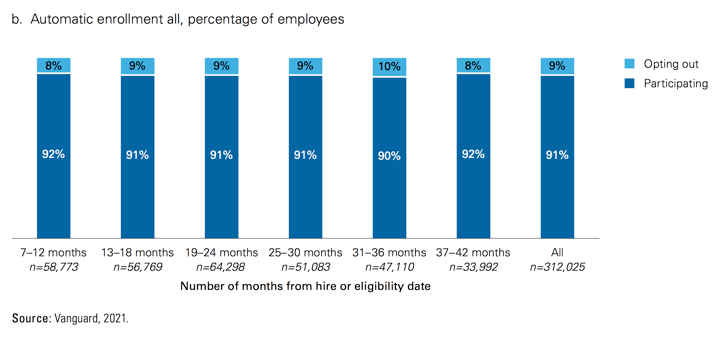
Much higher participation: After 3+ years, 90% of auto-enrolled employees kept participating in the retirement plans.
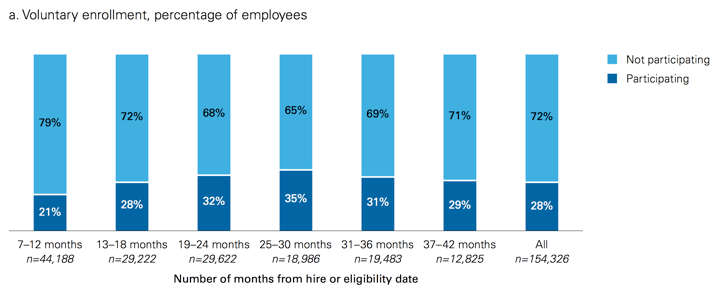
You might think, is that really better than normal? Yes! Here is what participation looked like without auto-enrollment.
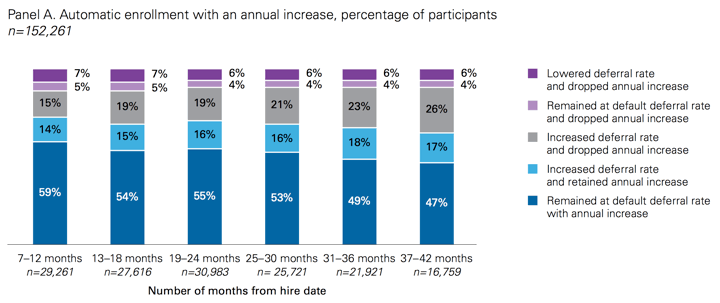
Higher contribution rates: After 3 years, 90% of employees auto-enrolled with automatic annual increases indeed kept increasing their contribution percentages. Most stayed with the gradual auto-increase even though they could opt-out at any time, but some also increased more on their own (for example to reach the max).
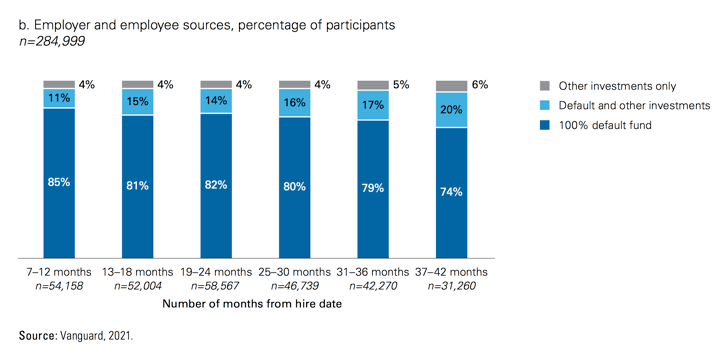
More appropriate investments: After 3+ years, 94% stayed with a mix of the default and other investments and 74% stayed with solely the default investment option. This is usually a diversified Target Date Fund, whereas in the past a significant amount of participants just stuck with a money market or similar cash account.
My takeaway is that I keep underestimating the power of the default. We see the effects all around us. Why do people keep using Google as their search engine? Default. Switch to DuckDuckGo? Hassle. Why do I simply buy the newest iPhone again after a few years? Default. Switch to Android? Hassle. Buying from Amazon? Easy. Input your name, address, payment info and buy from 100 different online stores? Hassle. Why does Netflix auto-renew with zero effort instead of sending you a bill to pay each month? Behavioral tendencies are big component of business success.
The power of the default is also why you can get $300 to open a new bank account and $500 to try out a new credit card. It takes a big fat incentive for people to move beyond their default. Car insurance companies like GEICO, Progressive, and Liberty mutual spend billions just to get you to even compare premium quotes, let alone switch. Getting over this behavioral tendency is a big component of improving your personal finances.
 The Best Credit Card Bonus Offers – 2025
 Big List of Free Stocks from Brokerage Apps
 Best Interest Rates on Cash - 2025
 Free Credit Scores x 3 + Free Credit Monitoring
 Best No Fee 0% APR Balance Transfer Offers
 Little-Known Cellular Data Plans That Can Save Big Money
 How To Haggle Your Cable or Direct TV Bill
 Big List of Free Consumer Data Reports (Credit, Rent, Work)
Speak Your Mind