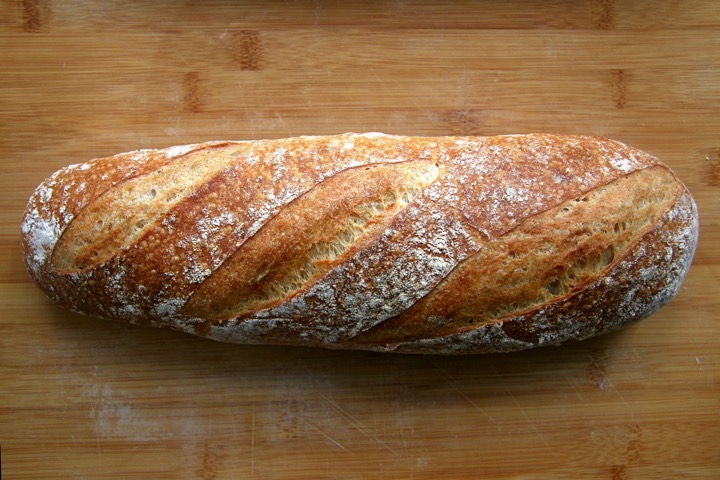
I was reading the thought piece Finance is other people when I came across an intriguing finance nugget:
Suppose you think that bitcoin will, like gold, have enduring appeal. During the reign of the Babylonian king Nebuchadnezzar, an ounce of gold purchased 350 loaves of bread according to Erb and Harvey (2013). Here we are 2,700 years later, and an ounce of gold will still get you around 350 loaves of bread. On the one hand, that’s an amazing record of retaining value. On the other, that’s a zero percent real return! If gold had merely beaten inflation by 30 basis points a year, an ounce of gold would get you a million loaves of bread today, instead of 350.
This claim was so specific, I had to dig further. So I looked up the paper by Erb and Harvey from 2013 called The Golden Dilemma. The only reference to Nebuchadnezzar was in a footnote:
Harmston (1998) mentions that in 562 B.C., during the reign of the Babylonian king Nebuchadnezzar, an ounce of gold purchased 350 loaves of bread. At the recent price of $1,600 an ounce, an ounce of gold could buy 350 loaves of bread priced at $4.57 a loaf.
This led to Gold as a Store of Value, published in November 1998 as a “research study” for the World Gold Council which states:
It is said that an ounce of gold bought 350 loaves of bread in the time of Nebuchadnezzar, king of Babylon, who died in 562 BC. The same ounce of gold still buys approximately 350 loaves of bread today. Across 2,500 years gold has in other words retained its purchasing power, relative to bread at least, and has had a real rate of return of zero.
In the end, I could not find a single piece of historical evidence support this claim. Just a lot of people repeating each other. Feels like a true factoid – an “assumption or speculation that is reported and repeated so often that it becomes accepted as fact”. Like “Humans only use 10% of their brains”.
Obviously, gold has been a store of value for a very long time, but how much money do you really want to commit to something that will end up with a zero return above inflation? Not to mention it is so volatile that it’s not a good short-term store of value. Nobody saves up for their house downpayment with gold coins.
So what’s the point of gold? I still fall back on a scenario where you want to flee quickly as society collapses around you and you want enough assets to start over somewhere else. Imagine you lived in Ukraine. It’s a form of “insurance” you can hold in your hand, and feel a bit more secure in this crazy world. I don’t think it’s completely irrational to put aside a small bit of your net worth into it. Such happy thoughts are echoed in the study:
Gold has not necessarily held its value in terms of purchasing power in times of war. This is partly because at such times the prices of other commodities, more immediately useful for the war effort, have tended to rise faster. However, gold’s liquidity, acceptability and portability are qualities that have been particularly important in times of crises such as occupation by a foreign power or collapse in a monetary system. At such times, these qualities may well be more important than gold’s rate of exchange with paper money. Given this, and gold’s role as a wealth preserver in some of the darkest periods of the twentieth century, gold has proved to be a haven on numerous occasions and in different places.
Photo by Tommaso Urli on Unsplash
 The Best Credit Card Bonus Offers – 2025
 Big List of Free Stocks from Brokerage Apps
 Best Interest Rates on Cash - 2025
 Free Credit Scores x 3 + Free Credit Monitoring
 Best No Fee 0% APR Balance Transfer Offers
 Little-Known Cellular Data Plans That Can Save Big Money
 How To Haggle Your Cable or Direct TV Bill
 Big List of Free Consumer Data Reports (Credit, Rent, Work)
Just imagine when it can’t buy anything. Because it’s coming…
Thanks for dispelling this myth. Hard to imagine Nebuchadnezzar used an English system of measurement invented thousands of years later. Just another fable goldbugs love to tell themselves.
Loaf is mostly of European origin. In Middle East they prefer flat bread that you can rip apart with your hands. Loafs can be of varied weight and quality, anywhere from 300 gr – 1 kg. Flour can be various levels of rye, wheat of different density based on various factors…think Wonder bread vs German whole grain rye. However, loaf of bread in medieval England was twopence which is like more than 6 GBP today, so there’s something to using the “bread index”
I’d like to point out to your Northeast readers that I’ve discovered a huge imbalance of bread prices between LIDL and other supermarkets. At LIDL you can get a loaf as low as $1.50 – $2.50 including wheat, multi grain, rye, white and they are just fine and tasty especially toasted. My mother insists on Arnold Brickyard White and pays $6+ per loaf and complains how they’ve recently taken away some protective packaging making it difficult to store and susceptible to easy squishing
“How much money do you really want to commit to something that will end up with a zero return above inflation?” You are thinking about this the wrong way. You are correct gold is not a good buy and hold for the long term, as something to set and forget. Gold is for following the cycles and getting in and out at the right times. If you look to Gold/Silver ratio, Gold/Dow ratio, and Gold/Housing ratio you can time your entry and exit points for getting in and out of these investment vehicles. For example when gold and silver went vertical in the year 1980 and reached an extreme versus the Dow that was the time to get out of gold and enter the stock market. Hitting these markets will yield profit far above the rate of inflation and thus gold has investment possibilities way beyond the societal collapse narrative. So yeah you don’t hold gold for the long term, you have to know when to get in and out.
I meant, hitting these “markers”. (from my previous comment)
I decided to search for the price of bread and an ounce of gold in 1910 – just a random date from a long time ago that we have reliable data for. AI overviews (fwiw) said that bread was 5-6 cents and gold was $20.67. That turns out to 375 loaves of bread (at 5.5 cents a loaf). That’s not bad.
However, as a commenter mentioned, local prices may vary. I can get a loaf of bread for a little more than $1.29 at Aldi and gold is over $3200 an ounce. So that’s closer to 2500 loaves of bread per ounce now.
Obviously, my research is limited here. I can’t imagine that anyone is regularly paying $9 for a loaf of bread to support $3200+ gold.
Would you please give us an update on Stable coins or Crypto investing (is it Digital Gold as some put it?)?
Calculating bread vs Gold is an interesting metric. But more telling is Gold versus Silver. And it looks to me like Gold is way overvalued vs Silver.