Advisor Perspectives has a nice chart of 150 years of historical inflation (1872-2022). I appreciate that it includes both the short-term monthly inflation numbers as well as the 10-year rolling average over this long period of time.

A few basic observations:
- From a long-term perspective, there have been many large sharp spikes in inflation throughout the entire period. Inflation has been a persistently recurring concern.
- From roughly 1872-1940, there were extreme swings between both high inflation and high deflation. Of course, this was also when the dollar was (mostly) on the gold standard.
- From roughly 1950 onward, the rolling 10-year average for inflation has still varied from ~2% to ~9% annually. Given our current low 10-year average, inflation could continue to be elevated for many years and not look out of place on this chart.
My primary takeaway is to always stay mindful of long-term inflation risk. I don’t know what inflation will be next month or next year, but I am confident that it’s coming sooner or later. Some applications (my opinion):
- The 30-year fixed rate mortgage continues to be a great inflation hedge. (Even at high interest rates, that might soon result in lower prices.) As long as you lock in a monthly payment that you can comfortably afford and plan to stay a while, your monthly mortgage payment will only effectively get cheaper over time as inflation eats away at it. If rates drop, you can refinance. If rates rise, you can keep it forever and even rent the property out if you move, as high rates means inflation likely boosted rents while your mortgage payment stayed the same.
- On the flip side, according to Macrotrends, the a 30-year Treasury bond yielded only 1% a year back in 2020. Long-term nominal bonds became a popular portfolio diversifier while rates were dropping (performance chasing), but in reality they became a ticking inflation bomb. I’m still avoiding long-term nominal bonds today.
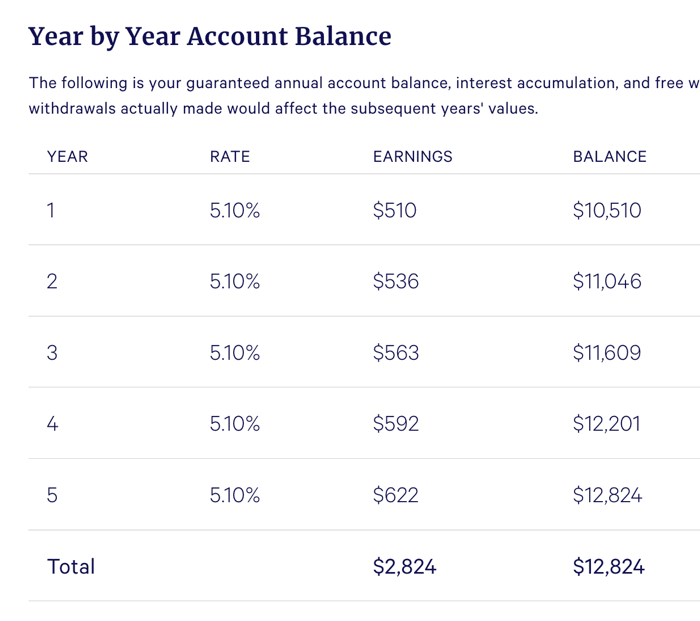
- A lifetime annuity has definite upsides, but inflation will eat away at the spending power over what could be 30 years. Maybe you’ll get older and spend less each year anyway, but I’d still maintain other assets (like stocks) to hedge that inflation risk. I like single premium immediate annuities as a possible tool for retirement income, but not as the only or primary tool.
- TIPS are complex yet intriguing. I’m still not sure what the best play is right now, but I am happy to keep holding them as part of my bond portfolio. I’m leaning towards moving away from ETFs and more towards a ladder of individual bonds, especially if the real rates on long-term TIPS go any higher.
 Retirement income planning would be so much easier if you could buy a known amount of guaranteed lifetime income that automatically adjusted for inflation. However, the reality is that not a single insurance company in the entire world is willing to take on that long-term inflation risk. The only possibility left is to ladder inflation-linked bonds (TIPS) so that each year you would cash out some bonds and interest to create your own DIY inflation-adjusted income.
 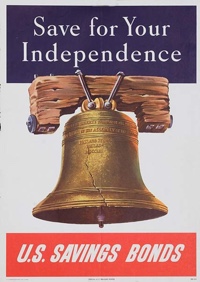 Inflation still 🚀 😬 Savings I Bonds are a unique, low-risk investment backed by the US Treasury that pay out a variable interest rate linked to inflation. With a holding period from 12 months to 30 years, you could own them as an alternative to bank certificates of deposit (they are liquid after 12 months) or bonds in your portfolio.


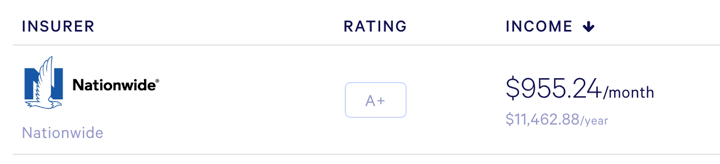
 Here’s my quarterly income update for my

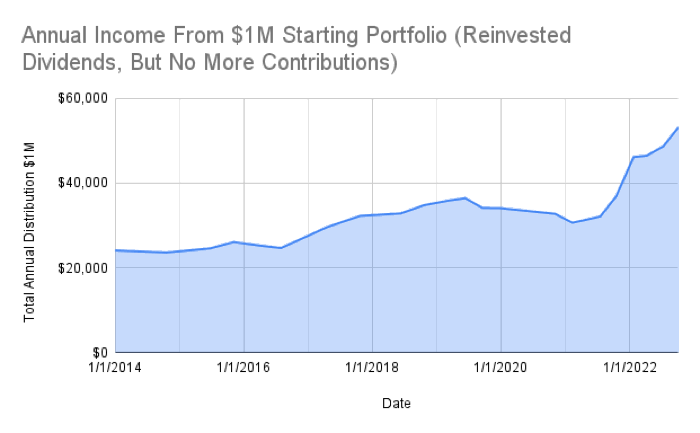
 Here’s my quarterly update on my current investment holdings as of 10/4/22, including our 401k/403b/IRAs and taxable brokerage accounts but excluding real estate and side portfolio of self-directed investments. Following the concept of

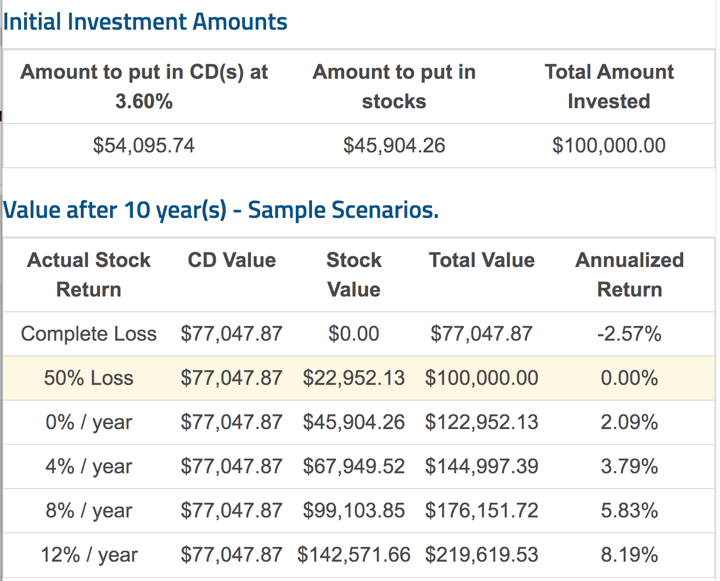
 Everyone loves a 100% money-back guarantee. A popular option on insurance policies is the “Return of Premium” rider. Let’s say you buy a $1,000,000 term life insurance for 30 years at $1,000 a year. At the end of 30 years, if you’re still alive, the insurance policy will no longer pay you the $1,000,000 if you die, but it will return all the premium you paid ($30,000). In your mind, you could think of it as “no risk” because you’ll get your $30,000 back no matter what!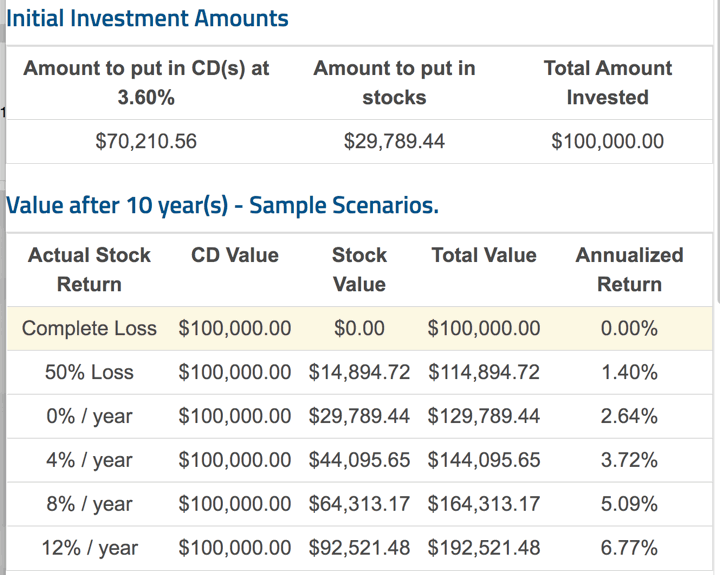







 The Best Credit Card Bonus Offers – 2025
 Big List of Free Stocks from Brokerage Apps
 Best Interest Rates on Cash - 2025
 Free Credit Scores x 3 + Free Credit Monitoring
 Best No Fee 0% APR Balance Transfer Offers
 Little-Known Cellular Data Plans That Can Save Big Money
 How To Haggle Your Cable or Direct TV Bill
 Big List of Free Consumer Data Reports (Credit, Rent, Work)