Our Savings Rate Is (Still) Negative: Should We Worry?

A few days ago, the US Department of Commerce released1 that the nation’s savings rate for 2006 was negative 1%. This means as a whole we spent more than we earned after-taxes, again. (It was also negative for 2005). Much is being made about how this is the lowest savings rate since the Great Depression, when there was a negative 1.5 percent rate in 1933. Should we be worried? Is the sky falling?

What’s the recent trend?
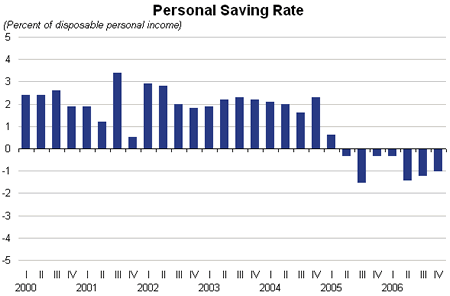
Savings Chart 2000-2006

I wonder what the margin of error is on this data. Looking at this graph, it seems like perhaps something happened about a year and a half ago? But then I found it goes back a lot further than that. This chart starts from the 1960s2:
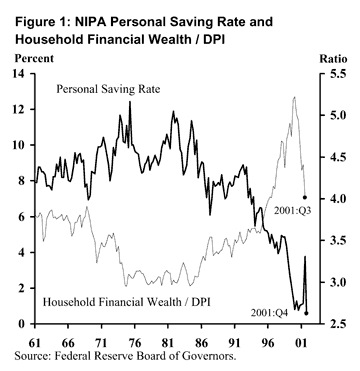
Savings Chart 1960-2005

To help better understand the numbers, you have to go into the definitions a little bit. The personal savings rate ignores the capital gains in our investments like stocks and bonds, and also tangible assets like cars and real estate. In fact, our overall net worth is not doing that bad and actually increased over last year. The graph above tracks this by dividing household total wealth by disposable personal income (DPI). There are a few ways the experts try to explain this:
[Read more…]

This Week in the Carnivals

If you can’t get your fill of financial talk, mosey on over to the Carnival of Investing (Monopoly Edition!), Carnival of Debt Reduction, and the Carnival of Personal Finance. Here are a few that stood out:

Looking to learn from someone who’s had some bumps in the road and still has a great attitude about it? Check out BloggingAwayDebt.

Searchlight Crusade has some tips on how to avoid vampire properties. I wish house inspections were done upfront by a third-party and shown to all interested parties. The fee could just be picked up by the eventual home-buyer.

MyPocketChange tries help figure out how long do you need to leave your money in the market? Don’t miss the graphs, they say it all.

What’s Your Dream Job?

ESPN Dream Job Logo, credit: ESPN.comMy wife and I are both job-hunting, and I’ve been thinking a lot about careers in general. I also recently watched the movie High Fidelity. If you haven’t seen it, there is a scene where John Cusack has a list of his top 5 dream jobs if “qualifications, history, time, and salary were no object.” After going through them, he realizes that he is already doing one of his dream jobs, owning his own record store. So I wondered, what are/were my dream jobs? Here they are, sorted by era, along with why it didn’t work out.
High School – High School Math Teacher
High school was where I first realized that good teachers can change your life by showing the beauty in a subject. Seriously. I also tutored some math and ACT/SAT students, and it was very rewarding. The problem? I was afraid that I would feel more like parent than a teacher, and I don’t have that kind of patience. Also, let’s face it, the pay is horrible.

College – Professor of Physics [at a small liberal arts college].
I still think about this sometimes. I love physics, also in large part to a great teacher. Besides the difficulty in getting the degree, the number of Physics Ph.Ds churned out every year compared to the number of tenure-track positions available is insane. You need to graduate from a top school to even have a chance. On top of that, you would have no power to choose where you lived. If a position opens up, you had better take it!

Corporate Worker – Optometrist
I have to admit, this was a very selfish choice. I was tired of feeling like an under-appreciated worker bee, and I wanted out. Being an optometrist seemed like the best combination of salary, autonomy, and quality of life. I really have no idea what the true life of an optometrist is like. It also would have required a lot more schooling and tuition.

Currently – Own My Own Educational Software Company
See a theme? I think that educational software is going to be a huge field in the future. We need to improve how our children learn. If the government doesn’t support this, then pro-active parents will buy it themselves as a supplement. You already see this in many areas, such as the SATs. I still have a ton to learn before I can achieve this, and my dream job may change in the meantime, but there you go.

So, what’s your dream job? (Pro athlete or big-inheritance aspirations aside.) It’d be especially awesome to hear from people actually doing their dream jobs.

NoPhoneTrees.com: GetHuman.com++

Most of us have heard of GetHuman.com, which offers people directions on navigating phone trees or direct-access phones numbers in order to reach a live person. Now a new service by NoPhoneTrees.com takes this one (small) step further.

After verifying your phone number, the website will call a service provider and navigate the phone tree for you. All you have to do is pick up when they call and you’re already on hold for the operator. I just tried this with one of my Citibank cards and it worked as advertised, saving me an entire 15 seconds 😉 Unfortunately, it doesn’t wait on hold for you and call you when someone actually picks up – I am guessing the lag time would be too great and the customer service rep would probably just hang up. Bummer – that would be cool.

Model Portfolio #2: The Boglehead’s Guide To Investing

(This is the second in my series of Model Portfolio Comparisons.)

This next portfolio comes from The Boglehead’s Guide To Investing by Larimore, Lindauer, and LeBoeuf. Taylor Larimore and Mel Lindauer are frequent and respected contributors at the Vanguard Diehards Forum. While obviously they are Bogle fans, they do present their own views on things. Four different model portfolios are given, but I will focus only on two of them.

Young Investor Model Portfolio

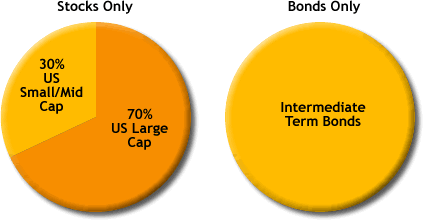
Asset Allocation Pie Chart, Young Investor

Asset Allocation for 80% Stocks/20% Bonds
55% Domestic Large Cap Stocks
25% Domestic Mid/Small Cap Stocks
20% Intermediate-Term Bonds

The domestic stock component of 70% Large and 30% Mid/Small Cap is actually how the entire U.S. stock market is broken down on a cap-weighted basis. Thus, you only need one US Total Market fund to cover both.

Investor in Early Retirement Model Portfolio
30% Diversified Domestic Stocks
10% Diversified International Stocks
30% Intermediate-Term Bonds
30% US Inflation-Protected Securities, or TIPs

The other two portfolios are for the Middle Aged Investor (30% US Large-Cap, 15% US Mid/Small-Cap, 10% International, 5% REITs, 20% Intermediate-Term Bonds, and 20% TIPs) and the Late Retirement Investor (20% Diversified Domestic, 40% Short/Intermediate-Term Bonds, 40% TIPs).

Overall, another simple but diversified portfolio – easy to build, easy to maintain. The risk profile is adjusted with age, going from more aggressive to less so with time. There is not very much international exposure.

Subscribe To My Money Blog

subscribe!

If you find this blog useful, I cordially invite you to subscribe to my content feed and get new entries sent directly to your e-mail address or RSS reader. Click here for all the subscription options. It’s easy and takes just a few seconds. (It also makes me feel warm and fuzzy.) Thanks!

Links: Tax Liens, Budgeting, Diamonds, Time, and Carnivals

Here are some posts from other bloggers that caught my eye:

Guzzo the Contrarian writes about Arizona tax lien certificates. I remember these being vaguely mentioned as superior to bank CDs in the Rich Dad, Poor Dad book series. I’m sure these involve more risk, so while I don’t believe that, it would be interesting to see how much these pay in my area.

Madame X shares how she successfully tracks her spending by using a PDA. I found it amusing that her old unsuccessful method is pretty much my current one – buy everything with a credit card, and count all the ATM withdrawals as either food, coffee, or beer. She lists some useful PDA financial software.

Jane Dough brings up the always-controversial subject of engagement rings and has some wise and practical thoughts. You can read my opinion on diamonds here. In short, like everything else in relationships, it all boils down to communication! There is no right or wrong. Every couple should do what’s right for themselves.

Mighty Bargain Hunter counts out 16 ways being disorganized costs you money. I think the main way disorganization costs you money is because it costs you time. Time that could be spent improving your career, executing money-making ideas, or learning more about investing.

If you haven’t been keeping up, the Carnival of Investing has been chugging along, with #55 at Binary Dollar, and #56 at Sun’s Financial Diary. New hosts are always welcome.

Plenty of Holiday Weekend Reading

Here are some of the posts that I’ve enjoyed reading through recently:

TiredButHappy is getting flack for her used car. Why must we judge? I secretly like the fact that our cars aren’t worth very much, if only to see if people care. Is that weird? I mean, the IRS doesn’t care whether you take bribes, deal drugs, or steal things, as long as you pay income taxes on it. From AllFinancialMatters.

And while you’re figuring out what to do with all those gift cards, why not consider one of these 25 gadgets that may actually save you money at the Simple Dollar? I want a DDR pad. How much does an old PS1 or PS2 go for these days? Anyone want to trade an iPod nano for a setup with game and 2 pads?

Excel can be a very powerful financial tool, and Experiments in Finance has a great series on Excel function tutorials.

Lazy Man and Money hosted this week’s Carnival of Investing. If you’d like to be a future host, please read about the Carnival here.

2006 In Review: A Year of My Money Blog

Out of the 637 posts that I scribbled this year, here are the ones that represent the good, the bad, and the fun of our 2006 financial adventure:



The Good
First, I started it off right by making financial goals (which give you something to focus on all year) instead of resolutions (which you end up looking backwards at).

Marriage and money are tightly linked, and behind the scenes this blog has spawned many a discussion about frugality and priorities. This has helped us limit our excess spending by focusing our energies towards a common purpose.

Of course, once you’ve saved it you still have to avoid the tax man. We maxed out our Roth IRAs and opened up and funded a Self-Employed 401k account. I’m very happy about that.

Finally, through the internet we have also found Modest Needs and Kiva, which give us new outlets to give to charity.

The Bad
Of course, there is always things I need to work on. We are also still on the look out for a method of tracking our spending that works for us, despite finding a bunch of free budgeting tools to help us.
[Read more…]

Free iPod Shuffle For Trading At HedgeStreet.com

(This offer expired at the end of 2006.)

Hedgestreet Logoaltext

Is it just me or are iPods quickly taking over the world? A new trading site, Hedgestreet.com, is offering a free 1 GB iPod Shuffle for opening an account, funding with at least $100, and making one trade. No trading fees for the first 30 days. You can start trading immediately when you open the account. However, this is because you cannot take out your money for 30 days after deposit.
[Read more…]

What Do You Want Me To Write About?

I’d like to know what topics that you’d like to learn more about, whether it is something personal related to me, or a financial topic in general. Please go ahead and leave an anonymous comment in this post (type in anything for name and e-mail). I won’t publish them, it’ll just be between you and me. I can’t make any promises, but I will take each suggestion into consideration. Thanks!
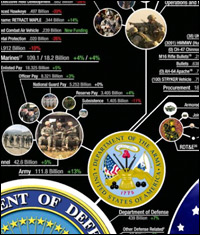
Death and Taxes: A Visual Guide to the Federal Budget

Ever wondered where your taxes went? Who has the time to actually read our $2.8 trillion budget? Well, now there’s an easier way: the incredibly high-res Visual Guide to the Federal Budget. From the site:

Knowledge of how your taxes are spent is essential to being a responsible citizen. If people actually knew what their thousands of dollars of income taxes paid for, there would be rioting in the streets, or at least some more accountability in Congress.