Our Family Travel Award Redemptions 2019

I’m not a Instagram travel blogger and I’ll never visit every country in the world, but I do earn enough points from navigating the top credit card offers to fund a big chunk of our annual travel each year. We are a family of five including a toddler, so we redeem for domestic economy class tickets to see grandparents instead of business class seats to an over-water Maldives bungalow. We also travel in peak times due to school schedules, so it’s harder to hunt for high value opportunities. I used to worry about this, but now we just earn ’em and burn ’em.

We are heading to Kauai later this month, which included these redemptions:

Economy flights to Hawaii – 15,000 to 40,000 American miles roundtrip each
The actual redemption amount will vary based on dates and times. The interisland flights are 7,500 miles each way (both AA/Hawaiian), and Mainland US to Hawaii are 20,000 miles each way.

You can earn American Airlines miles from multiple credit cards, as there are versions from both Citi and Barclaycard. Sometimes one offer is much better than the other, right now both are solid. Marriott/SPG points also transfer over to American miles. The cards will also let us get free checked bags and priority boarding, saving us more money.

Grand Hyatt Kauai – 25,000 Hyatt points per night
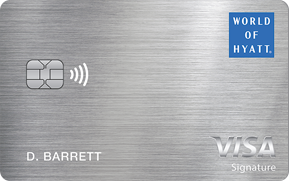
I’m excited to visit what is consistently rated the best resort in Kauai for the first time. You can earn Hyatt points from multiple credit cards as well. There is the Chase World of Hyatt card, and Ultimate Rewards also transfer over on a 1:1 basis instantly to Hyatt. That means the Chase Sapphire Preferred, Sapphire Reserve, Freedom, and Freedom Unlimited all earn points that can lead to a nice resort in Hawaii. (I also got a ton of points from the Ink Business Preferred for small businesses.)

Transferring some Chase points over let me top off the account to reach exactly the number of points needed. Redeeming with Hyatt points also includes all taxes and let me avoid the daily $35/resort fee. Here’s a screenshot showing that the total cash cost for our stay would have been $701 per night (2.8 cents per Hyatt point) after adding in the resort fee:
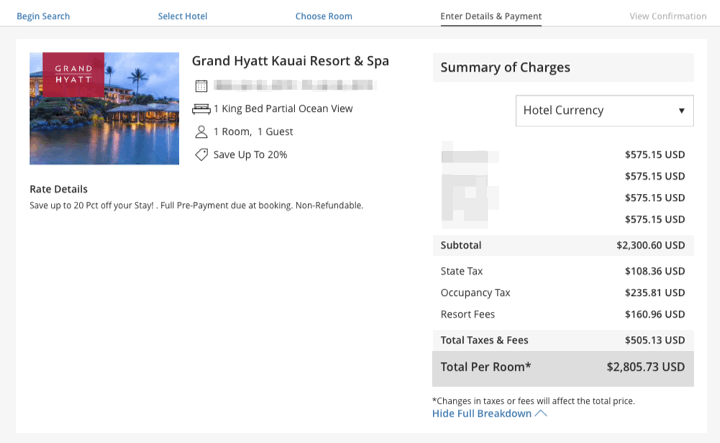
(I’m also getting 10% of my redeemed points back from this promo, so in the end I’ll be getting more than 3 cents per Hyatt point.)

For the holidays, we are heading to visit family in Austin, Texas:

Economy flights to Austin – 20,000 British Airlines Avios roundtrip each
The flights are actually on American as well, just using Avios. While far from my best Avios redemption, it worked out as British Airways allows you to “household” an account. We had a previous trip so a lot of miles were spread across the kids’ accounts, and this feature lets us pool the points and use them all up. For example, what if you had 18,000 points in five different accounts and the award you wanted was 100,000 points? Avios lets you pool them together, and you could transfer over some American Express Membership Rewards or Chase Ultimate Rewards points to top things off.

Besides past flights, our main source of Avios points was the Chase British Airways card.

SpringHill Suites Austin – 14,000 Marriott points per night
No free scuba lessons or water slides here. This is just a nice suite hotel so that we can fit all five of us in comfort. There is a solid free buffet breakfast, and it’s close to family (and a Rudy’s BBQ).

Marriott also has credit cards from both Chase and American Express that can provide lots of points-earning opportunities.

Both my wife and I apply for a few new cards each year, but we don’t go past that much anymore. Our basic idea is to try out one card at a time. Sometimes the perks are pleasantly much better than expected, and other times they are harder to use than expected.

Which Airline Miles Are Easiest To Redeem For Economy Awards? 2019

Cashing in your frequent flier miles for a free flight can be hit or miss, especially around a holiday. Which airlines are the most generous with making seats available? Each year, consulting firm IdeaWorks tries to run a fair comparison of all the major airlines to keep them honest. This WSJ article (paywall?) discusses their process:

In March, IdeaWorks searched for two award seats together on various travel dates between June and October on each airline’s busiest routes. Seats have to be available at the airline’s lowest everyday price—typically 25,000 miles round trip for a domestic coach ticket. The company made nearly 4,000 queries.

Below are the rankings of the 6 major US airlines. It is important to remember that this ranking focuses on domestic economy tickets only (no business class or international flights). The article does also rank international airlines on availability from a related metric.

For 2019, the most improved airline is United Airlines, while the worst decline goes to Delta. Not surprisingly, United claims this was totally on purpose because that’s what customers want and they are all about that… Meanwhile Delta suggested that the change was simply a result of more demand because their program is so popular. Shrug.

If you fly a lot on United, you can get significantly expanded award availability with the Chase United Explorer card. Add in the free checked bag for you and a companion, and the perks can easily offset the annual fee.

Southwest and JetBlue remain on top at close to 100% availability, but that is a bit misleading since both of their points are revenue-linked with no blackout dates. For example, 25,000 Southwest points will buy you basically any “Wanna Get Away” ticket that costs up to about $375. So the results are really just saying that Southwest’s busiest routes almost always have a flight that costs under ~$375. JetBlue is only 98% because some of their flights are just over the price threshold. I wonder if they included flights to Hawaii, now that Southwest flies there?

I have come to appreciate the simplicity of Southwest’s structure, especially now that I primarily shop for multiple economy tickets. For example, you can reliably value their credit card bonuses of 40,000 points = $600 in Wanna Get Away airfare, and 80,000 points = $1,200 of Wanna Get Away airfare. I can buy five seats on the same flight, no problem. Others prefer the traditional, more complex structure because it offered the skilled person the chance to get outsized value, like a $3,000 ticket for 50,000 points.

Airlines make a huge percentage of their revenue from selling these airline miles, which they create out of thin air both for actual flying and specifically for credit card users. This also means they have an incentive to create “miles inflation” such that each mile is worth less and less over time. I like this annual WSJ survey because it shows that someone is paying attention and calling them out publicly, at least on seat availability.

World of Hyatt Credit Card Review: 60,000 Bonus Points

The World of Hyatt credit card is a Hyatt consumer credit card issued by Chase that offers several perks for those that enjoy Hyatt hotels. There is a current sign-up bonus of up to 65,000 Hyatt points. Here are the highlights:

  • 30,000 Bonus Hyatt Points after you spend $3,000 on purchases in your first 3 months from account opening. Plus, up to 30,000 More Bonus Points by earning 2 Bonus Points total per $1 spent in the first 6 months from account opening on purchases that normally earn 1 Bonus Point, on up to $15,000 spent.
  • Enjoy complimentary World of Hyatt Discoverist status for as long as your account is open.
  • 1 Free Night award each year after your Cardmember anniversary at any Category 1-4 Hyatt hotel or resort.
  • 1 Additional Free Night award at any Category 1-4 Hyatt hotel or resort if you spend $15,000 during your cardmember anniversary year.
  • Receive 5 tier qualifying night credits towards status after account opening, and each year after that for as long as your account is open.
  • Earn 2 qualifying night credits towards your next tier status every time you spend $5,000 on your card.
  • Earn up to 9 points total for Hyatt stays – 4 Bonus Points per $1 spent at Hyatt hotels & 5 Base Points per $1 from Hyatt as a World of Hyatt member
  • Earn 2 Bonus Points per $1 spent at restaurants, on airline tickets purchased directly from the airlines, on local transit and commuting and on fitness club and gym memberships
  • $95 annual fee.

If you’ve gotten a bonus from any Hyatt Card within the last 2 years, please note the following:

The product is not available to either (i) current Cardmembers of any Hyatt Credit Card, or (ii) previous Cardmembers of any Hyatt Credit Card who received a new Cardmember bonus within the last 24 months.

If you have the old Chase Hyatt card, you can call them up and ask for upgrade options.

The 5/24 rule applies to this card. On many Chase cards, there is an unofficial rule that they will automatically deny approval on new credit cards if you have 5 or more new credit cards from any issuer on your credit report within the past 2 years (aka the 5/24 rule). This rule is designed to discourage folks that apply for high numbers of sign-up bonuses. This is applied on a per-person basis, so in our household one applies to Chase while the other applies at other card issuers. The 5/24 rule is now believed to apply to this card.

What can you get with 50,000 Hyatt points? Here are all the Hyatt redemption options, but the most popular options are for free hotel nights, points+cash hotel combinations, or room upgrades. Hyatt allows you the flexibility of combining your points with any other World of Hyatt member to redeem an award.

After the recent Marriott/Starwood merger, I believe that Hyatt points are now the most valuable hotel points on a per-point basis. In general, I would rather convert my Chase Ultimate Rewards points into Hyatt points than any other hotel program.

Below is their points award chart, and here is their award search tool. Free rooms start at 5,000 points. A suite upgrade is 6,000 points.

For example, 50,000 points can get you two free nights at the Category 6 properties like the Hyatt Regency Maui or Grand Hyatt Kauai (25,000 pts/night). You also avoid the resort fees of up to $45 per night with an award redemption. Alternatively, 50,000 points would get you 4 nights at a Category 3 like the Hyatt Regency Grand Cypress in Orlando (12,000 pts/night) with some points left over. Finally, you could get 10 nights at 5,000 points per Category 1 night like the Hyatt Place Austin/Round Rock.

If you compare with the cash cost of these hotels, the number varies you are nearly always getting between 1 cent and 2 cents per point value, sometimes more. We are staying at the Grand Hyatt Kauai this summer on Hyatt points from this card, where the cash value is $701 per night when you include all taxes and the $35/night resort fee. That works out to 2.8 cents per Hyatt point.

Annual fee and free anniversary night. This card does have a $95 annual fee, but in exchange you get a Free Night Certificate good at any Category 1-4 hotel or resort. I can easily get $95 of value out of this certificate, so this card is a keeper card for me. Your travel situation may be different.

You can also earn an additional free night at any Category 1-4 Hyatt hotel if you spend $15,000 during your cardmember anniversary year. I had to spend $6,000 to reach the sign-up bonus the first year, so I went ahead and reached this hurdle to reach a total of 2 free Cat 1-4 nights + 50,000 points after the first year. I probably won’t go for it in future years, though.

Hyatt points expire after 24 months of inactivity, but earning points via this credit card counts as activity. Chase Ultimate Rewards points also convert to Hyatt points and the transfer counts as activity.

Ongoing rewards structure. I might book my Hyatt nights on this card, but the rest of the rewards aren’t terribly exciting to me.

  • 9 points total per $1 spent at Hyatt – 4 Bonus Points per $1 when you use your card at Hyatt hotels & 5 Base Points per $1 you can earn as a World of Hyatt member.
  • 2 points per $1 spent at restaurants, on airlines tickets purchased directly from the airlines, on local transit and commuting and on fitness club and gym memberships.
  • 1 point per $1 spent on all other card purchasesoffer details reference link*

The free Discoverist status from this card gets you a free bottle of water daily, a free upgrade to premium WiFi internet, dedicated check-in area, and a 2pm late checkout upon request at participating locations. You are also eligible for a minor room upgrade within your type booked.

Bottom line. The World of Hyatt credit card is the new co-branded Hyatt credit card. As with most of these types of card, the best value is obtained by folks like like to stay at Hyatt properties. World of Hyatt is my favorite hotel rewards program, and thus my favorite hotel point to earn.

Also see: Top 10 Best Credit Card Bonus Offers.

Barclaycard Arrival Plus World Elite Review: $700 Towards Any Travel + Annual Fee Waived First Year

This offer has expired.

AFB_ARF_card_rRGB_ArrivalPlus_Fee_WE (1)The Barclaycard Arrival Plus World Elite MasterCard® is a travel rewards card that has just increased their sign-up bonus to 70,000 points (worth $700 towards any travel), and the annual fee is also waived for the first year ($89 annual fee after that). This is the highest total incentive ever for this card. Here are the highlights:

  • Enjoy 70,000 bonus miles after spending $5,000 on purchases in the first 90 days.
  • Earn unlimited 2X miles on every purchase
  • NEW – Control Your Card – Instantly secure your accounts by locking your cards with Barclays SecurHold™, plus set transaction limits and block certain purchase categories for you or your authorized users. Available only on the Barclays mobile app.
  • Book travel your way—no airline, seat or hotel restrictions—and redeem your miles for travel statement credits
  • Get 5% miles back to use toward your next redemption, every time you redeem
  • No foreign transaction fees
  • International Chip and PIN for use at self-service chip terminals around the world
  • Miles don’t expire as long as your account is open, active and in good standing
  • Annual fee waived for the first year ($89 annual fee after that).

Rewards program details. With this card, you earn 2 miles per $1 spent on all purchases. There are no special categories. These miles (easier to think of them as points, really) are then redeemable towards travel booked from any merchant or retailer classified as Airlines, Travel Agencies & Tour Operators, Hotels, Motels & Resorts, Cruise Lines, Passenger Railways and Car Rental Agencies. You can redeem towards any airline on any date.

To redeem, visit any booking site (Delta.com, AA.com, Southwest.com, Expedia.com, Travelocity.com, Hilton.com, Hotels.com, etc) and buy a ticket with this credit card. You don’t need to use any specific portal. Let’s say you buy an airplane ticket for $250. Then, you visit your Barclaycard account website and you’ll offset your purchase. You’ll redeem 25,000 “miles” and see a $250 statement credit on your statement. I’ve done this multiple times, and it always went smoothly with no issues.

Travel statement credit redemptions start at 10,000 miles for $100 toward a qualifying travel purchase of $100 or more made within the last 120 days. For example, you could use 10,000 points for a $100 credit towards a $200 plane ticket, if you wished.

On top of that, the card gives you a 5% miles rebate when you redeem for any travel. So if you redeemed 50,000 miles, you would get 2,500 back in your account after about a week. Although this is more complicated than just spending less points, you can calculate that getting $500 of value out of 47,500 miles at 2X miles/$ spent works out to 2.11% cash back towards any travel. Everything else (gift cards, merchandise) offers a significantly worse redemption ratio, so I wouldn’t bother.

During the first year, the $89 annual fee is waived. However, in future years it comes back. So I would take the first year and see how you like it. You would have to put over $80,000 in purchases on this card annually in order to get the 0.11% advantage to offset the $89 annual fee (after the 1st-year waiver) when compared to a 2% cash back card. That’s a big number.

Another option is that you are allowed to use 8,900 miles to offset the $89 annual fee. (Minimum increment is 2,500 points for $25 against annual fee.) Finally, you can also ask them to downgrade your card into the “plain” Arrival card with no annual fee (and no 2X miles).

Bottom line. The Barclaycard Arrival Plus World Elite MasterCard is a travel rewards card that earns double miles on all purchases (even more with the 5% rebate). The sign-up bonus has been raised to 70,000 points – worth $700 in travel statement credits – the highest ever for this card. The $89 annual fee is waived for the first year, but applies in subsequent years. This is a very strong offer as there is a $700 net value over the first year.

Applying for this card can cover a huge chunk of your annual vacation travel budget. I have added this offer to my list of Top 10 Best Credit Card Bonus Offers.

Chase Freedom Card Review: 5% Cash Back on Quarterly Categories + $150 Sign Up Bonus

The Chase Freedom Card is a popular cash back rewards credit card. What makes it unique is the combination having no annual fee and the ability to get 5% Cash Back on up to $1,500 in combined purchases in bonus categories each quarter. Here are the highlights:

  • $150 cash bonus after $500 in purchases within your first 3 months.
  • 5% cash back on up to $1,500 in combined purchases in bonus categories each quarter you activate.
  • New 5% categories every 3 months like Gas Stations, Restaurants, and Select Grocery Stores
  • Unlimited 1% cash back on all other purchases.
  • Cash Back rewards do not expire as long as your account is open and there is no minimum to redeem for cash back.
  • 0% Intro APR for 15 months from account opening on purchases and balance transfers. 3% intro balance transfer fee when you transfer a balance during the first 60 days your account is open, with a minimum of $5.
  • Free credit score, updated weekly with Credit JourneySM
  • No annual fee.

Note the following text regarding the sign-up bonus eligibility:

This product is available to you if you do not have this card and have not received a new cardmember bonus for this card in the past 24 months.

2020 5% Cash Back Category Calendar

From July 1st through September 30th, 2020 you can earn 5% cash back on up to $1,500 spent in the following categories:

  • Amazon.com
  • Whole Foods Market

Activate each quarter at ChaseBonus.com, via your online account page, or call the number on the back of the card.  The categories usually include at least one big-spending area, and seem to go with the seasons (home improvement for spring, gas and travel for the summer). This is another “keeper” card for me, as I can keep it around and use it when the bonus categories fit my spending needs.

If you’d rather have “set it and forget it” rewards, compare with the Chase Freedom Unlimited Card, which offers a flat 1.5% cash back on everything (no special 5% categories) and no annual fee.

Synergy with Chase Sapphire Preferred and Chase Sapphire Reserve. Technically, you earn Ultimate Rewards points which can also be converted to airline miles or hotel points instead of cash if you have a Chase Sapphire Preferred or Chase Sapphire Reserve card.

This turns the 5% cash back categories into 5X Ultimate Rewards categories. That’s like earning 5 United miles per dollar spent, or 5 Hyatt points per dollar spent. With the Sapphire Reserve, 5X Ultimate Rewards = 7.5% back towards travel (flights, hotels) booked through the Chase travel portal.

Bottom line. The Chase Freedom Card is a unique cash back rewards card that lets you earn 5% cash back on select categories each quarter. It’s a little extra work to keep track of things, but it allows me to earn hundreds of dollars in extra cash each year without buying extra stuff I don’t need.

Capital One Savor Cash Rewards Credit Card Review – $200 Bonus + 3% Cash Back at Restaurants and Grocery Stores (no Walmart/Target)

card_name

Capital One has refreshed their card_name with a sign-up bonus, no annual fee, and unlimited 3% cash back at both restaurants and grocery stores (no Walmart/Target Superstores). Here are the highlights:

  • One-time $200 cash bonus once you spend $500 on purchases within the first 3 months from account opening
  • 3% cash back at grocery stores (excluding superstores like Walmart® and Target®). No spending cap.
  • 3% cash back on dining, entertainment and popular streaming services.
  • 1% cash back on all other purchases.
  • 8% cash back on Capital One Entertainment purchases.
  • 5% cash back on hotels and rental cars booked through Capital One Travel, where you’ll get Capital One’s best prices on thousands of trip options. Terms apply.
  • No rotating categories or sign-ups needed to earn cash rewards; plus cash back won’t expire for the life of the account and there’s no limit to how much you can earn.
  • 0% intro APR on purchases and balance transfers for 15 months; reg_apr,reg_apr_type after that; balance transfer fee applies.
  • No foreign transaction fees.
  • No annual fee.

The application page provides some direct clarifications on the rewards structure.

What counts as dining?
Purchases at restaurants, cafes, bars, lounges, fast-food chains and bakeries.

What counts as entertainment?
Buying tickets to a movie, play, concert, sporting event, tourist attraction, theme park, aquarium, zoo, dance club, pool hall or bowling alley. Also, making purchases at record store and video rental locations. This excludes non-industry entertainment merchant codes like cable, digital streaming, and subscription services.

What counts as a grocery store?
A supermarket, meat locker, freezer, dairy product store and specialty market. Excludes superstores like Walmart® and Target®.

The rewards on this card are nice and simple. You earn cash, which can be redeemed as a statement credit or a mailed check. There are other options, but none are especially interesting or more valuable than cash.

Bottom line. The card_name has a $200 sign-up bonus, no annual fee, and unlimited 3% cash back at both restaurants and grocery stores (no Walmart/Target Superstores).

Also see: Top 10 Best Credit Card Bonus Offers.

The Personal Finance Index Card: Book Version Differences

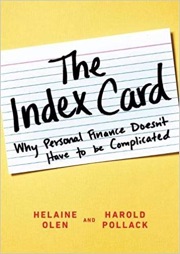
After rediscovering the young adult versions of fitting personal finance advice on an index card, I decided to go back and read the book The Index Card: Why Personal Finance Doesn’t Have to Be Complicated by Helaine Olen and Harold Pollack. (I was able to find it via library eBook.)

I noticed that the book version of the “index card” was slightly different. The original card had 9 items, but two of them were merged away into each other (401k/IRAs) and (Pay Attention to Fees/Buy Index Funds). I bolded the new additions below. (You can see all chapters on the Amazon page.)

  1. Strive to Save 10 to 20 Percent of Your Income
  2. Pay Your Credit Card Balance in Full Every Month
  3. Max Out Your 401(k) and Other Tax-Advantaged Savings Accounts
  4. Never Buy or Sell Individual Stocks
  5. Buy Inexpensive, Well-Diversified Indexed Mutual Funds and ETFs
  6. Make Your Financial Advisor Commit To a Fiduciary Standard
  7. Buy a Home When You Are Financially Ready
  8. Insurance – Make Sure You’re Protected
  9. Do What You Can To Support the Social Safety Net
  10. Remember The Index Card

Here again is the original:

Here are my notes on the newly-addressed topics of home-buying and insurance.

Home-buying. This will always be a hard topic because it mixes in emotion, personal history, peer pressure, and all that fuzzy stuff. If you want to own a home, you need to make sure the purchase won’t blow up your overall financial picture. Nothing really surprising, but still good advice.

  • Get your debt under control first.
  • Save up as close to a 20% down payment as you can.
  • Stick with a 15 or 30 year fixed-rate mortgage.
  • Prioritize what you really want and need in a home. Stay within your budget.
  • Location, location, location.

Insurance. There are low-probability events that can destroy decades of hard work, and that’s why humans invented insurance to spread the risk. Here are their cut-to-the-chase bullet points:

  • Emergency fund – Maintain one!
  • Life insurance – If you’re young(ish), just buy 30-year level term insurance.
  • Property insurance – Raise your deductible as high as you can handle.
  • Health insurance – Always sure you stay in-network.
  • Liability insurance – Coverage for at least twice your net worth.

I’m glad that this book still retained its “quick-and-dirty” nature. No single rule will cover every scenario, but it’s good to have a clear and concise collection of the big points along with just enough explanation that you understand the basic reasoning behind it.

Navy Federal Credit Union 0% APR No Balance Transfer Fee Promotion

navyfed0

Navy Federal Credit Union (NFCU) usually offers a special balance transfer promotion every January that is available to both new and existing NFCU credit cardholders. This year, I don’t see anything on their website, but I did just get a paper mailing from them. If you have an existing NavyFed credit card and are looking to lower your interest rates on balances, it may be worth checking in.

The Navy Federal Platinum credit card is still offering new cardholders 0% APR for 12 months on balance transfer with no balance transfer fee. This card is on my list of the best 0% APR balance transfer offers.

Balance transfer promotions can be good opportunities to lower the interest rate on your existing balances and accelerate any debt payoff plans. Try your best to finish your payments within the introductory period, as the rates will increase significantly after that.

Membership eligibility for NavyFed is restricted primarily to those with a military affiliation – including active duty, veterans, retirees, and family members – but also includes some civilian employees in the Department of Defense. NavyFed offers a variety of solid financial products including mortgage, car loans, and home-buying services.

Citi Simplicity® Card Review: 0% Intro APR for 21 months on Balance Transfers, No Late Fees, No Penalty Rates

Interest rates are rising, and that applies to credit cards as well. The Citi Simplicity® Card comes with an extended 0% intro period for balance transfers while also offering some “accident forgiveness insurance”. Do you have a balance that you are finally ready to pay off? The highlights:

  • No Late Fees, No Penalty Rate, and No Annual Fee… Ever
  • 0% Intro APR for 21 months on balance transfers from date of first transfer and 0% Intro APR for 12 months on purchases from date of account opening. After that the variable APR will be 18.99% – 29.74%, based on your creditworthiness. Balance transfers must be completed within 4 months of account opening. There is an introductory balance transfer fee of $5 or 3% of the amount of the transfer, whichever is greater for balances transfers completed within 4 months of account opening.
  • Stay protected with Citi® Quick Lock
  • Simplicity = No Late Fees, No Penalty Rate, and No Annual Fee.
  • Simplicity = When you want to speak to a human, just call and say “representative”

No late fees, no penalty rate details. On most other credit cards, if you make a late payment, you’ll first be charged a late payment fee of about $35. On top of that, your super-low interest rate disappears and instead gets jacked up to something called their “default rate” or “penalty rate”. This could be over 30% APR! This card adds a bit of flex in that they do not charge penalty rates or late fees.

Note that if you are 30 days late on this or any credit card, Citi will still report this activity to the credit bureaus. This card may be forgiving but you should still keep your credit score as high as possible.

The strongest part of this card is the long 21 month period, so you can spread out payments over 1.75 years and ideally pay it all off by the end. There is a 5% balance transfer fee ($5 min). 5% works out to under 4 months of interest at 18% APR. Transferring a balance to this card from a 18% APR card would be the equivalent of under 4 months interest at 18% APR and then having 17 months with 0% interest. Once the intro period on all 0% cards expire, the rates will go right back up. You’ll either need to pay it off or transfer your balance again if you need more time. With this card, you’ll have a full 21 months to spread your payments out.

Alternatively, if you are certain that you will pay it off within a shorter time period, look for a card with no balance transfer fee. Compare with other low fee 0% APR balance transfer offers.

This card does not earn any cash back, points, or airline miles. Many times, rewards cards are bad deals for those carrying balances. I’d open a separate card for rewards after your balances are paid off and you join the “Paid in full every month” club.

Bottom line. The Citi Simplicity® Card is best for folks that are serious about paying off their balances. You get a long 0% introductory period of 21 months on balance transfers along with consumer-friendly features that help ensure your low rates don’t get hiked with a single late payment. If you do the math and can make adequate payments to pay down your balance over a 21 month (1.75 years) span, this card may help get you debt-free with minimal gotchas. No annual fee.

Amex EveryDay® Credit Card: 10,000 Point Referral Offer, 0% APR on Purchases for 15 Months

The Amex EveryDay® Credit Card is a great way to earn American Express Membership Rewards points with no annual fee. Right now, there is also a welcome bonus and no balance transfer fee offer for new cardholders. Here are the highlights:

  • 10,000 Membership Rewards Points welcome bonus after $1,000 in purchases in the first 3 months.
  • 0% intro APR for 15 months on purchases.
  • 2X points at US supermarkets on up to $6,000 per year in purchases (then 1X). 1X points on all other purchases.
  • 20% more points if you make 20 or more purchases in a billing period (less returns and credits).
  • No annual fee.

Note the following:

Welcome bonus offer not available to applicants who have or have had this product.

Earn Membership Rewards (MR) points with no annual fee. American Express has historically been a “premium”-only brand and most every card had an annual fee. This no-annual fee card is a move to welcome more consumers. In addition, if you have Membership Rewards points earned from other American Express cards, having this card would keep all of your MR points from expiring even if you closed those other cards (perhaps to avoid the annual fees). This way you keep the flexibility to transfer the points into a variety of airline miles or hotel points as needed. As there is no annual fee, I can keep this card open forever.

Membership Rewards points can be converted to the following airline miles (there are more, this is just a selection):

  • Delta SkyMiles
  • Hawaiian Airlines
  • ANA Mileage Club (partner of United Airlines)
  • Air Canada (partner of United Airlines)
  • British Airways (partner of American Airlines)
  • FlyingBlue (Air France/KLM)
  • Virgin Atlantic
  • Virgin America

With the 20% bonus for 20+ purchases per billing period, you would be getting 1.2 miles per dollar on all purchases and 2.4 miles per dollar at US supermarkets (up to $6,000 per year). A lot depends on how much value you can get out of those airline miles.

Unfortunately, there are many redemption options for Membership Rewards points that are worse than 1 cent per point value. Here are a few examples:

  • Shop with Membership Rewards Points (~0.5 cents per point)
  • Shop with Points at Amazon.com (~0.7 cents per point)
  • Use points at BestBuy.com (~0.7 cents per point)
  • Gift Cards (varies from 0.5 up to 1 cent per point max)

Bottom line. The Amex EveryDay® Credit Card allows you to earn and maintain Membership Rewards points with no annual fee. The welcome offer currently includes a 10,000 Membership Rewards points welcome bonus and 0% APR on purchases for 15 months.

Big List of Ways To Protect Your Identity: Free Credit Monitoring, Free Credit Locks, and Free Credit Freezes

eq_hack

Updated. After the Equifax hack and many subsequent hacks that affected so many Americans, there is renewed interest in the various ways you can monitor and/or protect your credit report. Below is a summary of the options available.

Free credit reports. Everyone should take advantage of the free copy of their credit reports (Equifax, Experian, TransUnion) and their bank report (ChexSystems, TeleCheck) available every 12 months. I would also add LexisNexis to the ones I personally check. This free access is mandated by the government. Here again is my Big List of Free Consumer Reports.

Free credit monitoring. There are many offers nowadays for free credit scores and partial snapshots of your credit report. These are provided by private services, either in partnership with or as a subsidiary of the major credit bureaus. In addition, some offer credit monitoring, where they will e-mail or text you when a significant change occurs (new accounts, etc). I choose to take advantage of this, knowing it is in exchange for some ads. Here’s a recipe for credit monitoring coverage across all three major bureaus:

Free credit locks. The credit bureaus now have a feature that allows you to instantly “lock” and “unlock” the credit report of a specific credit bureau and thus prevent access. These are nice because you can unlock it for a day or so when you need, but otherwise keep it locked. Again, if they are free, they are probably supported by ads and/or upgrades (which is fine by me, I just decline the occasional upsell and it stays free).

Free Fraud Alerts. If you are concerned that your personal information is compromised (you should be!), you can contact any one of the three major credit bureaus and ask for a “Fraud Alert” to be placed on your credit report. This supposedly lets all potential creditors know that you are at high risk and that they need to do extra identity verification. Be sure that they have your current contact information as they will call you every time someone tries to check your credit report.

(Update: I’ve had a Fraud Alert on my account for over 12 months now, and I have not seen any special precautions taken despite applying for multiple credit cards during that time. No verification phone calls, no snail mail letters, etc. I wouldn’t depend on a Fraud Alert to stop any criminal activities.)

This is free of charge. It will expire automatically after 1 year but you can call in and renew by submitting a new request within 30 days of your current alert expiring. If you are a documented victim of identity theft, you can ask for an Extended Fraud Alert of up to 7 years. By law, you should only need to contact one of them, and they are supposed to contact the other two companies and thus have the Fraud Alert active on all three accounts. Taken from FTC.gov:

Credit Freezes. This is the most comprehensive measure to take. Once you initiate a credit freeze, it will stay on there permanently in most states (or at least 7 years in others). In order for a business to check your credit report, you must manually “unfreeze” your credit temporarily. As of 9/21/18, this should be free by law at all three credit bureaus. You must contact each credit bureau separately.

In addition, the same law requires that free credit freezes also be made available for children under 16 years old. (I would warn folks that you have to send in multiple sensitive personal documents like birth certificate and possibly notarized forms to verify your kids’ identities. Makes sense but a lot of work.)

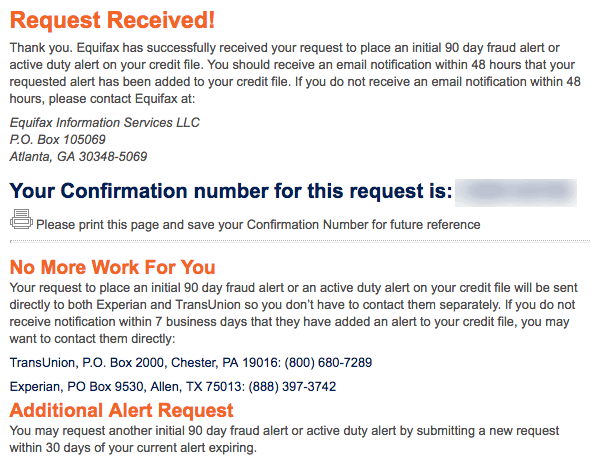
I decided to initiate a free 90-Day Fraud Alert to try it out (through Equifax since they should do the extra work).

eqalert_sample

I already access my credit reports/ChexSystems/LexisNexis every 12 months, and I continuously monitor my own credit using the services listed above. Here’s a sample free alert I got from CreditKarma:

ck_sample

I then cross-referenced with a similar free credit monitoring alert from CreditSesame (TransUnion) that included more info like date and card issuer:

cs_sample

Bottom line. That’s the menu; I would start at the top and pick what works for you. I tend to open a relatively high number of credit and bank accounts throughout the year, often for a time-senstive promotion, so I choose to decline the extra hassle and cost that comes with a credit freeze. I use the free monitoring services listed above instead to get an e-mail whenever a new credit check occurs or a new line of credit is reported. If you rarely get new accounts or simply feel otherwise, go more extreme.

How To Enable Auto Sweep on Paypal Accounts (2018)

If you use PayPal to accept credit cards for your small business (eBay, Etsy, e-store, freelance, etc), you may not want to keep your money sitting at PayPal (especially if you are earning higher interest in your bank account). There is a feature called Auto Sweep that checks daily and automatically “sweeps” any money that arrives in your PayPal account into your bank account overnight.

The Auto Sweep feature used to be easily found in their settings. Then they moved it into a dim corner of their website that was harder to find. Last week, I couldn’t find it at all. After digging through several outdated articles, it turns out that as of 2018 you can’t access the feature at all unless you call in and ask for it explicitly. Not exactly customer-friendly behavior, but PayPal makes money off your idle balances… (The PayPal Money Market fund that offered higher interest shut down in July 2011.)

Here’s how to enable Auto Sweep on your PayPal account as of 2018. This is another post for the benefit for others searching online. First, make sure you meet these requirements:

  • You must have a Business PayPal account in good standing.
  • You must have a bank account linked to your PayPal account.
  • You must have lifted your withdrawal limit and verified your PayPal Account.

Next, you must call PayPal directly via phone.

  • Once logged into your PayPal account click Contact at the bottom of the page.
  • Choose the Call Us option and call the number listed for your account. Use the unique code to quickly identify yourself to them.
  • When you reach a human, explicitly ask for “Auto Sweep” to be enabled on your account.

After that, they will flip a switch on their end, and you should finally be able to see the option enabled on your online account. Log back into your PayPal account and follow these instructions:

  • Click Profile beside “Log Out” and select Profile and settings.
  • Click My money.
  • Click Set near “Automatic transfers.”
  • Click Edit.
  • Click Yes, select the bank you want your money transferred to, and click Save.

Here’s what you should see after Auto Sweep has successfully been turned on:

There you go. Note that if you ever manually request a cash transfer from a bank account to your PayPal balance, that this would automatically turn off Auto Sweep. I guess the money running around in circles causes a tear in the time-space continuum or something. (You can go back an turn Auto Sweep back on manually.)

If you activate this feature, it may also change your how you use the PayPal Business Debit card, as there will no longer be any cash balance in your account to draw from. For non-PIN signature purchases, these will still work if you first link a bank account as a backup source, and then the debit card charges will pull from your designated backup source. You can also link up certain PayPal credit cards (source), but not just any credit card as backup. For ATM withdrawals, you will not be able to make ATM withdrawals with a zero PayPal balance (source).

I wouldn’t really recommend using the debit card anyway, there are much better small business card options with no annual fee.