A new book called Barking Up the Wrong Tree by Eric Barker promises to reveal surprising facts about what really determines success. The publicity tour has generated several articles about how high school valedictorians are less successful than you might think:
- This is why class valedictorians don’t become millionaires
- Wondering What Happened to Your Class Valedictorian? Not Much, Research Shows
- Why valedictorians rarely become rich and famous
- Why Grade Grubbing Valedictorians Never Get to Rule the World
Beyond the clickbait, what really happened? I haven’t read the book, but I did learn that Dr. Karen Arnold of Boston College tracked 81 high school valedictorians and salutatorians for 14 years after graduation. Here are some of the findings of this study:
- 95% went on to graduate college.
- The average college GPA was 3.6.
- 60% went on to receive graduate degrees.
- 90% were in professional careers.
- 40% are in highest tier jobs (not exactly sure what this means).
Apparently, none of the subjects became billionaires or “changed the world” in a meaningful way. Why not?
The theory is that high grades are a product of conformity and obedience, while being “successful” is about mastering a unique skill and non-comformity. Research has found that high grades are only loosely correlated with intelligence. In addition, out of a survey of 700 millionaires, the average GPA was only 2.9. If you are devoted to a single passion, it can be hard to have good grades in all subjects; thus you tend to struggle in high school.
My question is – How you define “success”? If it’s a respectable career with above-average income, it seems that being valedictorian gives you a much higher chance for that. There’s a reason why many parents want their kids to get good grades and become an engineer, doctor, accountant, or lawyer. You are playing the odds. There are many starving artists and writers, but not many starving nurses.
If “success” is becoming a billionaire, then yes it seems that being a valedictorian may not match up with that. If you want to get rich quickly, you’ll need to start your own business and take some sort of ownership stake. The richest people all own something – music copyrights, book copyrights, businesses, real estate, something.
The difference is taking risks. By definition taking a risk means there is the chance of failure. A small business can make you rich, but most small businesses end up failing. However, you’ll only get graduation speeches from the winners. This is called survivorship bias, as this XKCD comic explains:

There is no direct formula for success, but you can still break it down into the required parts:
Work + Skill + Bad Luck + High Risk = Failure + Experience
Work + Skill + Good Luck + High Risk = Success + Experience
No Work + Good Luck = Failure
The takeaway is that you need hard work, valuable skills, taking a risk, and some luck. Luck plays a role, but you need the other three or you have no chance at all.
If you can be a high school valedictorian, I feel you are able to do hard work and thus have the ability to develop valuable skills. That’s a good base. The difference is… will you take the risk? Will you risk putting all your time and energy into developing a skill or a company that may or may not result in something valuable? Will you accept that chance of failure? Or would you rather go with the odds and do something with more reliable results? Perhaps statistically valedictorians take less risk than other groups.
I plan on advising my kids to take calculated risks when they are young and can devote 70 hours a week to a single task. That’s possible when you aren’t taking care of your kids (or your parents). However, I would also teach them that a reliable stream of above-average income plus a high savings rate equals financial freedom, aka early retirement in 10-20 years. (Getting rich via ownership just accelerates the process even further.) Once you have that financial freedom, you can do whatever you want with your life. Start a charity, write a novel, spend time with family, travel the world. Living a lifestyle aligned with your values certainly sounds like “success” to me.


 If you don’t understand why having a fiduciary requirement matters in terms of financial advice, read this
  Investment research firm Morningstar has released their annual 529 College Savings Plans Research Paper and Industry Survey. While the full survey appears restricted to paid premium members, they did release their
  I’m always fascinated by the potential power of cheap, accessible education. Back in 2013, I wrote about how Georgia Tech planned to offer an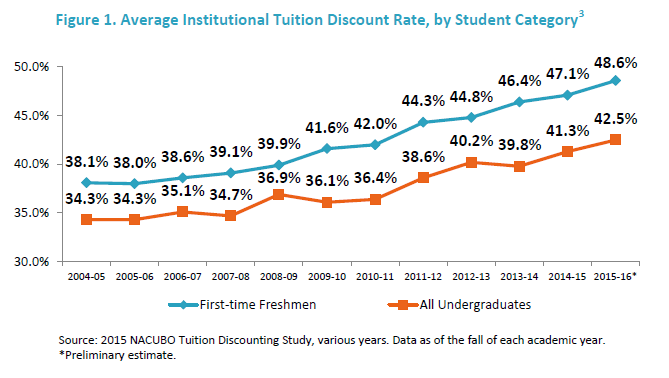


 Sometimes I get questions about dealing with student loan debt, but I no longer feel well-qualified to answer. I graduated in 2000 with roughly $30,000 in student loan debt myself, but I never participated in any government-backed repayment plan, nor did I refinance it into a lower interest loan. Roughly 70% of students are graduating with debt today as opposed to 60% in 2000, according to this

 The government just passed the Protecting Americans from Tax Hikes (PATH) Act of 2015, which had a few notable provisions for 529 college savings plan participants. Some of them need to be taken advantage of quickly.


 The Best Credit Card Bonus Offers – 2025
 Big List of Free Stocks from Brokerage Apps
 Best Interest Rates on Cash - 2025
 Free Credit Scores x 3 + Free Credit Monitoring
 Best No Fee 0% APR Balance Transfer Offers
 Little-Known Cellular Data Plans That Can Save Big Money
 How To Haggle Your Cable or Direct TV Bill
 Big List of Free Consumer Data Reports (Credit, Rent, Work)