These days, everyone has a regained respect for stock market volatility. One way to maintain a more stable income in retirement is to take part of your nest egg and buy a single-premium immediate annuity (SPIA). With an SPIA, you pay a lump-sum upfront to an insurance company in exchange for a guaranteed stream of income payments for life. You’ll usually get a much higher income than from bonds or dividend-paying stocks. However, once you die, the payments stop and your upfront payment is gone.
How much income can you get?
The two main factors that affect your actual payout are your age and the current interest rate environment, but there are also additional options to consider. Here are a few of the biggies:
- Single vs. joint life. Will the payments be guaranteed for only one life, or the longer of two lives? This is a popular option for couples living together.
- Minimum guaranteed payout period. Some folks may hate the idea of losing your entire lump-sum in the event of an early death, or want a minimum payout amount. With this option, you can guarantee that payments will be made for a specific minimum period (i.e. 5 or 10 years) no matter what.
- Inflation-adjusted payments. With this option, your monthly payments will increase or decrease by a certain percentage each year, as pegged to inflation. This will protect you from decreased purchasing power in the future due to inflation, but will significantly decrease your initial payout.
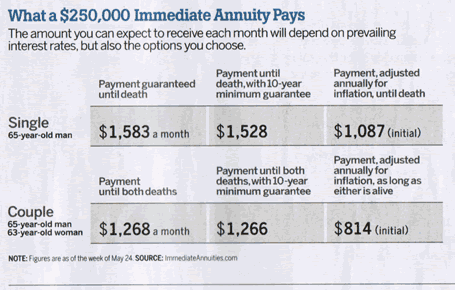
Below, the July issue of Money magazine included a nice graphic that helps show how each affect your possible payouts based on a $250,000 investment. Data is from ImmediateAnnuities.com, a handy site to get free quotes.
 The Best Credit Card Bonus Offers – 2025
 Big List of Free Stocks from Brokerage Apps
 Best Interest Rates on Cash - 2025
 Free Credit Scores x 3 + Free Credit Monitoring
 Best No Fee 0% APR Balance Transfer Offers
 Little-Known Cellular Data Plans That Can Save Big Money
 How To Haggle Your Cable or Direct TV Bill
 Big List of Free Consumer Data Reports (Credit, Rent, Work)